
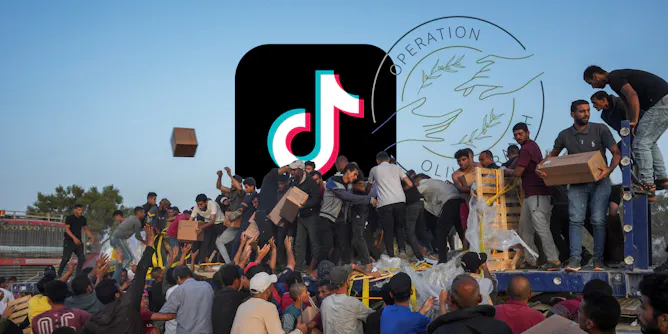
As the conflict continues, social media users are eschewing mainstream charities in favour of grassroots campaigns. It’s not without issues.
Articles on Humanitarian relief
Displaying all articles
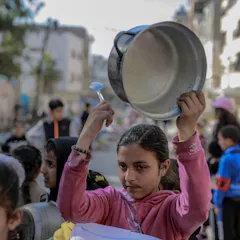
In Gaza, Sudan, Haiti and elsewhere around the globe, famine affects increasing numbers of people.

Government sanctions against Hamas, which the US and the European Union consider a terrorist group, mean that aid groups are not able to directly work with Hamas.
Many people in Gaza are reliant on the United Nations and other international aid groups to meet their basic needs, like food and medical care. A scholar of peace and conflict economics explains why.

When government responses to a natural disaster do not address the specific needs and vulnerabilities of women and girls, women tend to lose trust in the institutions.

Refugee camps should only be a temporary solution. They’re no place for ongoing health care.
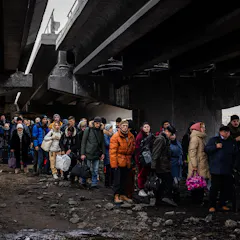
Tens of thousands of Ukrainians are using humanitarian corridors to leave the country. But these routes are often announced for political reasons and do not always offer safety

Despite the recognition of risk, it’s clear that the scope and severity of the Ethiopian crisis has caught many by surprise.
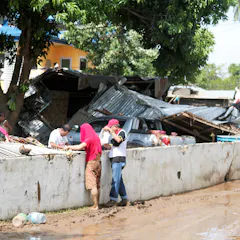
Months after Typhoon Washi tore through the Philippines in 2011, relocated residents were moving into newly built housing. They soon began modifying and extending homes that didn’t meet their needs.
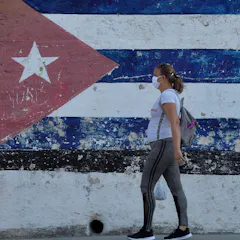
Cuban medicine is now called upon both to protect the island’s population from Covid-19 and to help various foreign countries, including Italy and France.
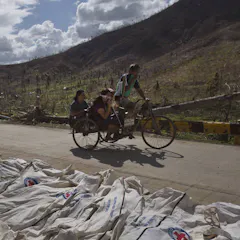
The Haiyan Typhoon disaster is a cautionary case for climate adaptation and mitigation because it demonstrates the seductiveness of survival myths.

The revolution begun by Syrians exactly eight years ago has been won – by the murderous leader they rebelled against. But the struggle for freedom, dignity and justice Syrians launched is not over.
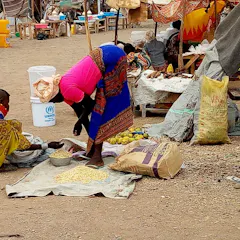
Refugee policy may well be a humanitarian issue. But it is also a development issue.
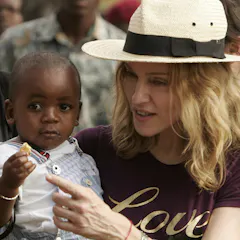
Voluntourists’ ability to change systems, alleviate poverty or provide support for vulnerable children is limited. They don’t have the skills and can perpetuate patronising and unhelpful ideas.
Top contributors
-

Associate Professor and Head of Humanitarian Research Program, Australian National University
-
Lecturer in Emergency Management, University of Tasmania
-
Assistant Professor of Anthropology, University of North Carolina – Charlotte
-
Professor of Forced Migration and International Affairs, University of Oxford
-
Visiting professor, Harvard University
-
Professor of Political Science, Northwestern University
-
Professor of Economic Development & Peacebuilding, University of San Diego
-
Director of the Center for Humanitarian Health, Johns Hopkins University
-
Research Fellow in the Australian Research Council Centre of Excellence for Automated Decision-Making and Society (ADM+S), and the Emerging Technologies Lab, Monash University
-
Lecturer in Humanitarianism and Development, Deakin University
-
Senior Lecturer, UNSW
-
Research Fellow – Informal Urbanism (InfUr-) Hub, The University of Melbourne
-
Research and Teaching Assistant, Melbourne School of Design, The University of Melbourne
-
Senior Lecturer, International Relations, Australian National University
-
Professor of Practice and Director of Global Humanitarian Policy, Batten School of Leadership and Public Policy, University of Virginia