

Short-term letting via digital platforms benefits some in the market at the expense of others. Closer regulation might be needed in Melbourne and Sydney, where a permissive approach prevails.
Articles on Housing supply
Displaying 41 - 60 of 76 articles

Shared equity models have a dual benefit of making home ownership affordable for people on modest incomes and freeing up scarce social housing for other households in need.
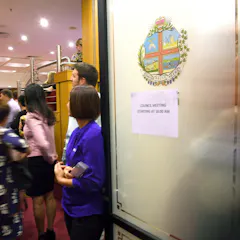
A national survey shows councils know much of the housing in their local areas isn’t affordable. But providing affordable housing is not a priority because they see it as being beyond their means.

A survey shows 70% of South Africans feel immigrants pose a threat to the country.

Property prices have soared in the past decade, but much more modest increases in rent, with the exception of Sydney, suggest less of an imbalance of supply and demand for housing as a place to live.

Migrants have similar home ownership rates to the overall population and rely less on public housing. But housing supply shortfalls and higher prices have reduced ownership among recent migrants.

It’s said Australia’s housing affordability problem is the result of new housing stock not keeping pace with population growth. But there is actually enough housing, so why can’t the poor afford it?

The clichés about housing supply and regulatory restraints are distractions from the need to focus on expanding the affordable housing sector to directly meet the needs of low-income households.
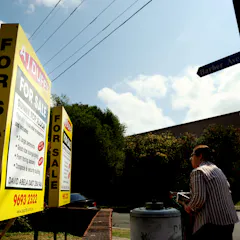
New modelling shows negative gearing and capital gains taxes can be reformed in a way that doesn’t impact poorer investors.
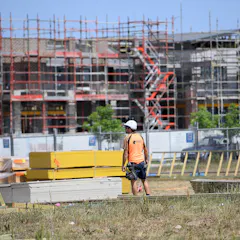
Australian governments are faced with a choice: make the difficult decisions to fix planning systems so more houses can be built, or tap the brakes on Australia’s migrant intake.

Yet again the evidence shows supply is no cure-all for affordable housing. All levels of government in Australia need to concentrate on housing for low-income renters in particular.

The states that are delivering more affordable housing have sophisticated, multi-pronged strategies to serve the full range of needs.

Unaffordable housing and homelessness are burning issues. Policymaking has suffered from a critical lack of data and expert input since the National Housing Supply Council was axed in 2013.

One in seven Australian households is in a state of housing need. A shortfall in social housing supply means some are locked out of the market and others pay much more for rent than they can afford.

Only 18% of Sydneysiders think foreign investors should be able to buy property. They simply don’t accept arguments that this investment improves housing affordability by increasing supply.
The bond aggregator by itself cannot create a housing development pipeline. It needs co-investment from government to make it feasible.

People are taking on larger future risks and costs just so they can buy a house. Increases in new home owners are seen as a positive development, but what if they can’t afford the ongoing costs?
In the second part of our review of what The Conversation experts have to say about housing, we focus on affordability, social housing and what government can do about a growing crisis.
Housing experts writing for The Conversation largely agree on the government policies that are causing negative distortions in the market and the wider economy. And supply is not the key concern.

Business Briefing: how the attitudes of the next generation are changing the property market
The Conversation18.5 MB (download)
There's been a shift in attitudes to the property market over generations, from owning a home as a right, to owning a home as a commodity.
Top contributors
-

Emeritus Professor of Housing, UNSW
-
Emeritus Professor, Urban Planning and Policy, University of Sydney
-
John Curtin Distinguished Professor, Curtin University
-
Professor of Urban and Regional Planning, University of Sydney
-
John Curtin Distinguished Professor, Curtin Business School, Curtin University
-
Professor of Housing Research, Adelaide University
-
Executive Dean, UniSA Business, Adelaide University
-
Professiorial Fellow, The University of Melbourne
-
Professor Emeritus of Urban Planning, University of Kansas
-
Associate Professor & Global Challenge Lead, Urban Transformations Research Centre, Western Sydney University; University of British Columbia
-
Emeritus Professor of Urban Policy, The New School
-
Head of Urbanism and Associate Professor of Urban Studies, School of Architecture, Design and Planning, University of Sydney
-
Program Director, Housing and Economic Security, Grattan Institute
-
Associate professor in urbanism, University of Sydney
-
Professor of Urban Planning, The University of Melbourne