
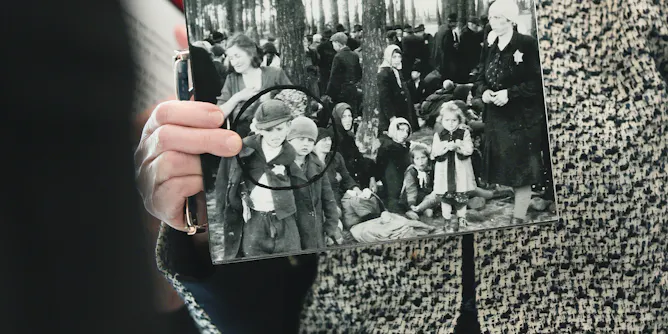
West Germany’s educational reforms in the 1960s and ‘70s show that gaps in knowledge can sometimes create opportunity for rethinking educational methods.
Articles on Holocaust education
Displaying all articles
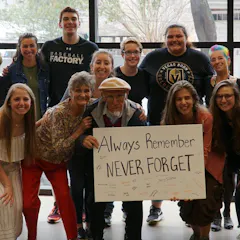
Students respond to history that feels local and personal. There are ways to do that even as Holocaust survivors pass away, one professor writes.
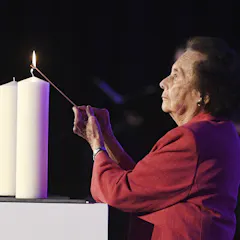
Forms of ‘rescue archaeology’ are working to save the testimony of survivors before it is too late.
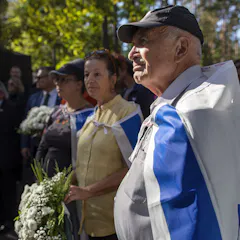
The past is a reality that humanity as whole must contend with, but a lack of understanding is fertile ground for denial, revisionism and antisemitism.
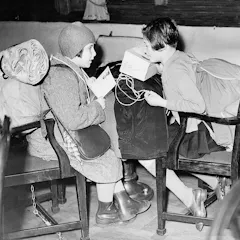
10,000 children, from mostly Jewish families, were saved from the Nazis by the Kindertransport visa-waiver scheme, which started in 1938.
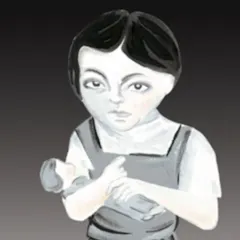
Memoirs about the Holocaust by women emphasize women’s embodied, gendered experiences, and show their intelligence, agency and resolve in the face of Nazi persecution.
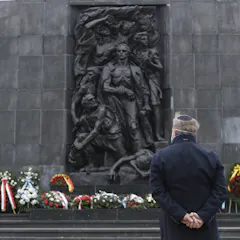
The Holocaust has become a contentious issue in Poland in recent years. And those challenging the government’s historical narrative have faced condemnation and lawsuits.
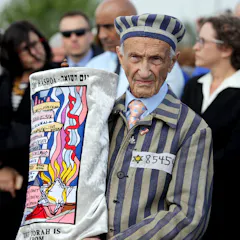
We navigate between making the Holocaust a fable and banning any representation by talking about, arguing over and even calling out fables of the Holocaust.
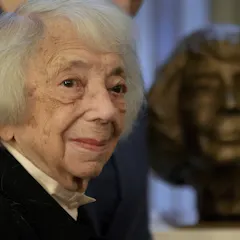
Over 100 life stories of Holocaust survivors have been published through a Holocaust survivors’ memoir program. Listening to survivors narrate their stories is a powerful learning experience.

Antisemitism often appears and spreads on social media. But digital technology can be part of the solution, too.
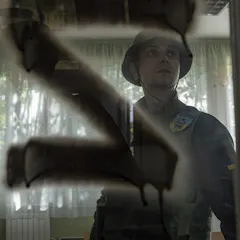
Many conspiracy theories and disinformation are rooted in antisemitic tropes which spread harm and undermine our democratic institutions.
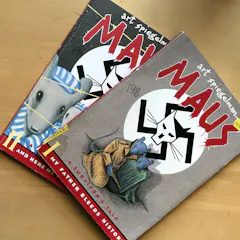
The multigenerational memoir laid the groundwork for graphic memoirs to become an essential form for remembering the Holocaust and communicating its legacy of trans-generational trauma.
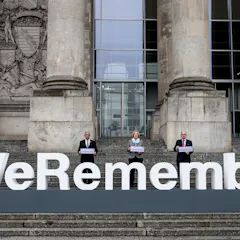
While Australians’ general knowledge of the Holocaust is high, few people knew who William Cooper was or that Australia refused to accept more Jewish refugees in 1938.
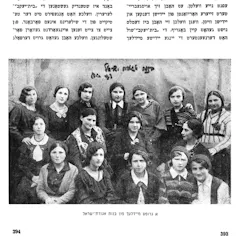
Yom HaShoah is a day to commemorate the murder of 6 million Jews – but also their lives. Yizker bikher books lovingly document Jewish communities across Europe.
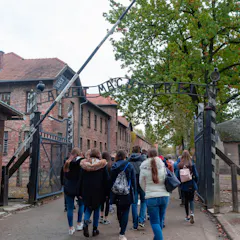
Less than half of the respondents to a UK survey knew that six million Jewish people were killed.
The past of the Holocaust still haunts the present and calls out to Canadian writers. Their works of poetry and prose are forms of remembrance that command our attention.
If teachers don’t accept the challenge of proactively educating children about racist language, young people may not understand its hurtful impact. And they may take this ignorance into adulthood.
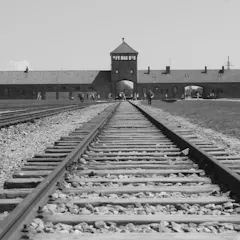
The study of the Holocaust, as the ultimate example of genocide, allows teachers to raise the universal message of human rights abuses and mass violence.
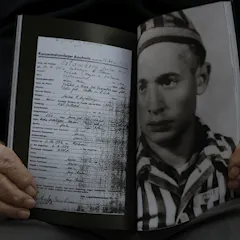
As social media platforms fight Holocaust denial and anti-Semitism, online archives offer another possible approach: direct links to the historic truth.
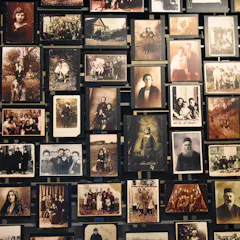
Many young people learn about the Holocaust in school, but their knowledge and understanding of the subject can be limited and based on inaccuracies and misconceptions.
Top contributors
-

Professor, Department of English, Toronto Metropolitan University
-
Faculty, Holocaust and Genocide Studies, Gratz College
-
Adjunct Senior Lecturer in Education, Faculty of Education, Monash University
-
Senior Research Fellow, UCL Centre for Holocaust Education, UCL
-
Assistant Professor, Department of Central, Eastern, and Northern European Studies, University of British Columbia
-
Associate Professor in Modern European History and Jewish History, UNSW
-
Professor of Sociology, Rowan University
-
Professor of Contemporary Literature and Thought, Royal Holloway, University of London
-
Research Fellow, Deakin University
-
Associate Professor and Co-Director of the Tackling Hate Lab, Deakin University
-
Associate Professor of Cultural Heritage and Museum Studies, Deakin University
-
Associate Professor of Communication and Media Studies, Pace University
-
Assistant Professor of Jewish Studies, College of Charleston
-
Professor of German, Aberystwyth University
-
Professor of Curriculum & Instruction, University of Connecticut