
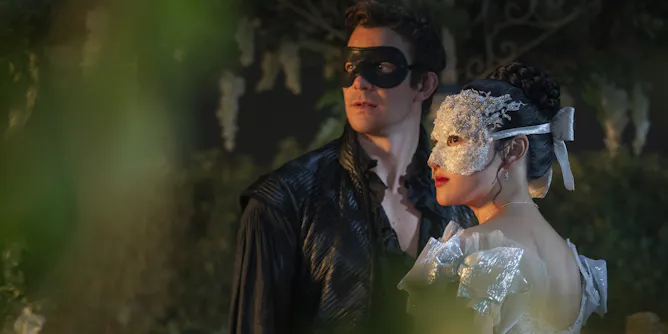
In the case of Elizabeth Chudleigh, it was more like lust at first sight.
Articles on History
Displaying 181 - 200 of 2073 articles
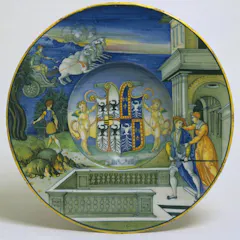
The expression is, ‘handed to you on a silver plate’; but a recent breakthrough came to me on a painted ceramic one.
Goldenberg’s Peanut Chews, Goobers and Whitman’s Sampler boxes of chocolates are just a few confectionary classics that were born in Philly.

Jeanne Duval fascinates many feminist and postcolonial scholars, partly because of how little is known about her.

Dancing masters were crucial to transforming girls and boys into ladies and gentlemen.
Women have moved from mapmakers using their bodies to depict maps to being leaders shaping the field of cartography.

New research suggests olive trees have been exploited for more than 6,000 years. The first Italian olive oil was produced perhaps 4,000 years ago.

Both film and table tennis depended upon the invention of celluloid – which plastic ping pong balls are made from.

Innovations have made recent Winter Games possible, but the future climate will have a big impact on where the Olympics can be held and winter sports themselves.
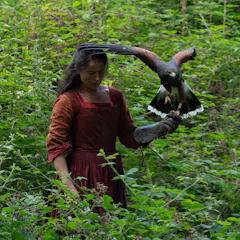
Hawks offered women both real and symbolic means to express gender, power and status within a male-dominated world.
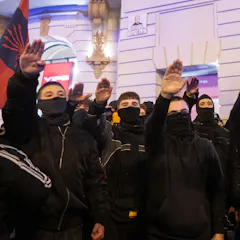
Comparisons of Trump to Hitler have become common. But some of Trump’s policies may more closely resemble those of Francisco Franco of Spain, says a Spanish scholar.
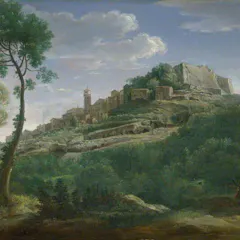
The real heartbeat of Troy is a story that history has long forgotten.

After the regime ‘disappeared’ their children, Argentina’s Madres de la Plaza de Maya relentlessly demanded justice – and exposed the atrocities of a dictatorship.

The words used to describe this peppery green are a linguistic fossil record revealing the history of Italian migration.

The story of donkeys in Namibia is one of colonial control but also resistance.
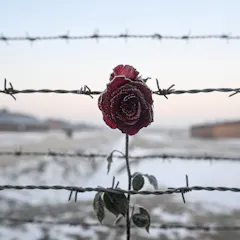
On International Holocaust Remembrance Day, it’s timely to reflect on how the liberation of the camps was reported at the time – and how it changed journalism.
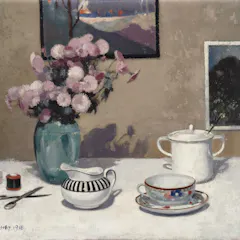
One of the earliest references to sugar dates to 510BC.
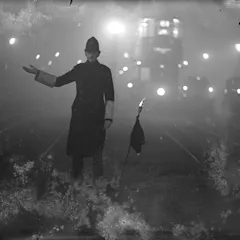
London’s fog literally fogged photographs with the yellowish hue of the capital’s notorious ‘pea-soupers’.
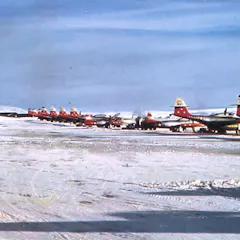
In 1951, the French Explorer Jean Malaurie witnessed the building of a US military base in Greenland in near total secrecy, which marked an irreversible turning point for Inuit societies.

Centuries of management practice were built on cruelty and exploitation. But history also offers a countercurrent – leaders who chose care, fairness and conscience.
Top contributors
-

Professor of History, Australian Catholic University
-
Research Associate, Institute for Prehistory and Early History and Medieval Archaeology, University of Tübingen
-
Director, Gender and Women's History Research Centre, Australian Catholic University
-
PhD Candidate, Anthropology and Archaeology, University of Bristol
-
Senior Lecturer in History, University of Waikato
-
IE School of Humanities, IE University; California State University San Marcos
-
Professor Emerita, Classical Studies, The Open University
-
Director, Vice-Chancellor's Centre of Public Ideas (CoPI) and Donald Horne Professor of History and Public Ideas, University of Canberra
-
Lecturer in Classics and Ancient History, The University of Western Australia
-
Professor of History, President, Australian Historical Association, Macquarie University
-
Associate Professor, Fashion History, De Montfort University
-
Emeritus Professor in the History of Religious Thought, The University of Queensland
-
Senior Lecturer in History, University of Winchester
-
Associate Professor of Medieval History, Durham University
-
Francesco Perono Cacciafoco is a Friend of The Conversation.
Associate Professor in Linguistics, Xi'an Jiaotong-Liverpool University