

People use cognitive shortcuts to make choices that sometimes have outcomes that don’t serve their own interests or preferences. But to call these choices irrational might be missing the big picture.
Articles on Heuristics
Displaying all articles

New research finds that people are more likely to choose a plan that has the words “tax-free” in the title, regardless of the details in fine print.

Referees would need to be superhuman to be immune to the risk of bias – maybe that’s something all sports fans could agree on.

People tend to dislike uncertainty and risk – two things that are hard to avoid completely during a pandemic. That’s part of why it can feel especially draining to make even small decisions these days.

Errors don’t necessarily mean your mind is faulty. They may actually be a sign of a cognitive system with limited capacity working efficiently.

It’s human nature to unconsciously rely on quick rules to help make spur-of-the-moment decisions. New research finds physicians use these shortcuts, too, which can be bad news for some patients.

The recommendations of experts aren’t reaching people in the supermarket aisles. So what can be done about it?

Treasury modelling suggests that limiting negative gearing will lead to small change in prices. But behavioural economics shows it all depends on how the policy is framed.

For 30 years, sports fans have been told to forget about streaks because the ‘hot hand’ is a fallacy. But a reanalysis says not so fast: Statistics show players really are in the zone sometimes.

With a second Scottish referendum ‘all but inevitable’, here’s a strange pill for the nationalists to swallow.

What’s in a name? Many words are arbitrary – there’s no reason a dog must be called a dog or a table must be called a table. Why do we tend to assume there’s a reason any object has its specific name?

People find it difficult to understand the true value of loss of life when the numbers are large. For instance, a study found that people are more willing to donate money to an organisation when just one…
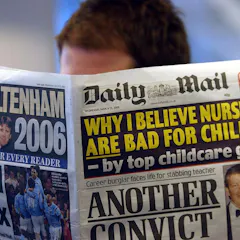
I once told a journalist that “the very fact that a piece of health research appears in the newspapers indicates that it is nonsense”. That may be too harsh, so I would like to suggest a slightly more…
Top contributors
-

Assistant Professor of Economics, Universidad de Alicante
-
Lecturer in Psychology, Glasgow Caledonian University
-
PhD student, Université de Bordeaux
-
Winton Professor of the Public Understanding of Risk, University of Cambridge
-
Banting Postdoctoral Fellow, University of Toronto
-
Professor of Economics, The University of Melbourne
-
Associate Dean Research/Professor in Economics, UTS Business School, University of Technology Sydney
-
Professor of Accounting, Wilfrid Laurier University
-
Director of Behavioral Science & Policy Initiative, Schaeffer Institute of Public Policy & Government Service, USC Price School of Public Policy, USC Dornsife College of Letters, Arts and Sciences
-
Research Fellow, Management, University of Leeds
-
Associate Professor, Lazaridis School of Business and Economics, Wilfrid Laurier University
-
Professor of Philosophy, University of Auckland, Waipapa Taumata Rau
-
Professor of Brain and Cognitive Sciences, University of Rochester
-
Assistant Professor of Health Economics, UMass Amherst
-
Associate Professor of Finance, Toronto Metropolitan University