

China’s national government policies on energy and economic development are changing pastoral life on the Tibetan Plateau.
Articles on Herding
Displaying all articles

Some in China are blaming Mongolia for the dust storms they are experiencing. But what are the real causes?
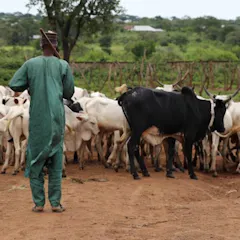
Blending livelihood strategies based on what works at different times in specific environments has been key to human survival for thousands of years.
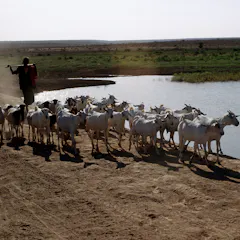
Somalia’s competitiveness in global markets has weakened owing to climate change and conflict.

Herders carved names, slogans, nude silhouettes and more into the trees around them during lonely seasons in the mountains. Now, researchers rush to find and record the arborglyphs before they disappear.

Archaeological data alone can’t always help to answer researchers’ questions: multiple lines of evidence are needed.

Shepherding livestock may be more effective protection than killing predators.
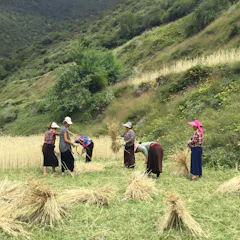
Men in rural China spend more time in leisure or social activities, or just hanging around and resting.
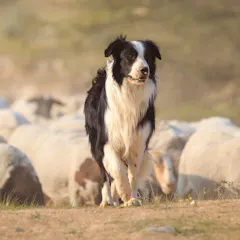
Breed matters. But dogs are mostly what we make of them, and they repay the effort we put into their behaviour tenfold.
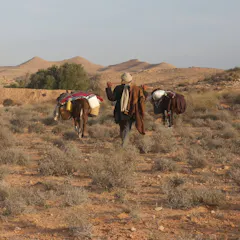
Pastoral communities should be included in conservation initiatives – but the ecology of pastoral lands has long been misunderstood.

Mineral-rich Mongolia is experiencing a mining boom, but its growth is creating distrust and conflict with herder communities.
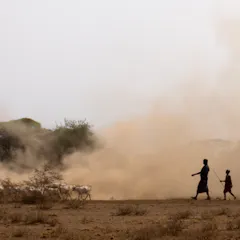
Pastoralism is a central part of many Africans’ identity. But how and when did this way of life get started on the continent? Ancient DNA can reveal how herding populations spread.
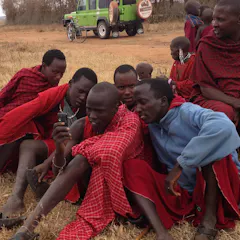
What do traditional Maasai people use mobile phones for?

Herding behaviour is leading to excessive borrowing, further fuelling apartment prices, particularly in Sydney.

New research upends the previous theory that tsetse flies – and the disease they carry – were the main reason the spread of livestock domestication in Africa stalled out for a thousand years.
Top contributors
-

Professor of Economics, Swinburne University of Technology
-
Graduate Teaching Assistant in Biology, University of Utah
-
Professor, Department of Economics, Monash Business School, Monash University
-
Associate Professor of Geography, Virginia Tech
-
Professor of History, Boise State University
-
Professor of Aeolian Geomorphology, King's College London
-
Professor of Anthropology, UCL
-
Senior Research Scholar, Max Planck Institute for the History of Science
-
Lecturer in China and Sustainable Development, King's College London
-
Researcher in Geography, University of Oxford
-
Professorial Fellow, Institute of Development Studies
-
Assistant Professor, University of Alberta
-
Librarian and Head of the Jon Bilbao Basque Library, University of Nevada, Reno
-
PhD Candidate in Evolutionary Anthropology, UCL
-
Postdoctoral Fellow, Centre for Interactive Research on Sustainability, University of British Columbia