
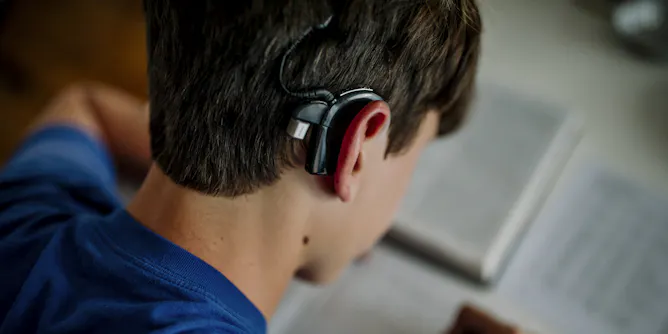
Researchers are exploring different ways to improve how cochlear implant users perceive speech and music in noisy environments.
Articles on Cochlear implant
Displaying all articles
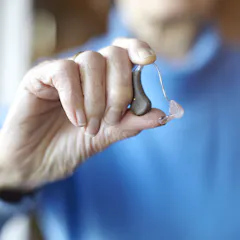
They are easy to get, and far less costly than prescription hearing aids. But over-the-counter devices are not the answer for everyone with hearing issues.
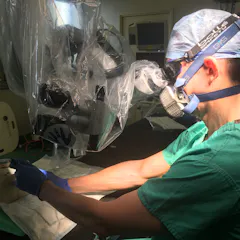
Before COVID-19, if you told me that I’d need to construct a tent in which to operate this year, whilst wearing spoggles and a respirator mask, I would not have believed you.

Teaching deaf babies sign language improves the success of cochlear implants – and also safeguards their long-term physical and mental health.

Audiologists recommend enhanced communication strategies in the time of coronavirus to help the nearly 60 million Americans living with hearing loss in one or both ears.

Hearing-impaired listeners often struggle to locate the source of sounds - haptic technology could change that.

People with auditory implants often experience music as horrible buzzes and beeps. New research may be able to help.
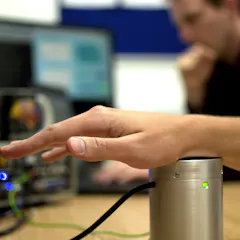
People who depend on auditory implants to hear struggle to understand speech in noisy places. A new device could change that.

We can either take advantage of advances in technology to enhance human beings (never to go back), or we can legislate to prevent this from happening.
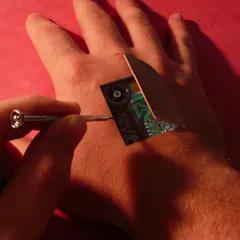
At the nexus of medical science, engineering, computer science and 3D printing is the biofabricator, a new career for the 21st century.
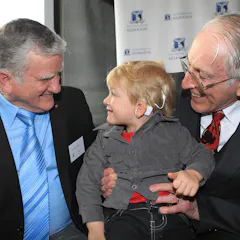
The creator of the cochlear implant - a revolutionary device that enables people born or made deaf through disease or trauma to hear and recognise speech - has won a top international award in clinical…
Top contributors
-

Post-Graduate Researcher in Tactile Neuroscience, University of Southampton
-
Research Fellow in Auditory Neuroscience, University of Southampton
-
Laureate Professor Emeritus University of Melbourne & Distinguished Professor at NICTA, The University of Melbourne
-
William Gibson Chair of Otolaryngology, The University of Melbourne
-
Executive Director of the ARC Centre of Excellence for Electromaterials Science and Director of the Intelligent Polymer Research Institute, University of Wollongong
-
Ph.D. Candidate in Speech and Hearing Science, Arizona State University
-
Professor of Deaf Education, University of Tennessee
-
District School Administrator and PhD Student in Deaf Education, University of Tennessee
-
Postdoctoral Researcher of Language and Literacy, University of Tennessee
-
Professor of Otology and Neurotology, University of Virginia
-
Associate Professor in Speech, Language, and Hearing Sciences, James S. and Dyan Pignatelli Clinical Chair in Audiologic Rehabilitation for Adults, University of Arizona
-
Professor of Music, University of Cambridge
-
Professor of Otology and Consultant ENT Surgeon, University of Nottingham
-
VC Postdoctoral Fellow, RMIT University