

Every dollar invested in hearing care returns about $16. So why are 98% of Africans who need a hearing aid still going without one?
Articles on Hearing aids
Displaying 1 - 20 of 22 articles

Many Australians experience hearing loss but hesitate to seek help. So what are the options if you need help with your hearing?
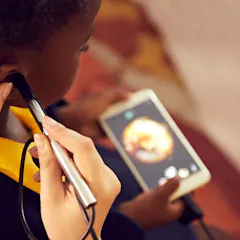
There is only one audiologist for every million people in Africa. Pioneering digital devices help close the gap.
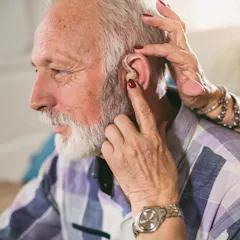
This is both a result of social inequality, and an issue that could widen disparities further.
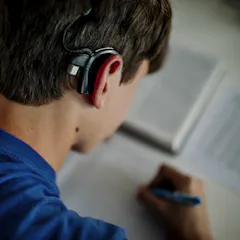
Researchers are exploring different ways to improve how cochlear implant users perceive speech and music in noisy environments.

Some commercial wireless earphones could work as basic hearing aids, a new study claims.

They are cheaper to buy and don’t require a doctor’s prescription. But OTC hearing aids come with some limitations.
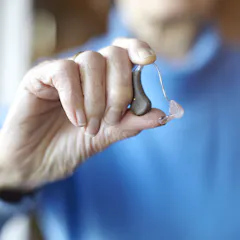
They are easy to get, and far less costly than prescription hearing aids. But over-the-counter devices are not the answer for everyone with hearing issues.

OTC hearing aids promise to increase the accessibility and affordability of the devices for millions of adults who live with untreated mild to moderate hearing loss.
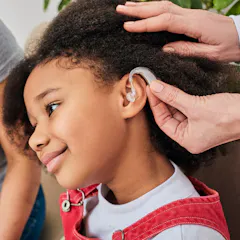
We have underestimated the energy potential of our ears: deformations in the ear canal could be used to power in-ear technologies.
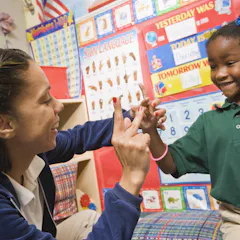
Schools and universities are embracing and promoting the use and teaching of South African Sign Language but more still needs to be done.
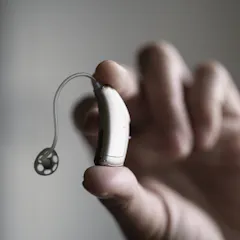
Only 3.7% of people in the U.S. with hearing difficulty own hearing aids. Thanks to a federal law in progress of being implemented, OTC hearing aids may help bridge the gap.

Audiologists recommend enhanced communication strategies in the time of coronavirus to help the nearly 60 million Americans living with hearing loss in one or both ears.

Each device is complex in its own right, and trying to use them together in many different settings makes things even more complicated.

South African universities aren’t catering to students with hearing problems. Here’s what can be done.
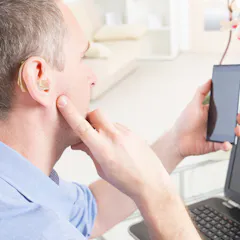
A new study finds it’s possible to train the brain to better distinguish between speech and background noise.
From cheap prosthetic arms for landmine victims in Sudan to the promise of surgery on astronauts in space — 3D printing is sparking a healthcare revolution.

Studying the way insects hear and make their own sounds is inspiring new hearing technology.
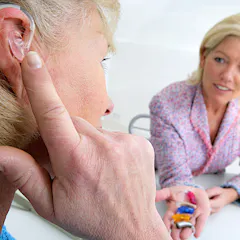
Audiology services are government registered for many – such as for children up to the age of 26 and veterans. But many fall through the cracks and rely on the self-regulation of the industry.
Adding a camera that can work out where sound is coming from could make hearing aids smarter.
Top contributors
-

Head AAT & EdTech, UCL
-
Professor of Audiology, University of Pittsburgh
-
Associate Professor of Pharmacy and Therapeutics, University of Pittsburgh
-
Professor in Audiology in the Department of Speech-Language Pathology and Audiology, University of Pretoria
-
Ph.D. student in Speech and Hearing Bioscience and Technology, Harvard University
-
Professorial Research Fellow, Audiology and Speech Pathology, The University of Melbourne
-
Ewing Professor of Audiology, University of Manchester
-
Chair Professor in Computing, Edinburgh Napier University
-
Ph.D. Candidate in Speech and Hearing Science, Arizona State University
-
SUNY Distinguished Professor of Architecture, University at Buffalo
-
Senior Research Associate, University of Bristol
-
Associate Professor, Department of Economics, Macquarie University
-
Postdoctoral research fellow, University of Sydney
-
Professor, School of Health and Rehabilitation Sciences, The University of Queensland
-
Professor of Otology and Neurotology, University of Virginia