
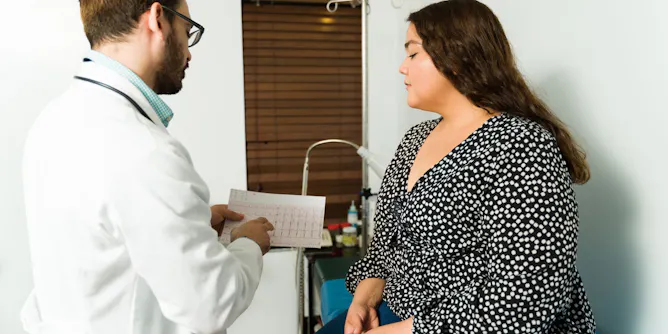
Canada has quietly become an unexpected leader in global obesity care guidelines, but care at home — where one in four adults now lives with obesity — remains slow and uneven.
Articles on Health care system
Displaying all articles

Home care is essential to Ontario’s health- care system, but its failures are offloaded onto underpaid personal support workers — mostly racialized immigrant women —who often work in unsafe conditions.

An estimated 8% of US doctors had joined a union in 2024, up from 5.7% a decade earlier.
Many of the preventable pregnancy-related deaths documented by the CDC are directly attributable to failures and barriers in the maternal care system.

Health Minister Mark Butler warns COVID wave will worsen
Michelle Grattan speaks with Health Minister Mark Butler about Australia's new COVID crisis and striking a new response
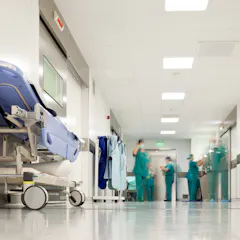
Patient safety incidents were already a leading cause of death in Canada. With that crisis converging with the demands of the COVID-19 pandemic, health care is being pushed to a breaking point.
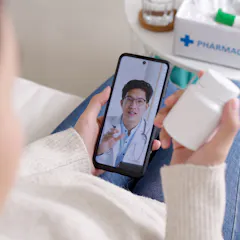
Given the success of telehealth and virtual care during the pandemic, it would be a mistake to automatically return to pre-pandemic norms of health care.

Palliative care is about living well and meeting patients’ goals, but referral can be more complex than access to medical assistance in dying (MAID). Palliative care should be as accessible as MAID.
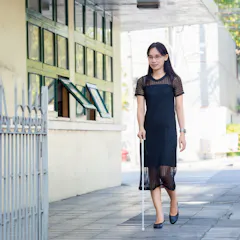
Our health-care system is fraught with paternalistic attitudes toward the capabilities of people with disabilities. Capacity assessments raise important issues about consent, autonomy and agency.
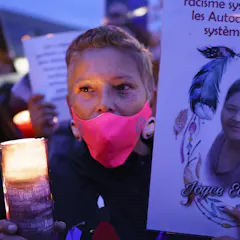
Joyce’s Principle seeks to shift the way health services are provided to Indigenous communities and ensure they are free of discrimination.

COVID-19 has shown the flaws of a reactive health-care system designed to care for people who are already sick. A preventive approach would be more equitable, less expensive and keep us healthier.

As the US prepares to reopen from weeks of social distancing, it’s worth noting what other countries are doing.
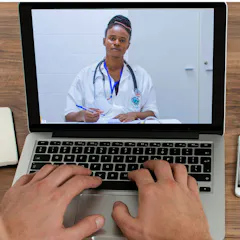
Telemedicine has grown sluggishly in Canada, but COVID-19 has sped up the pace of adoption of online technology to deliver health care.
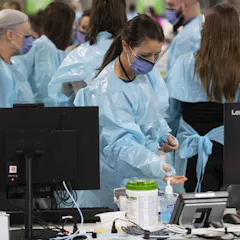
As response to COVID-19 moves from a learning phase to an operational phase, lessons from the 2009 H1N1 pandemic can inform Canada’s action plan.
Best-case estimates suggest 40 million American adults may come down with COVID-19. But an epidemiologist explains why now is not the time to just give up.

In Canada, regulation of professions usually falls under provincial jurisdiction, but there may be feasible models for a national licence for health-care professionals.
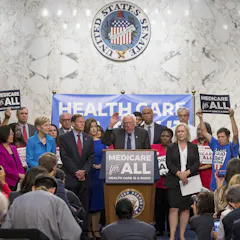
There’s a very simple way to give Medicare to all: delete six words from the legislation that created the program in 1965.

Ever more Americans are using digital cameras to keep an eye on elderly relatives who live in nursing homes. This surveillance may violate patients’ privacy and demoralize their caretakers.

Every year, thousands of medical devices and drugs are recalled in the US. But the decision to recall a flawed product is often left up to the manufacturer.

Setting up 24 hour clinics in a busy metropole such as Johannesburg would help those who need health care most.
Top contributors
-

Assistant Professor, Department of Information Science, Cornell University
-
Director, Public Health Program and Associate Professor of Integrative Physiology, University of Colorado Boulder
-
Associate Professor of Sociology, Toronto Metropolitan University
-
Professor of Public Health and DST/NRF Research Chair., University of the Witwatersrand
-
Professeure agrégée, Département de médecine familiale et de médecine d'urgence, Chercheuse à VITAM, centre de recherche en santé durable, Université Laval
-
Professor of Health Sciences, Simon Fraser University
-
PhD Candidate, Health Innovation (Medicine, Health and Human Sciences), Macquarie University
-
Associate Professor, Political Science, University of Northern British Columbia
-
Professorial Fellow, University of Canberra
-
Professor, Global Health Management and Policy and Political Science, University of Michigan
-
Family physician, Journalism Alumni Dalla Lana School of Public Health, inderveer.mahal@gmail.com, University of Toronto
-
Doctoral candidate, public health, University of Michigan
-
PHD Student, Health and Rehabilitation Sciences, Western University
-
Clinical Assistant Professor, Department of Family Medicine, Faculty of Health Sciences, McMaster University
-
Assistant Professor, School of Social Work, University of Washington