

Sophisticated fake social media personas created by North Korean hackers offered to collaborate with cybersecurity researchers. Several US researchers fell for it.
Articles on Hackers
Displaying 61 - 80 of 145 articles

To anticipate and protect themselves against the rise in cyberattacks, organizations need to consider new vulnerabilities that emerge when employees work from home.

The outdated Microsoft operating system was recently dumped online in a huge leak. Hackers can now scour it for bugs to exploit.

Russian interference deeply marked the 2016 American presidential election. Four years later, let’s analyze the form and impact of disinformation coming from Russia.
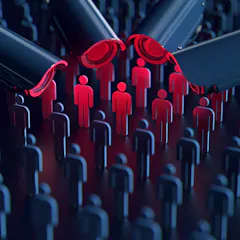
Australia’s new voluntary code of practice to make IoT devices more secure may expose consumers to greater risks.
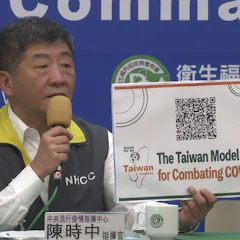
Taiwan has a population of over 20 million people and no new cases of coronavirus since mid-April. Embracing ‘digital democracy’ and ‘hacktivism’ have been the keys to their success.
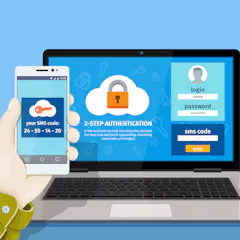
Two-factor authentication is certainly an added layer of security as we traverse the online world. But it comes in various forms, and they’re not all equally protective.

DIY labs have disrupted industries from alcohol to pharmaceuticals. During the coronavirus pandemic, curious people have more opportunities to innovate from home.

Legislation expected to be put to Parliament later this year may very well fall short due to COVID-19’s budget impacts. But until we strengthen our cyber defences, we’re all at risk.
A social media researcher explains how bots and sock puppet accounts manipulate and polarize public debate.

Australia is coming under sustained cyber attack by a ‘state-based’ actor, says Prime Minister Scott Morrison, as hackers try to exploit vulnerabilities in business and government software systems.
Vulnerable websites are popping up as organizations move online during the coronavirus pandemic – and hackers have more time at home alone. The result is more websites falling victim to defacement.
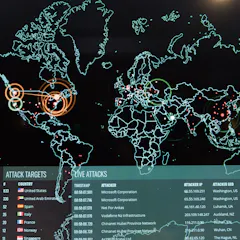
In the murky world of cyber espionage and cyber warfare, effective deterrence has long been considered out of reach. A government report argues it’s time to change that.

Instead of going after large corporate networks, which often have multiple defenses, cybercriminals can now simply target people’s home networks.

SpaceX and other companies are rushing to put thousands of small, inexpensive satellites in orbit, but pressure to keep costs low and a lack of regulation leave those satellites vulnerable to hackers.
A recent leakware attack targeting Johannesburg was the second of its kind ever recorded. Hackers demanded A$52,663 worth of bitcoins, in return for not releasing senstivie civilian information.

A major cyber attack on a data lake could have immense consequences for any of us. And the damage could be felt anywhere from banking to the healthcare sector.

The worst-case scenario is that hackers still have access to the university systems via a backdoor and are siphoning off critical data as it emerges.

States like California have been at the forefront of privacy innovation in recent decades. A possible federal law could bring their experimentation to a halt, harming consumers.
Society needs cybersecurity professionals who can protect systems and mitigate damage.
Top contributors
-

Teaching Professor of Computer Science and Electrical Engineering, and Associate Director, UMBC Cybersecurity Institute, University of Maryland, Baltimore County
-
Adjunct Senior Lecturer, Applied Ethics and CyberSecurity, Griffith University
-
Professor of Cybersecurity, School of Computing and Information Systems, The University of Melbourne
-
Senior Lecturer in Networking, The Open University
-
Director of UWA Centre for Software Practice, The University of Western Australia
-
Associate Professor of Information and Operations Management, Texas A&M University
-
Assistant Professor of Global Security, American University School of International Service
-
Lecturer in Intelligence and Security, Edith Cowan University
-
Professor of Cyber Security Practice, Edith Cowan University
-
Adjunct Lecturer, Charles Sturt University
-
Professor of Criminology, University of Leeds
-
Adjunct Instructor in Cybersecurity, Johns Hopkins University
-
Associate professor, Charles Sturt University
-
Assistant Professor of Sociology, Old Dominion University
-
Professor of Business Law and Ethics, Indiana University