
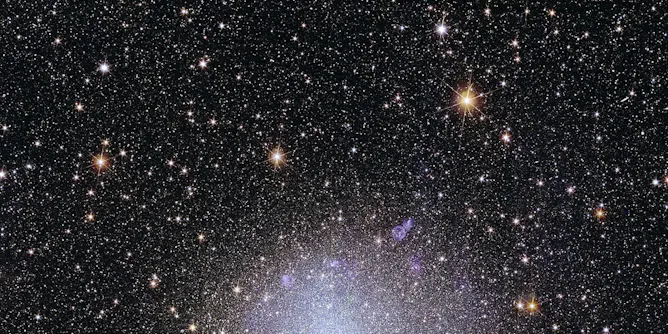
The fictional biologist in ‘Project Hail Mary’ claims that potential alien organisms might not be made of carbon or require water, unlike life on Earth.
Articles on Habitable planets
Displaying all articles
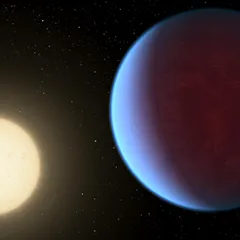
Searching for life on other planets requires more than just measuring their distances from their stars. A future NASA telescope may help search for potentially habitable worlds.
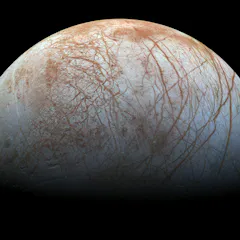
As NASA rolls out more powerful telescopes in the future, scientists will need a way to determine where to point them. A new approach could help.
Scientists analyzing isotope ratios have found that many of the elements that make up life could be left over from Earth’s formation.
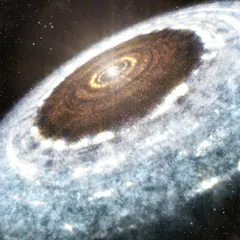
Astronomers have long known where water is first formed in the universe and how it ends up on planets, asteroids and comets. A recent discovery has finally answered what happens in between.
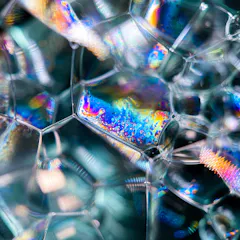
Some physicists think we live in a multiverse, surrounded by universes not quite like our own. What does that mean for life?
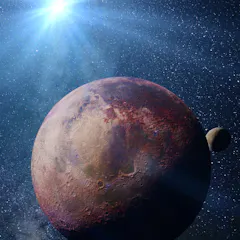
Billions of galaxies are in the universe, with billions of stars in every galaxy. Could billions of planets be out there too?
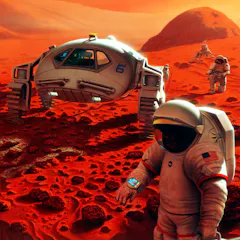
NASA’s InSight Mars lander touches down Nov. 26, part of a careful robotic approach to exploring the red planet. But human exploration of Mars will inevitably introduce Earth life. Are you OK with that?
Nearly 50 years since the first man walked on the moon, our morals are still stranded on Earth.
When NASA first started planning the Kepler mission, no one knew if the universe held any planets outside our solar system. Thousands of exoplanets later, the search enters a new phase as Kepler retires.
Aliens are highly likely to undergo natural selection, shows new research.
Planetary protection protocols try to make sure we don’t seed places like Mars with life from our planet. An astrobiologist argues they’re misguided – especially with human astronauts on the horizon.
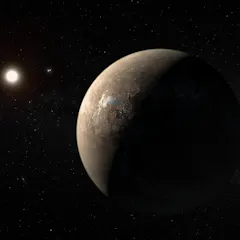
You may even be able to find other planets around the star closest to our solar system.
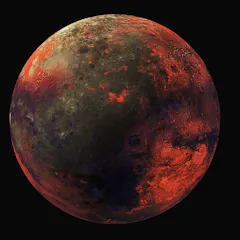
The planet is more similar to Earth than any other – except when it comes to supporting life.
Top contributors
-

Space Plasma Physicist, Imperial College London
-
Professor of Astronomy, Vanderbilt University
-
Senior Lecturer in Philosophy, University of St Andrews
-
PhD in Evolutionary Biology, University of Oxford
-
Senior Lecturer in Earth Sciences and Environmental Sciences & the Center for Exoplanet Science, University of St Andrews
-
Research Scientist at Centro de Astrobiología, Spain, and Visiting Scientist in Astronomy, Cornell University
-
Professor of Earth, Planetary, and Space Sciences, University of California, Los Angeles
-
Professor of Planetary Science, University of Science and Technology of China
-
Scientist, National Radio Astronomy Observatory
-
Associate Professor of Earth and Planetary Sciences, University of Tennessee
-
Professor of Astrophysics, University of Sydney
-
Assistant Professor of Physics and Astronomy, University of Nevada, Las Vegas
-
Associate Dean for Research and Professor of Astronomy and Planetary Sciences, University of Arizona
-
Ph.D. Candidate in Earth, Environmental and Planetary Sciences, Rice University
-
University Distinguished Professor of Astronomy, University of Arizona