
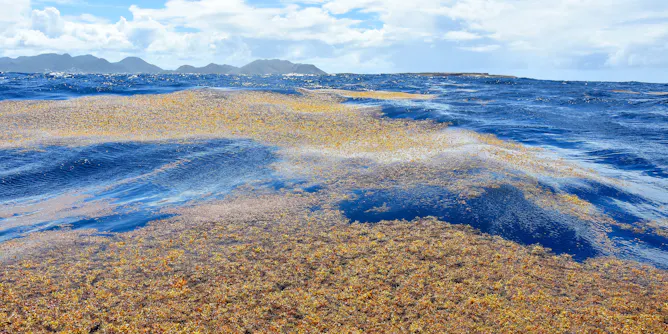
Huge blooms of brown seaweed have fouled Florida and Caribbean beaches almost every year over the past decade. They originate in Africa and South America. and are fueled by human activities.
Articles on Gulf of Mexico
Displaying 21 - 34 of 34 articles
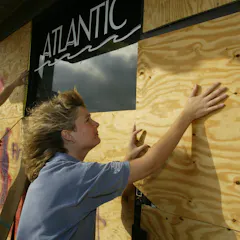
New Orleans has about a 40% chance of getting hit by a tropical storm in any given year. Here’s how heat, winds and the shape of the seafloor raise the hurricane damage risk.

In the design of marine protected areas, new research suggests that it might be better to start small in order to gain local trust and support that leads to larger long-term benefits.

New research shows that one-third of yearly nitrogen runoff from Midwest farms to the Gulf of Mexico occurs during a few heavy rainstorms. New fertilizing schedules could reduce nitrogen pollution.
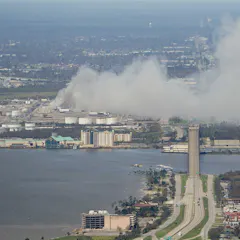
A storm-driven chlorine gas release in a vulnerable community is the type of worst-case scenario that scientists and engineers have warned about for decades.
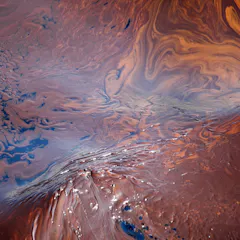
The Deepwater Horizon disaster set new records for holding polluters to account. But it had much less impact on laws regulating offshore drilling or US oil dependence.
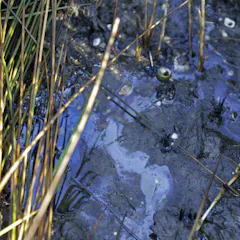
The 2010 Deepwater Horizon spill caused widespread damage in the Gulf of Mexico, but some parts of this complex ecosystem fared better than others.
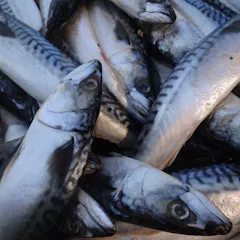
The Deepwater Horizon oil disaster catalyzed a decade of research on oil contamination in the Gulf of Mexico, from surface waters to the seabed, with surprising findings.
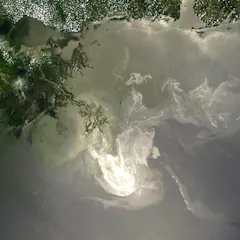
The BP Deepwater Horizon blowout on April 20, 2010 triggered the largest offshore oil spill in history. Ten years later, post-spill reforms are being undone and the Gulf of Mexico remains vulnerable.

Scientists are predicting major algae blooms in Lake Erie and large dead zones in the Chesapeake Bay and Gulf of Mexico this summer. Nutrient pollution from industrial corn farming is a major driver.
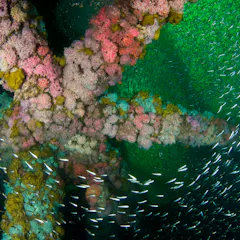
Californians love their coast and strongly oppose offshore drilling. Will they support converting old oil rigs to artificial reefs – a policy that benefits both marine life and oil companies?
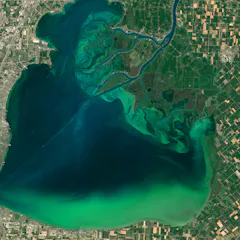
Scientists have mapped a huge dead zone in the Gulf of Oman, without enough oxygen in the water to support life. This Speed Read explains why dead zones form in waters around the world.
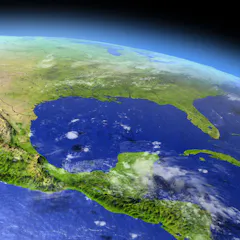
Oxygen-free areas will continue to grow until we stop pumping excess nutrients into the oceans.

Nitrogen and phosphorus are polluting US waters, creating algae blooms and dead zones. New research confirms that voluntary steps are failing in the Gulf of Mexico and unlikely to work in Lake Erie.
Top contributors
-

Professor Emeritus of Environment and Sustainability, University of Michigan
-
Adjunct professor, Flagler College
-
Associate Extension Professor in Marine Fisheries Ecology, Mississippi State University
-
Associate Professor of Geography, University of Wisconsin-Stout Polytechnic
-
Professor of Coastal Science, Florida International University
-
Professor of Marine Science, University of Maryland Center for Environmental Science
-
André Hoffmann Fellow, Stanford University
-
Assistant Professor of Ecology, Evolution and Organismal Biology, Iowa State University
-
Associate Professor of Marine Science, University of North Carolina at Chapel Hill
-
Associate Professor of Atmospheric Science, Texas A&M University
-
Assistant Director, C-IMAGE Consortium, University of South Florida
-
Associate Professor of Meteorology, Penn State
-
Visiting Researcher, Marine Science institute, University of California, Santa Barbara
-
Associate Professor of Petroleum and Geosystems Engineering, The University of Texas at Austin
-
Postdoctoral Research Fellow of Social, Behavioral, and Economic Sciences, University of California, Santa Barbara