

Without a clear picture of the actual drivers affecting food prices, we lack the necessary information for developing policies that protect the rights and well-being of Canadians.
Articles on Groceries
Displaying 21 - 40 of 60 articles

Many food and beverage companies are not doing enough to positively shape diets in Canada, while positive examples show that public health commitments are achievable.

Consumer psychology can help explain why boycotts sometimes fail, as well as help predict when they are likely to succeed.

Although it’s rooted in legitimate grievances, the ‘Steal from Loblaws Day’ campaign is not only illegal, but also fails to achieve its intended objective and risks undermining economic stability.

New research suggests educators can play a crucial role in changing attitudes and actions about food waste and equip future marketing professionals with the tools to tackle sustainability challenges.

Parents told us how the ever-present juggle of budgets and the realities of family life strained relationships and increased their mental load.

Ingredients, manufacturing, transportation and marketing factor into higher prices for allergen-free products.

The hidden side of the supermarket giants’ quest for profits is an increasingly elaborate system for monitoring and managing shoppers and workers.

Two important inflation indicators are trending in different directions. What gives?

If history had taken another path, bar codes would look dramatically different today.

The cost of feeding a table full of people may be too much for the average Canadian to bear this holiday season.

The food theft crisis is framed as a threat to paying customers. This furthers the divide between those who can still afford groceries and those who cannot.

The share of low-income US families who sometimes or often didn’t have enough food to eat fell from 24.5% to 22.5% between late April and late July of 2020, a research team found.

Once a cornerstone for many food retailers, brand loyalty is eroding as consumers prioritize cost savings over long-term brand relationships.

New research about the Nutrition North Canada program shows that the subsidy is not being fully passed on to consumers.

Why is the $50 million going to the government and not to those who overpaid for bread? The answer is complicated.
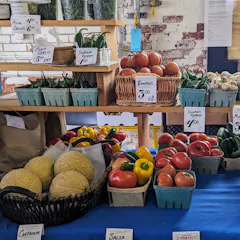
Many people are experiencing the sticker shock of higher prices at grocery stores. But the amount we pay for food often does not reflect the real social, environmental and human costs of production.

A team of economists looked at what happened after Supplemental Nutrition Assistance Program work requirements were reinstated in Virginia in 2013.

Coronation Quiche may be fit for a king. But with a few tweaks, can be made to suit your budget. Hint: store-bought pastry is cheaper.

Initiatives like the federal government’s new grocery rebate are only a small step towards ending food insecurity in Canada. A broader guaranteed basic income is long overdue.
Top contributors
-

PhD Candidate, ARC Centre of Excellence for Automated Decision-Making and Society, RMIT University
-
Assistant Professor, Food Security and Sustainable Agriculture, Dalhousie University
-
Associate Dean, School of Business and Law, Edith Cowan University
-
Professor of Community Health and Wellbeing, The University of Queensland
-
Assistant Professor, Faculty of Business, University of New Brunswick
-
Accredited Practising Dietitian and Lecturer, Southern Cross University
-
Director, Agri-Food Analytics Lab, Professor in Food Distribution and Policy, Dalhousie University
-
Professor of Law, University of Richmond
-
Professor, Department of Anthropology, Economics, and Political Science, MacEwan University
-
Professor of Nutritional Sciences, University of Toronto
-
Assistant Professor of Supply Chain and Health Sciences, Northeastern University
-
Associate Professor of History and Environmental Studies, University of Wisconsin, Eau Claire
-
Senior Research Fellow, BehaviourWorks Australia, Monash University
-
Associate Professor, Department of Anthropology, University of Toronto
-
Associate Professor of Sociology, North Carolina State University