
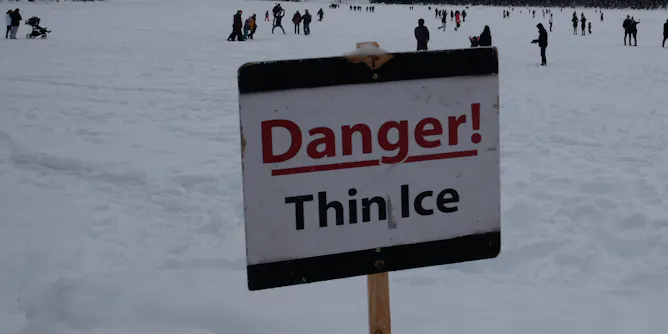
Lakes in the northern hemisphere are rapidly losing their ice cover due to rising greenhouse gas emissions. The only way to preserve lake ice is to limit GHG emissions and slow down climate change.
Articles on Great Lakes
Displaying 41 - 60 of 64 articles
Shoreline communities are already faltering under the weight of billions of dollars in damages — and worrying that climate change will continue to make things even worse.
Some of the worst risks of earthquakes are in a zone running from the Great Lakes to the St. Lawrence River that includes major cities like Toronto, Ottawa and Québec City.
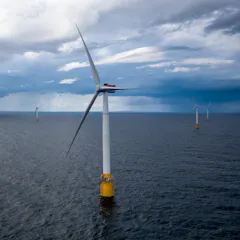
Some of the most powerful offshore wind is over water too deep for a standard wind turbine. Engineers found a way around the problem.
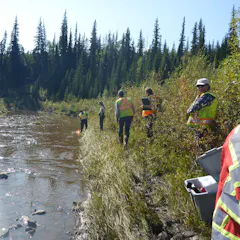
In Canada, watersheds are vast and often inaccessible, making it difficult to monitor the health of these ecosystems. A new tool helps communities collect data to assess the state of Canada’s rivers.
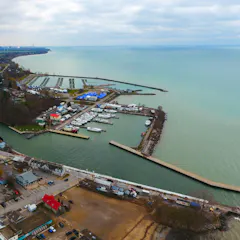
Working waterfronts are a key link between consumers and seafood, but are increasingly threatened by developers. Policies need to ensure that waterfronts remain accessible to seafood harvesters.

A networked array of sensors could warn drinking water utilities in real time of harmful algal blooms and prevent public health crises.

When sea lampreys gained a foothold in the Great Lakes in the 1950s, these trout-sucking predators upended the ecosystem.
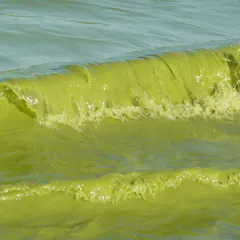
Warmer waters, heavier storms and nutrient pollution are a triple threat to Great Lakes cities’ drinking water. The solution: Cutting nutrient releases and installing systems to filter runoff.

Climate change is making extreme weather events, both hot and cold, more frequent across the Great Lakes region. Weatherizing low-income residents’ homes is an important way to prepare.
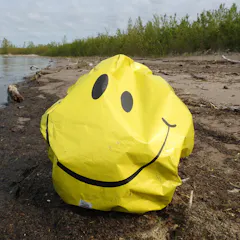
Releasing balloons at weddings and other celebrations is festive, until they break into pieces and become plastic pollution. A citizen science project is spotlighting the problem.
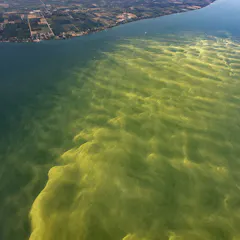
The Great Lakes contain reservoirs of legacy contaminants, mostly in their sediments, that are vulnerable to resuspension.
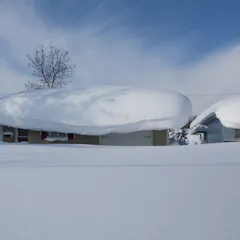
As climate change intensifies, much of the nation’s building stock will need upgrading to strengthen it against flooding, snowstorms and other weather hazards.

All the Great Lakes are at, or close to, record highs. But it is us, not the water, that needs to move out of the way.
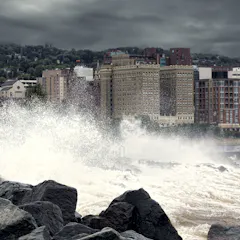
Over the past 20 years, Great Lakes water levels have gone from sustained multiyear lows to multiyear highs. Climate change is accelerating the transition between dry phases and wet phases.
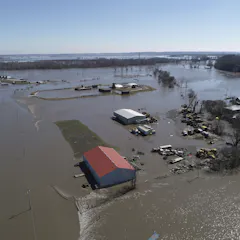
A climatologist who studies precipitation trends explains how climate change is projected to make flooding events in the Midwest more severe and more frequent.

Rwanda is a paradox – a ‘development miracle’ and an authoritarian state.
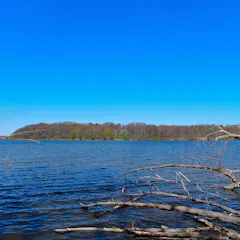
It’s cheaper to prevent biological invasions than to react after they happen. But it’s hard to detect invaders while there are still just a few of them. Knowing when and where to look can help.

A big spill in Michigan’s Straits of Mackinac could have devastating consequences. But does replacing the pipeline running beneath it make sense in a warming world?
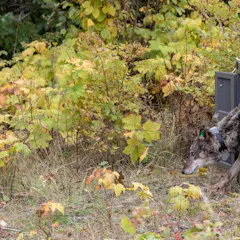
The National Park Service is moving wolves to Isle Royale in Lake Superior to replenish a small pack on the island. Wolves prey on moose, which are overgrazing the island. It doesn’t hurt that they are charismatic.
Top contributors
-

Professor of Practice & Engagement, School for Environment & Sustainability; Director of the University of Michigan Water Center, University of Michigan
-
Director and Professor, Great Lakes Institute for Environmental Research, University of Windsor
-
Chair of the Department of Science, Technology, and Society, Rochester Institute of Technology
-
Knowledge Mobilization Specialist, Water Institute, University of Waterloo
-
Associate Professor of Environment and Sustainability, Western Michigan University
-
Professor in Department of Earth and Environmental Science, and Dean of Science, University of Waterloo
-
Professor Emeritus of Climate and Space Sciences and Engineering, University of Michigan
-
Professor and Director of the Center for Water Policy, School of Freshwater Sciences, University of Wisconsin-Milwaukee
-
Research Associate Professor, Department of Earth & Environmental Sciences, University of Waterloo
-
Assistant Professor of Architecture, University at Buffalo
-
Professor and York University Research Chair in Global Change Biology; Director of the United Nations Institute for Training and Research Global Water Academy, York University, Canada
-
Professor of Biogeochemistry and Canada Excellence Research Chair Laureate in Ecohydrology, University of Waterloo
-
Visiting Scholar, Great Lakes Institute for Environmental Research, University of Windsor
-
Professor, Department of Biology & Bieler School of Environment, McGill University
-
Postdoctoral Researcher in Microbiology, University of Tennessee