
Freshwater ecosystems in Canada, and around the world, are more fragile than they look and vulnerable to invasive species. Canada’s lakes and rivers require constant vigilance to protect from invasion.
Articles on Great Lakes
Displaying 21 - 40 of 64 articles
Many wild fish in Québec have parasites. Is this necessarily a bad thing? How can we limit the proliferation and spread of specific harmful parasites?

The growing environmental and health risks posed by microplastics can only be addressed by reducing the amount of plastic produced and ensuring that all of it is recycled.

In winter 2023-24, the Great Lakes’ ice cover was near record lows, peaking at just 16%. Researchers explain how diminishing ice could have consequences for fisheries, and how species are evolving.
Mapping where water once flowed is important for managing flood risk today in Detroit and elsewhere.

Increasing awareness of the dangers ‘forever chemical’ road salts pose to our fresh water systems highlights the urgent importance of finding new approaches to de-icing our roads.
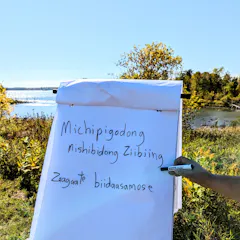
A scholar works to document a dialect of the Ojibwe language that was spoken by his grandmother in the Great Lakes region.
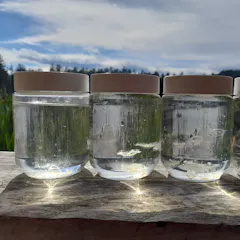
The Peach Blossom Jellyfish is an invasive species in Canada, and a lack of data is hampering efforts to control populations.

According to a new UN report, invasive species do more than US$423 billion in damage worldwide every year. Four articles explore examples, from mollusks to poisonous fish.
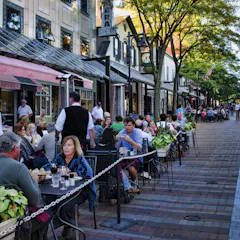
Even ‘climate havens’ face a riskier future, and infrastructure often isn’t built to handle climate change. But there are steps cities can take to prepare.
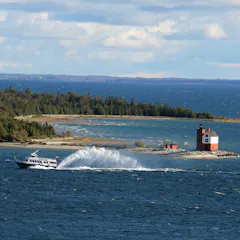
A pipeline that has carried Canadian oil and gas across Wisconsin and Michigan for 70 years has become a symbol of fossil fuel politics and a test of local regulatory power.

Canadian folk singer Gordon Lightfoot passed away on May 1. His legacy includes songs that memorialize tragic shipping disasters and the 1968 Detroit Uprising.
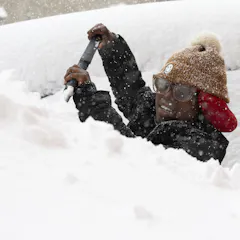
Snowstorms that sweep across the Great Lakes can dump several feet of snow on the other side. A climate scientists explains why.
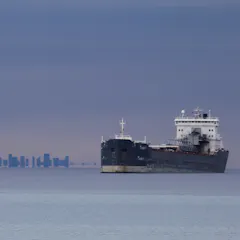
Ballast water release from ocean vessels has been a major source of invasive species in the Great Lakes for over 60 years.
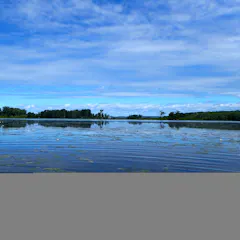
Wetlands can help limit the spread of the voracious round goby, an invasive species that has infiltrated the Great Lakes and has become widespread in the St. Lawrence River.
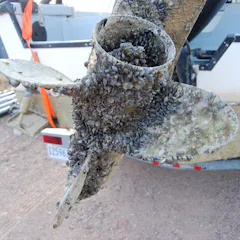
Zebra and quagga mussels entered the Great Lakes in large ships’ ballast water. Now, local boaters and anglers are spreading them into the southern and western US.
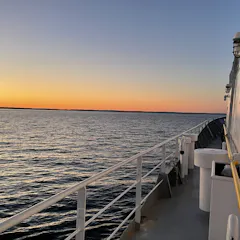
Climate change is causing the deep waters in parts of the St. Lawrence River to lose their oxygen, and it’s damaging the health of the ecosystem.
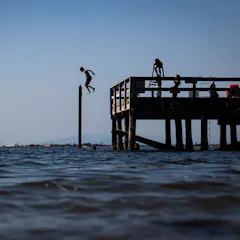
Rough surf and nearshore currents lead to about 50 drowning fatalities annually in the Great Lakes.
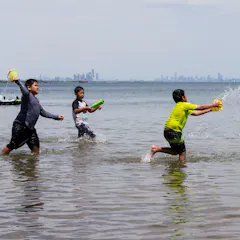
Cleaning up the Great Lakes was a big job when the US and Canada undertook it in 1972. Today it’s far more challenging.

The deal undermines every human being’s right to seek asylum and commitments enshrined in the Refugee Convention.
Top contributors
-

Professor of Practice & Engagement, School for Environment & Sustainability; Director of the University of Michigan Water Center, University of Michigan
-
Director and Professor, Great Lakes Institute for Environmental Research, University of Windsor
-
Chair of the Department of Science, Technology, and Society, Rochester Institute of Technology
-
Knowledge Mobilization Specialist, Water Institute, University of Waterloo
-
Associate Professor of Environment and Sustainability, Western Michigan University
-
Professor in Department of Earth and Environmental Science, and Dean of Science, University of Waterloo
-
Professor Emeritus of Climate and Space Sciences and Engineering, University of Michigan
-
Professor and Director of the Center for Water Policy, School of Freshwater Sciences, University of Wisconsin-Milwaukee
-
Research Associate Professor, Department of Earth & Environmental Sciences, University of Waterloo
-
Assistant Professor of Architecture, University at Buffalo
-
Professor and York University Research Chair in Global Change Biology; Director of the United Nations Institute for Training and Research Global Water Academy, York University, Canada
-
Professor of Biogeochemistry and Canada Excellence Research Chair Laureate in Ecohydrology, University of Waterloo
-
Visiting Scholar, Great Lakes Institute for Environmental Research, University of Windsor
-
Professor, Department of Biology & Bieler School of Environment, McGill University
-
Postdoctoral Researcher in Microbiology, University of Tennessee