

Australia’s economy has prospered due to open borders and international trade. It has much more to lose from disruptions.
Articles on Great Depression
Displaying 41 - 60 of 93 articles
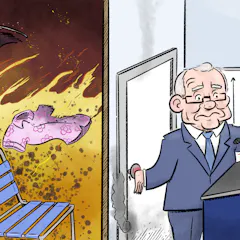
After a disastrous performance during the summer’s bushfires, Morrison has been a stronger leader on the global health crisis. But another great challenge – the economic one – is still ahead.
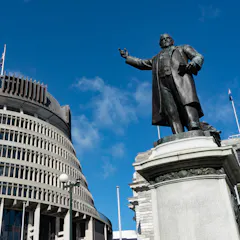
New Zealand’s 2020 budget must not only provide economic hope, it must balance the very different ideologies and aspirations of two earlier historic budgets.
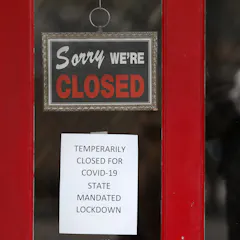
Several economists predict joblessness will eventually surpass the 25% rate experienced in 1933.
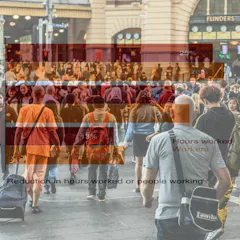
Grattan institute estimates suggest that up to 26% of the workforce – 3.4 million Australians – are likely be thrown out of work as a direct result of the shutdown.
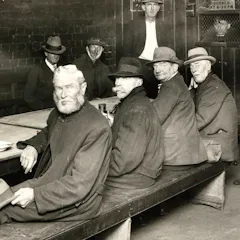
The IMF is forecasting an Australian downturn that will dwarf every one since the Great Depression.
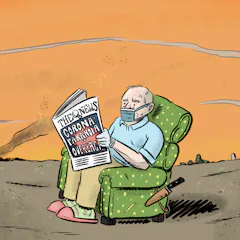
The usual pretence that right-wing commentators are on the side of their audience falls away in times of crisis. They are on the side of business - particularly their own.
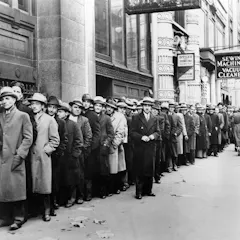
Some economists are predicting joblessness to surpass the record level experienced at the height of the Great Depression as 22 million people file for unemployment benefits.
The commitment we made to full employment after World War II ushered in decades of prosperity. The paths we chose after this war will be as important.

The ‘tough guy’ is a cultural archetype that political leaders have long adopted. But during crises, Americans tend to look for a different kind of hero.
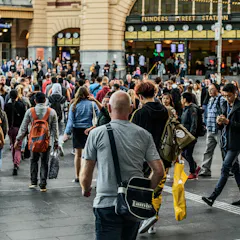
The OECD estimates have Australia less hit than most, but they are only partial and point to Australia’s worst recession on record.

In 1931, the NSW government passed landmark legislation reducing rents by 22.5% and banning evictions indefinitely. The reforms, however, were short-lived and many people ended up in tent cities.
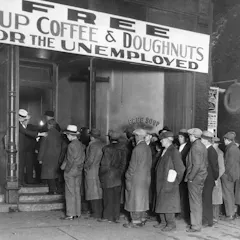
While the Great Depression reduced inequality and closed the racial wealth gap, the Great Recession of 2009 did the opposite.
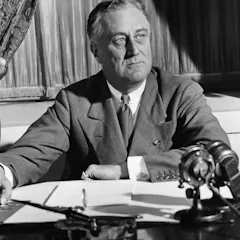
On March 12, 1933, President Roosevelt addressed the nation from the Oval Office during a time of great crisis. That ‘fireside chat’ proved broadcasting’s power as nothing before or since.
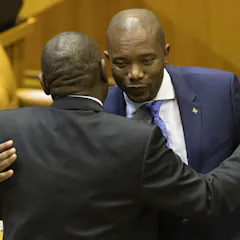
South Africa’s parliamentary system would make it difficult to achieve a fusion of parties.

Francis Townsend had a similar if less ambitious idea in the 1930s that never got through Congress but ended up making Social Security a lot more generous.
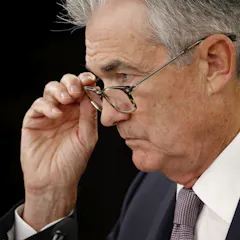
The US economy may be in worse shape than it seems.
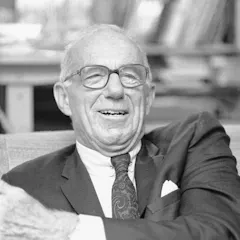
The man whose book outsold all others, except the Bible.
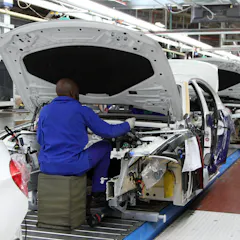
South Africa’s economic reforms of the 1990s were overdone, destroying some industries and thus impacting economic growth and job creation. A re-balancing of industrial policy is called for.
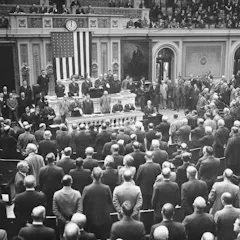
President Trump has unilaterally raised tariffs and sparked trade wars, all without consulting Congress. A century ago, the roles were reversed.
Top contributors
-

Associate Professor of Business, Boston University
-
Program Director, Housing and Economic Security, Grattan Institute
-
Professor of International Relations, Australian National University
-
Professor of International Relations, American University School of International Service
-
Associate Professor of Public Administration, West Virginia University
-
Professor of Law, St. Mary's University
-
Associate Professor of Economics, Heriot-Watt University
-
Educator and Researcher, The Partnership for African Social and Governance Research (PASGR)
-
Professor of Sociology, University of the Witwatersrand
-
Professor of Sociology, University of California, Irvine
-
Associate Professor of Art History/Visual and Cultural Studies, University of Rochester
-
Professor of Sociology, Western Connecticut State University
-
Head of Film, University of Southampton
-
Associate Professor of Political Science, Georgia State University
-
Senior Lecturer of African American Studies, University of Florida