
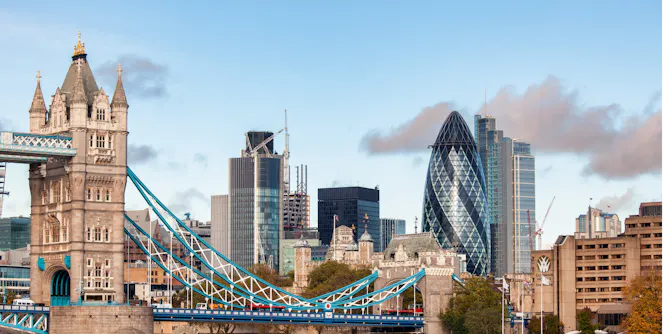
New green finance measures aside, UK chancellor Jeremy Hunt’s Edinburgh reforms look like history repeating itself.
Articles on Great Depression
Displaying 21 - 40 of 93 articles
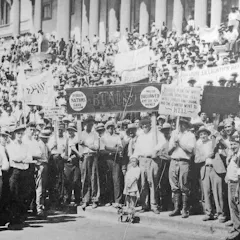
Thousands of volunteers joined the military during World War I. But when the war ended and the Great Depression began, the volunteers wanted a bonus to be paid in 1932, not in 1945 as planned.
Until Diamond and Dybvig published key papers in the early 1980s, it wasn’t well understood that perfectly healthy banks could be brought down by panicking depositors.
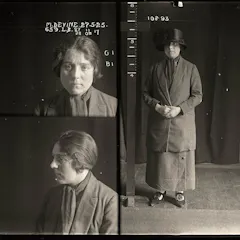
A panoramic tale and an in-depth character study, Iris immerses its readers in a world of impoverishment and struggle.

Sydney’s Domain, Melbourne’s Dudley Flats and the banks of the River Torrens in Adelaide were just a few places where communities of people experiencing homelessness sprung up in the early 1930s.
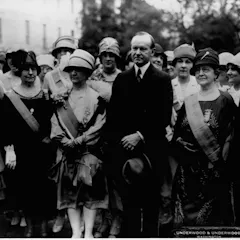
US President Calvin Coolidge hasn’t gone down in history for his triumphs or failures as president during the 1920s – but his dry sense of humor carries on.
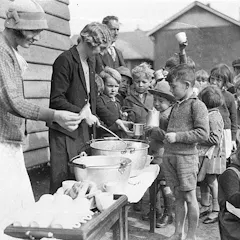
Joan Beaumont’s latest book offers a deeply conservative reading of a pivotal moment in Australian history.
A bipartisan group of senators proposed the gas tax should be indexed to inflation to help pay for new infrastructure spending, an approach Biden calls ‘regressive.’
The story of how money injections became the go-to policy for tackling economic crises.
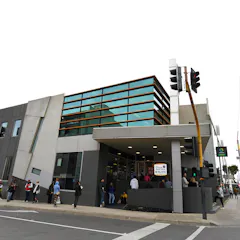
Australia has a long history of making unemployment support contingent on the idea of “deservedness”. JobSeeker rules are an extension of that.
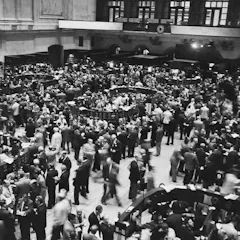
Market prices are supposed to reflect a company’s fundamental value. When they no longer do, bad things can happen.

What might the past offer us at this moment, and how will future generations reflect on this year? How will this present become the future’s past?
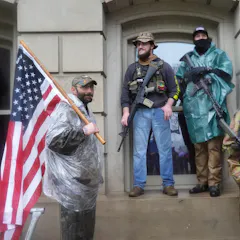
Everyone’s saying it: ‘Democracy is fragile’ in the United States. But a political science scholar says that has always been the case.

The US faces many of the same problems Germans faced after World War II: how to reject, punish and delegitimize the enemies of democracy. There are lessons in how Germany handled that challenge.
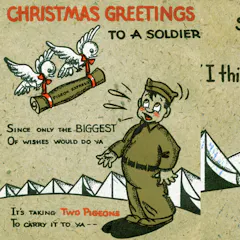
A professor of comedy examines holiday cards in times of struggles. They aren’t all sad.
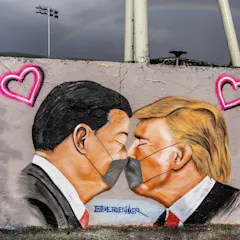
History shows what moments of great political and economic uncertainty mean for tensions between military rivals.
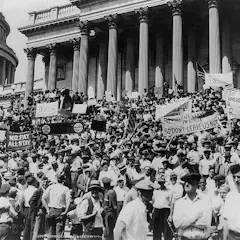
Marches, demonstrations, civic unrest, attacks by law enforcement and the military on protesting civilians: The parallels between the summer of 1932 and what is happening currently are striking.

A law to fast-track development consents is being fast-tracked itself. Before it’s too late, politicians should insist on greater protection against long-term environmental damage.

The four-day work week is an idea that should make it through the pandemic’s open policy window.

You’ve heard of compulsory purchase orders for houses, but few realise it has sometimes happened with the world’s favourite precious metal.
Top contributors
-

Associate Professor of Business, Boston University
-
Program Director, Housing and Economic Security, Grattan Institute
-
Professor of International Relations, Australian National University
-
Professor of International Relations, American University School of International Service
-
Associate Professor of Public Administration, West Virginia University
-
Professor of Law, St. Mary's University
-
Associate Professor of Economics, Heriot-Watt University
-
Educator and Researcher, The Partnership for African Social and Governance Research (PASGR)
-
Professor of Sociology, University of the Witwatersrand
-
Professor of Sociology, University of California, Irvine
-
Associate Professor of Art History/Visual and Cultural Studies, University of Rochester
-
Professor of Sociology, Western Connecticut State University
-
Head of Film, University of Southampton
-
Associate Professor of Political Science, Georgia State University
-
Senior Lecturer of African American Studies, University of Florida