

Lawmakers reach a deal on national labeling rules for foods that contain GMOs, but if passed, it won’t give consumers what research has shown consumers want.
Articles on GMO
Displaying 21 - 40 of 51 articles
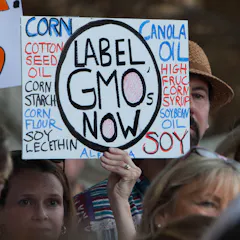
The Senate has just reached an agreement for a national system to label foods with genetically modified ingredients. What do consumers actually want from GM food labeling?
Science and technology has always helped us feed the world. GM has more to offer, if we let it.
Genetically modified animals can help to feed the world’s burgeoning population, but there is still a lot of misinformation concerning its safety.
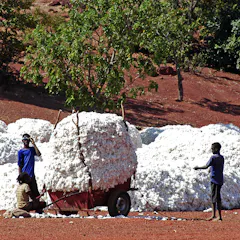
Burkina Faso, one of the largest GM cotton producers in the world, has begun a phase out of all Bt cotton production.

The upcoming TTIP trade agreement could force EU to liberalise GM regulations such as labelling.

Adding a single wheat gene helps the American chestnut withstand a fungal pathogen that nearly wiped these hardwood trees out of the eastern forests they once dominated.
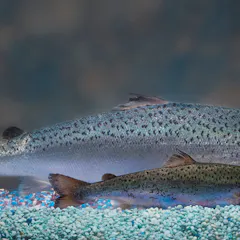
The US food authority may have approved GM salmon for our consumption, but it may take time before any appear in our stores.
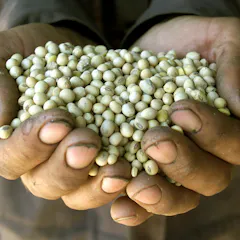
Scientists are developing GM crops that don’t need pesticides and other chemicals to help them grow. Isn’t that what organic farmers want too?

New research suggests how we could prevent genetically modified organisms from surviving - and potentially spreading - in the wild.

The solutions presented by GM crops are rarely tested against the other options. Take a look at our philosophy of farming and it all starts to make sense.

Why are half of European Union members opting out of GMO crops? Hint: it’s not about food and environmental safety.

Since the heyday of retail bans on products containing genetically modified ingredients 15 years ago, the tide has been heading in the other direction.

The GM debate in the developing world encompasses countries with very different priorities. Through the shrill battle of interests, the real agents for change tend to be overlooked.
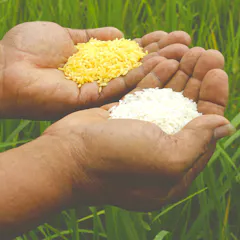
Over 20 years since GM crops reached the public consciousness, the industry has struggled to get off the ground. Had it played a better hand, it could all have been very different.

What explains the huge gap between US and European consumers on GMO foods? A short history helps explain.

New EU rules on GM attempt to unblock logjam that has hung over the technology in the region for most of this century. To work, anti-GM member states and Big Biotech will need to cooperate.

Some activists use open records requests to bully researchers – distracting them from their actual work and silencing others who don’t want to draw attention.
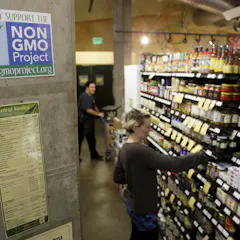
Statewide survey in Vermont finds GM food labels don’t scare consumers or indicate an inferior product. In some cases, labels built trust in the technology.
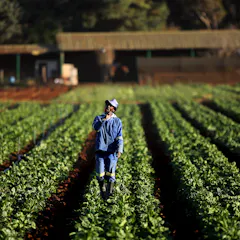
Only a few African countries are using genetically modified organisms for their crops.
Top contributors
-

Professor and Chair Community Development and Applied Economics, University of Vermont
-
Lecturer in Law, Queen's University Belfast
-
Professor of Ocean Leadership, University of Tromsø
-
Senior Lecturer in Food Biotechnology and Microbiology, Agriculture and Food Systems, The University of Melbourne
-
Professor; Dean, Melbourne School of Land and Environment, The University of Melbourne
-
Assistant professor, Louisiana State University
-
Assistant Professor of Science and Risk Communication, Washington State University
-
Professor in Plant Molecular Genetics, The University of Queensland
-
Ph.D. student, Learning Planet Institute (LPI)
-
Associate Professor, International Studies Department, University of San Francisco
-
Special Assistant for Communications, University of Florida
-
Senior Vice President for Agriculture and Natural Resources and Professor of Wildlife Ecology and Conservation, University of Florida
-
Visiting Fellow, Cornell University
-
Doctoral Student in Biochemistry, University of Washington
-
Visiting Professor of Biotechnology, King's College London