
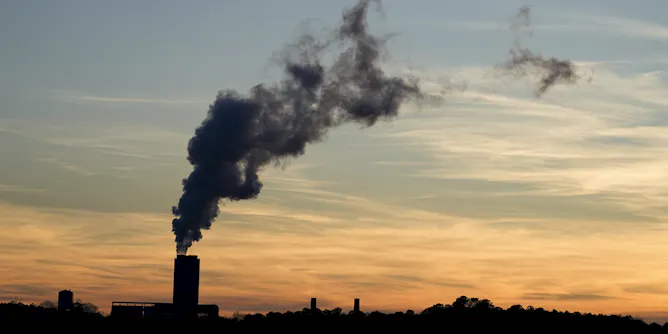
The time has come to develop Canada’s participation in international carbon markets.
Articles on Global warming
Displaying 161 - 180 of 1162 articles

The usual ‘pre-industrial’ baseline already contains some human-caused warming. Our method uses a much earlier baseline.
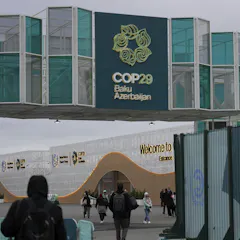
Centring climate justice in our global efforts against climate change could bring myriad benefits for us all. COP29 in Baku must make this dream a reality.

A landmark legal ruling in Ontario could pave the way for greater government climate accountability in the province while setting an important precedent for the rest of the country.
Climate scientists call for global leaders to double down on efforts to cut emissions with their full attention and unwavering commitment at the UN’s climate summit, Cop29.

Efforts to tackle the climate crisis – both in Australia and globally – are much bigger than one man. Here are ten reasons to remain hopeful.
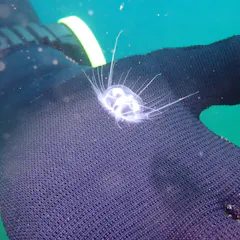
Freshwater jellyfish are growing in abundance in Canadian lakes and rivers. The reasons are complex but climate change is the primary culprit.
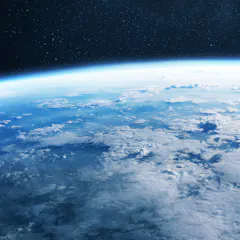
Alarmingly, Earth’s climate will change for many centuries to come. But we must still push to reach net-zero emissions as quickly as possible.

New research on the European Little Ice Age in England has upended established narratives and provided a window into an era of climatic instability not too different from our own.
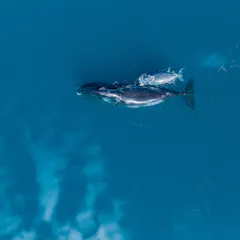
Commercial whaling, present challenges and future threats shape genetics and the potential for adaptation in the bowhead whales and narwhals of the Canadian Arctic.

Tree and bird diversity has been linked to a number of positive mental health outcomes. It is time that urban planners interested in human well-being take biodiversity into account.

The key to understanding shifts in climate and life on Earth is sustained long-term research. Enabling this research to take place should be a priority for universities and governments.
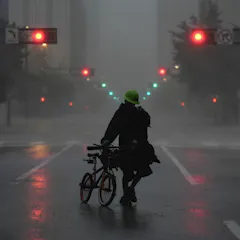
‘Climate scientists’ are often understood as being a block of experts with monolithic beliefs. A new survey sheds considerable nuance onto the beliefs and perceptions of climate scientists.
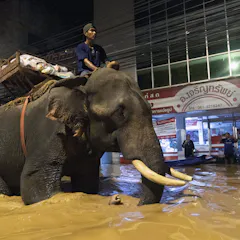
While poorer nations face more severe climate impacts, their ‘social cost of carbon’ remains disproportionately low, reflecting deeper economic inequities that complicate global climate action.
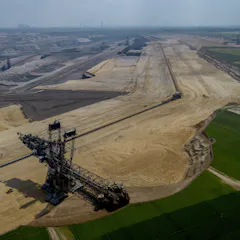
Purely technical solutions to the challenges of sustainable development will likely end in failure. Living within planetary boundaries will require a unified effort across disciplines and economies.

Helene’s size and speed worsened everything from its storm surge to its extreme flooding in the mountains. And another hurricane was coming right on Helene’s heels.
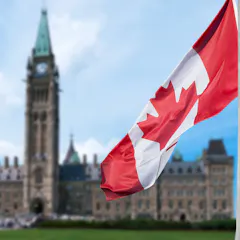
Utilizing carbon contracts for difference mechanisms could help the federal government maintain its climate policies. But overly relying on these tools brings its own risks.
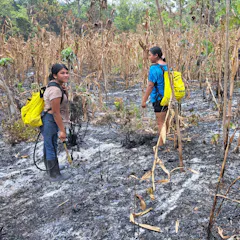
Recent wildfires in Belize shows how we must work together to revitalize Indigenous knowledge systems and plant the seeds of collaborative climate action.
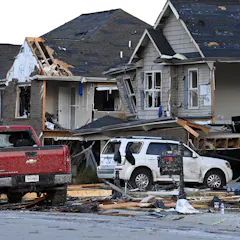
Insurers are raising rates quickly, and it’s not just in California and Florida. They’re often shrinking coverage at the same time.
Invasive species are not always harmful; some can even provide key benefits to native habitats in an era of climate change. Canadian conservation efforts should embrace the movement of species.
Top contributors
-

ARC Future Fellow and Associate Professor in Climate Science, ARC Centre of Excellence for 21st Century Weather, The University of Melbourne
-
Research Associate, Institute for Climate Risk and Response, UNSW
-
Distinguished Scholar, National Center for Atmospheric Research; Affiliate Faculty, University of Auckland, Waipapa Taumata Rau
-
Chief Research Scientist, CSIRO Environment; Executive Director, Global Carbon Project, CSIRO
-
Chief Scientist, Australian Antarctic Division and Professor of Climate Science, Australian National University
-
Professor and Climate Scientist, Department of Geography, Planning and Environment, Concordia University
-
Deputy Director, Engagement and Impact, The ARC Centre of Excellence for the Weather of the 21st Century, Australian National University
-
Adjunct professor, UNSW
-
Professor of Climate Science, University of Reading
-
Professor Emeritus of Climate and Space Sciences and Engineering, University of Michigan
-
A/Prof., School of Earth Sciences, The University of Melbourne
-
Professor of Physical Climate Change; Director of the Priestley Centre for Climate Futures, University of Leeds
-
Adjunct Professor of Energy, Murdoch University
-
Director of the ARC Centre of Excellence for Our Future Oceans and Scientia Professor in Oceanography, UNSW
-
Climate Projections Scientist, CSIRO