
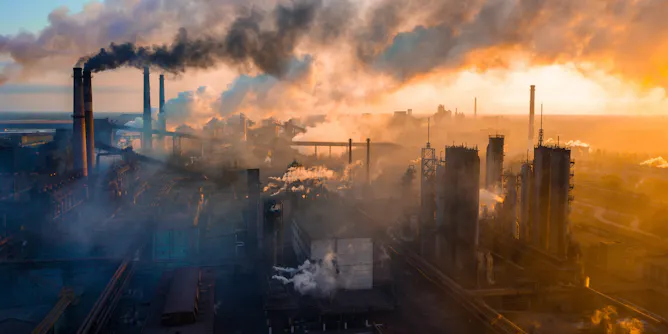
Trump has pulled the US out of the Paris Climate Agreement and vowed to increase fossil fuel extraction.
Articles on Global warming
Displaying 141 - 160 of 1162 articles
Achieving net-zero emissions by 2050 is humanity’s only hope of achieving climate security. It’s time to think deeply about our chances of getting there.
In 1939, Adelaide endured 13 straight days of extreme heat – residents’ diaries from the time reveal old-fashioned cooling strategies.

The Antarctic ice sheet is nearly twice the area of Australia and holds enough freshwater to raise global sea levels by 58 metres.

Canadians over-consume water at alarming rates with an antiquated water licensing system that promotes competition and misuse over sustainability.
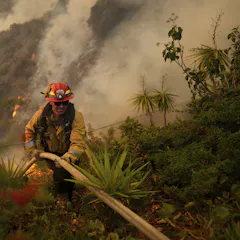
It’s vital to understand how climate drivers played out before and during the LA wildfire emergency – because many Australian cities face the same climate risks.

For many firms, ESG-related social media activity appears to be more about managing their public image than signaling genuine environmental commitment.
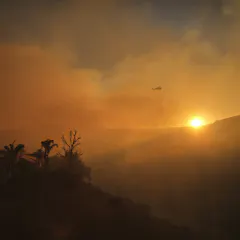
This record-breaking heat is primarily driven by humanity’s burning of fossil fuels. The warming won’t stop until we reach net-zero emissions.

The carbon tax, once seen as a policy achievement for the Liberals, may be a liability in this year’s election. Here is how the Liberals can counter the “axe the tax” narrative.
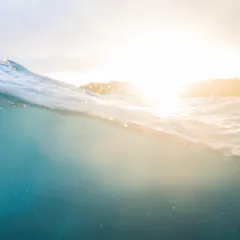
The oceans have been much warmer than average for the past two years, and the planet just set another global heat record. What’s going on?

That depends on how you define ‘normal.’ The baseline has been creeping up as the planet warms.

Canada’s current carbon tax system is unpopular and not as effective as it should be. A progressive carbon tax system would help.

Navigating green differences between friends can be a tricky endeavour. These strategies can help you be a climate leader while keeping your friendships intact.
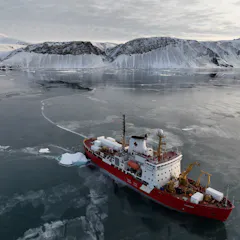
The last ice area is projected to be the last place on Earth to retain year-round sea ice by 2040. A recent Arctic expedition to the area has provided key data that could help guide conservation efforts.
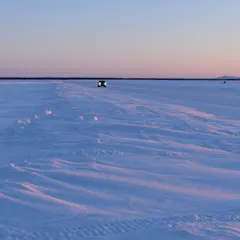
Northern communities in Canada have long relied on ice roads to bring in essential goods, however, climate change is making these routes more perillous and unpredictable by the day.

Algal blooms are typically associated with summer weather but warmer winters caused by climate change are resulting in blooms appearing more frequently, and for longer periods.
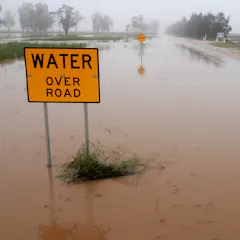
A region’s climate is defined over periods of 30 years. In a world affected by global warming, we need new tools to improve these definitions.

The 1,000-ton rule states that a person is killed every time humanity burns 1,000 tons of fossil carbon. Minimizing the deaths caused by climate change should be a global priority.

Nature-based solutions are a cost-effective means of addressing climate instability, and governments already have all the tools they need to help get these projects off the ground.
Net zero is not as simple as planting a tree. The first step is understanding that tackling climate change, and reaching true net zero, requires returning carbon to the ground.
Top contributors
-

ARC Future Fellow and Associate Professor in Climate Science, ARC Centre of Excellence for 21st Century Weather, The University of Melbourne
-
Research Associate, Institute for Climate Risk and Response, UNSW
-
Distinguished Scholar, National Center for Atmospheric Research; Affiliate Faculty, University of Auckland, Waipapa Taumata Rau
-
Chief Research Scientist, CSIRO Environment; Executive Director, Global Carbon Project, CSIRO
-
Chief Scientist, Australian Antarctic Division and Professor of Climate Science, Australian National University
-
Professor and Climate Scientist, Department of Geography, Planning and Environment, Concordia University
-
Deputy Director, Engagement and Impact, The ARC Centre of Excellence for the Weather of the 21st Century, Australian National University
-
Adjunct professor, UNSW
-
Professor of Climate Science, University of Reading
-
Professor Emeritus of Climate and Space Sciences and Engineering, University of Michigan
-
A/Prof., School of Earth Sciences, The University of Melbourne
-
Professor of Physical Climate Change; Director of the Priestley Centre for Climate Futures, University of Leeds
-
Adjunct Professor of Energy, Murdoch University
-
Director of the ARC Centre of Excellence for Our Future Oceans and Scientia Professor in Oceanography, UNSW
-
Climate Projections Scientist, CSIRO