

The effect is the transfer of wealth away from the poorest workers.
Articles on Gig economy
Displaying 101 - 120 of 178 articles

An upcoming study on workers in the gig economy suggests the future of work may be a lonely and uncertain one for many workers.

Uber Works is the next step in the evolution of the gig economy.

Flexibility is just a euphemism for exploitation.

In this first of a series of “vision statements” Albanese has sought to send the messages that Labor under his leadership is focused on jobs, is looking to the future and is not afraid of change.
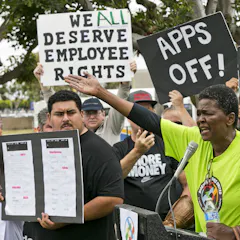
If your job doesn’t currently involve automation or artificial intelligence in some way, it likely will soon. Computer-based worker surveillance and performance analysis will come, too.
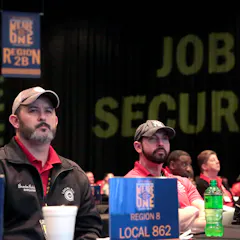
Unions should move their focus away from traditional collective bargaining and instead embrace new ways to attract new members, such as by offering discounted benefits and engaging in more advocacy.

Underpaying workers has become rampant in Australia.

A growing number of jobs are becoming less stable, with fewer benefits and stagnating wages. This is taking a significant toll on the psychological health of workers.
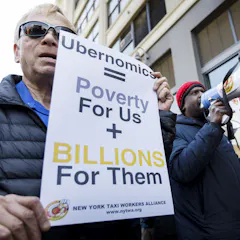
Many Uber drivers do their job because the alternatives are worse. It’s an unhappy work choice faced by an increasing number of Australians.

Dealing with the Coalition will more difficult than arguing than the rules are wrong.
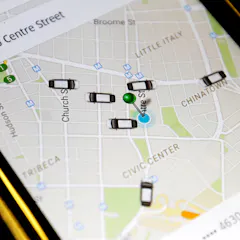
Uber’s IPO will value the company at more than $80 billion, yet the data it collects on its users may be worth even more – and creates the potential for dangerous manipulation.
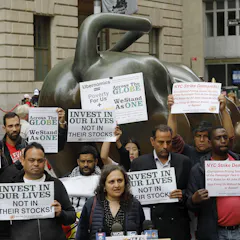
The Uber driver walkout raises questions about how workers can fight for better pay and benefits in the age of the gig economy – a topic frequently on the minds of Conversation scholars.

It ought to be possible to replace Australia’s minimum wage with a higher “living wage” without putting people our of work, but more will be needed.

American employers routinely violate workers’ rights. A Bernie Sanders presidency could change that.
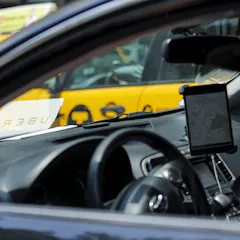
One of Uber’s selling points is that a driver is always available to pick up a rider within minutes. But the drivers who make this possible aren’t being compensated for the time they spend waiting.
Businesses and workers are at the mercy of mega-corporations.
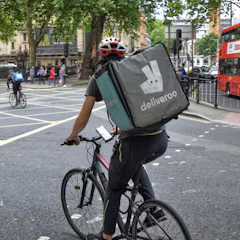
The tensions between platforms and their workers can be better understood by studying the mutual expectations of both parties.

An obsession with GDP growth fails to account for some of society’s most pressing problems.

Sugar daddy capitalism is deformalising relationships and erasing the lines between commercial and non-commercial worlds.
Top contributors
-

Associate professor, University of Sydney
-
Associate Professor UTS Centre for Business and Social Innovation, University of Technology Sydney
-
Senior Lecturer, Management and Organisations, UWA Business School, The University of Western Australia
-
Senior Lecturer, Management and Organisations, The University of Western Australia
-
Affiliate Researcher, Work and Organisational Studies, University of Sydney
-
Professor of Practice, Associate Dean, Warwick Business School, University of Warwick
-
PhD Candidate, ARC Centre of Excellence for Automated Decision-Making and Society, RMIT University
-
Associate professor, Human Resources & Management, McMaster University
-
Associate Professor, Faculty of Law, University of Technology Sydney
-
Laurie Carmichael Distinguished Research Fellow at the Centre for Future Work, Melbourne; and Professor Emeritus, Griffith Business School, Griffith University
-
Professor of Economics and Political Economy, University of Leeds
-
Canada Excellence Research Chair in Migration and Integration, Toronto Metropolitan University
-
Michael and Susan Jandernoa Professor of Management and Organizations, University of Michigan
-
Professor of Work and Employment, University of Southampton
-
Senior Lecturer in Human Resource Management, Liverpool John Moores University