
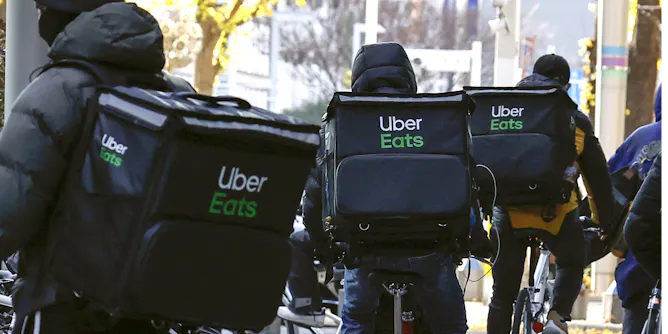
Australia’s largest private-sector employers are steadily integrating gig workers into their operations.
Articles on Gig economy
Displaying 41 - 60 of 178 articles

Australian startup MilkRun may have attracted more than $85 million in venture capital but it always had a challenging business model.
Gig companies like Uber often promote the freedom that comes with independent contractor arrangements. They talk less about the impact that pay volatility can have on workers’ health.
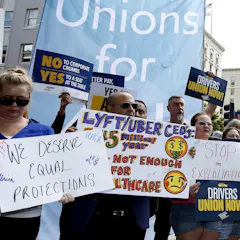
What a ‘gig worker’ is remains ill-defined, which can suit employers. But the spread of the gig economy means more workers don’t have the same rights and protections as employees.

Gig workers navigate the challenges of solo work by seeking out relationships and cultivating skills to cope with emotional turbulence

‘Career portfolioing’ is a trend where people assemble different sources of income, such as side gigs, to give them a measure of independence from employers who provide little job security.

Alternative working arrangements like gig platforms might help immigrant workers find temporary work, but many care professionals are still unable to find permanent jobs in their industry.

Deliveroo says it has been unable to achieve a sustainable position in the Australian market.

The Uber Files leak reveals that the company embarked on a deliberate public relations strategy that involved the media, public officials and academics.

As Coles and Woolworth turn to UberEats and DoorDash for fast deliveries, supermarket workers feel ‘the gig economy is getting closer’.

Our five years of research reveals an industry facing push back from both workers and customers. Many workers we spoke with sought to leave the gig economy.

Rating services on ride and task apps disadvantage gig workers, whose future work assignments are affected by their ratings. Women workers are made vulnerable, and have to contend with harassment.

Uber Australia’s deal with the transport workers union signals the Albanese government won’t mess about with attempts to reclassify gig workers as employees.

Uber, the poster company of the gig economy, has agreed its Australian workers deserve more employee-like conditions. Why it has done this now isn’t too hard to work out.
With customers and workers both being squeezed, what does the future look like?

Starting out is getting more and more expensive.
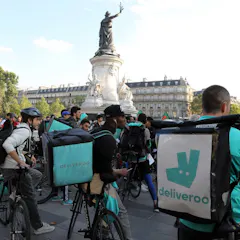
A trial in France revealed how the platform’s algorithm established a subordination relationship between riders and the firm. Could we be witnessing the beginning of the end of “uberisation”?

Feudalism has been replaced by capitalism, and the new villeiny — or neo-villeiny — has emerged to reflect a relationship between a worker and an organization.
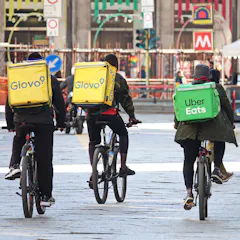
New legislation could strengthen the social contract between workers and platforms.

Gig workers are more stressed than other types of workers. Two experts explain coping strategies that are likely to help, and which to avoid.
Top contributors
-

Associate professor, University of Sydney
-
Associate Professor UTS Centre for Business and Social Innovation, University of Technology Sydney
-
Senior Lecturer, Management and Organisations, UWA Business School, The University of Western Australia
-
Senior Lecturer, Management and Organisations, The University of Western Australia
-
Affiliate Researcher, Work and Organisational Studies, University of Sydney
-
Professor of Practice, Associate Dean, Warwick Business School, University of Warwick
-
PhD Candidate, ARC Centre of Excellence for Automated Decision-Making and Society, RMIT University
-
Associate professor, Human Resources & Management, McMaster University
-
Associate Professor, Faculty of Law, University of Technology Sydney
-
Laurie Carmichael Distinguished Research Fellow at the Centre for Future Work, Melbourne; and Professor Emeritus, Griffith Business School, Griffith University
-
Professor of Economics and Political Economy, University of Leeds
-
Canada Excellence Research Chair in Migration and Integration, Toronto Metropolitan University
-
Michael and Susan Jandernoa Professor of Management and Organizations, University of Michigan
-
Professor of Work and Employment, University of Southampton
-
Senior Lecturer in Human Resource Management, Liverpool John Moores University