

Today’s journalism students are less likely to find full-time jobs as professional journalists. The craft has become ‘post-industrial’, entrepreneurial and atypical.
Articles on Gig economy
Displaying 61 - 80 of 178 articles

Many formal sector jobs are increasingly precarious and poorly paid, meaning that formal work is not an avenue to greater social equality for many people.

How do we take care of delivery riders who are often exposed to multiple risks? What are their needs in terms of social protection? Researchers asked them these questions directly.

Low incomes, unpaid work and excessive workloads: Australian artists are facing a crisis.

Teaching entrepreneurial skills is a staple in business schools. But it can benefit all students – including majors in engineering, agriculture and even the arts.

Recent developments in the organisation of production have led to the decline of wage employment across much of the world.

Strip away the sexy marketing and what you have is just another digital platform shifting legal responsibilities and risks.

The pandemic home-delivery boom is driving a push to automation and precarious work by Australian supermarkets.

It could push up prices and pay.
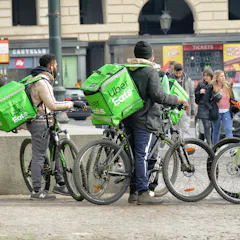
Gig work is entering almost every industry and changing the relationship between workers, employers, service providers and customers. But gig workers face new and unique challenges.

Why a workers’ rebellion in 19th-century England is relevant in the age of data extraction, gig labour and management by algorithm.
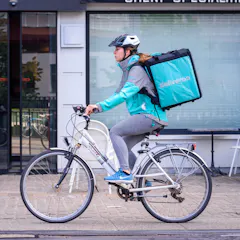
Is there a place for speedy grocery delivery startups in a post-COVID world? That depends on consumer habit.

The Fair Work Commission’s ruling that delivery rider Diego Franco was an employee of Deliveroo is a major legal win for Australia’s gig workers.
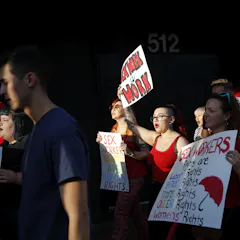
More people are getting involved in sex work, especially online – and it can be a lifeline for marginalized people.
If the best people management practices of the formal economy were to be deployed in the informal economy, new avenues of stimulating economic and life empowerment may be opened.
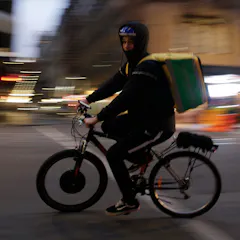
Food-ordering platform Menulog has declared it will break with the standard contractor business model. But let’s not get too excited yet.

New changes to employment rules go hand in hand with the recent knocks to Deliveroo and Uber to suggest that a trend is emerging.

Uber has been forced by the UK courts to treat its British drivers as workers. It will probably require legislative change for Uber’s Australian drivers to be treated as employees.

A rise in contract and gig work in professional and creative fields is affecting steady employment. Research shows that to maintain a career in these fields, a worker needs to consider family.
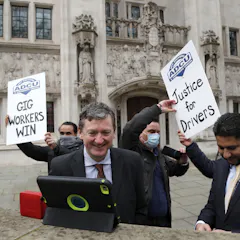
The British Supreme Court ruling in favour of Uber drivers offers some hope that gig workers, many of them immigrants, might finally be given basic rights. But there’s still lots of work to do.
Top contributors
-

Associate professor, University of Sydney
-
Associate Professor UTS Centre for Business and Social Innovation, University of Technology Sydney
-
Senior Lecturer, Management and Organisations, UWA Business School, The University of Western Australia
-
Senior Lecturer, Management and Organisations, The University of Western Australia
-
Affiliate Researcher, Work and Organisational Studies, University of Sydney
-
Professor of Practice, Associate Dean, Warwick Business School, University of Warwick
-
PhD Candidate, ARC Centre of Excellence for Automated Decision-Making and Society, RMIT University
-
Associate professor, Human Resources & Management, McMaster University
-
Associate Professor, Faculty of Law, University of Technology Sydney
-
Laurie Carmichael Distinguished Research Fellow at the Centre for Future Work, Melbourne; and Professor Emeritus, Griffith Business School, Griffith University
-
Professor of Economics and Political Economy, University of Leeds
-
Canada Excellence Research Chair in Migration and Integration, Toronto Metropolitan University
-
Michael and Susan Jandernoa Professor of Management and Organizations, University of Michigan
-
Professor of Work and Employment, University of Southampton
-
Senior Lecturer in Human Resource Management, Liverpool John Moores University