
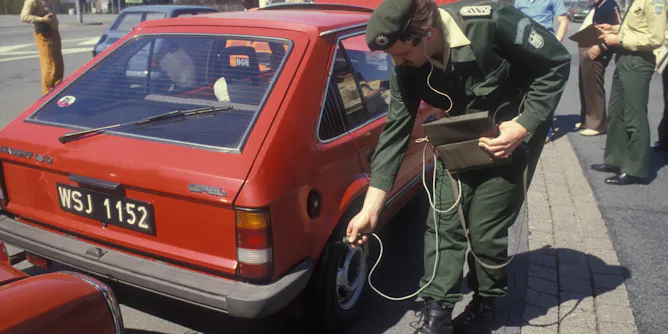
Once classified files from East Germany reveal the extent of Soviet actions to hide the true extent of catastrophe.
Articles on German Democratic Republic (GDR)
Displaying 1 - 20 of 27 articles
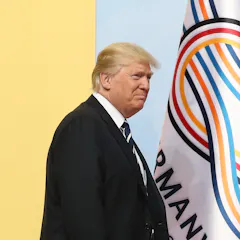
Trump’s incoming administration could create certain risks for Germany, including putting more pressure on its weak economy.

Russian actions in occupied Ukraine are following a plan modeled on how the Soviet Union dismantled Nazi influence in Germany after World War II – including arrests and revised school lessons.

The story of a Dutch double agent who spied on the Stasi. Listen to The Conversation Weekly podcast.
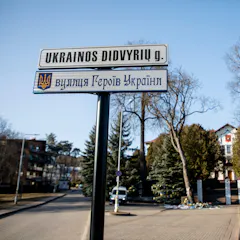
The Russian embassy in Vilnius now sits on Ukrainian Heroes’ Street (Ukrainos Didvyrių g.), a direct response to the war.
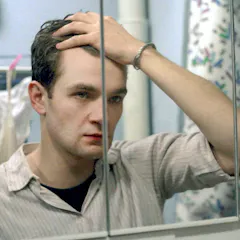
More than 30 years after the Berlin Wall fell, the re-release of the East German film ‘Coming Out’ reminds us that protecting minority populations’ rights is every society’s responsibility.
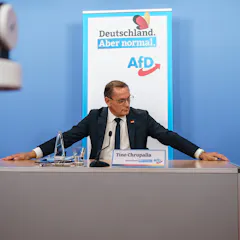
Support for Alternative for Germany continues in the former East Germany in particular. It’s worth really asking why.

East Germany strongly encouraged mothers to participate in the labour market full-time, whereas West Germany propagated a more tradition male breadwinner model.

For many in former Soviet Bloc countries the desire to forget the communist past conflicts with the need to make money from dark tourism sites.
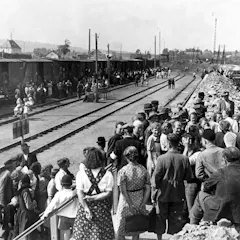
After World War II ended in Europe, millions of ethnic Germans faced an uncertain future. The political repercussions of their expulsion continue even today.
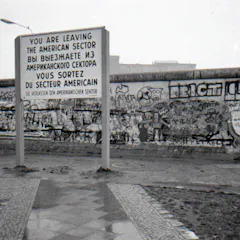
East Germans feel alienated and powerless. They see themselves as second-class citizens, while outsiders live high on what is rightfully theirs.
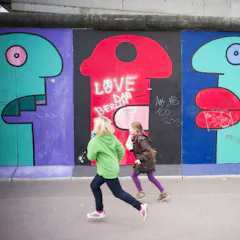
When the wall fell – education equality did too.
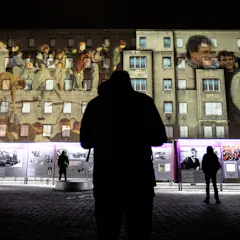
The decision to move the Stasi files into the German national archive has sparked debate of how memories of life before reunification should be handled.
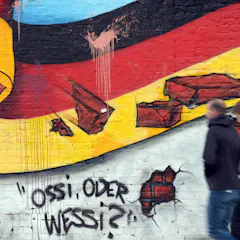
The collapse of the East German economy following unification has combined with racism and neoliberalism to feed far right support.
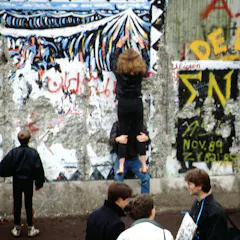
Young people from both East and West Germany congregated in nightclubs which were hastily thrown up in the spaces where the Wall had dominated.
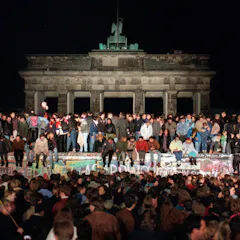
It would be easy to assume that outbreaks of extreme-right groups in the former east are a legacy of its communist past, but the idea does not bear scrutiny.
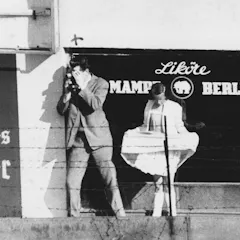
30 years after the fall of the Berlin Wall, covert surveillance images offer us an unparalleled look at the lives of people trying to escape from the east to the west.
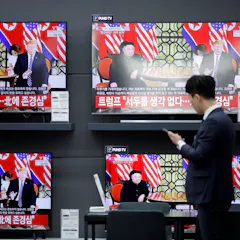
Without its communist Soviet-style economy, North Korea would just be South Korea.
City decline is neither a fatality nor an urban nightmare. It can even be the background to a resilience strategy.
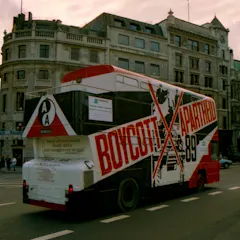
As South Africa became an international pariah, it began working in shady ways through even more shady operators, including getting arms from the Soviet Union and China.
Top contributors
-

Director of Global Languages, Massachusetts Institute of Technology (MIT)
-
Reader in Political Economy, Brunel University of London
-
Associate Professor of History, Rowan University, Rowan University
-
Host, The Conversation Weekly Podcast, The Conversation
-
Professor of Marketing, Schulich School of Business, York University, Canada
-
Dorothy and Jonathan Rintels Professor of Holocaust Studies, Florida State University
-
Reader in Human Development and Education Policy, University of Strathclyde
-
Associate professor of international history, Utrecht University
-
Assistant Professor of Cultural Sociology, University of Groningen
-
Senior Research Fellow, Horn of Africa and Southern Africa, Institute of Commonwealth Studies, School of Advanced Study, University of London
-
Lecturer in History, University of Cambridge
-
Research Fellow in Modern Languages, University of Birmingham
-
Professor of Modern Languages and German Studies, University of Birmingham
-
PhD Researcher in Modern History, University of St Andrews
-
Lecturer in Education, University of Exeter