
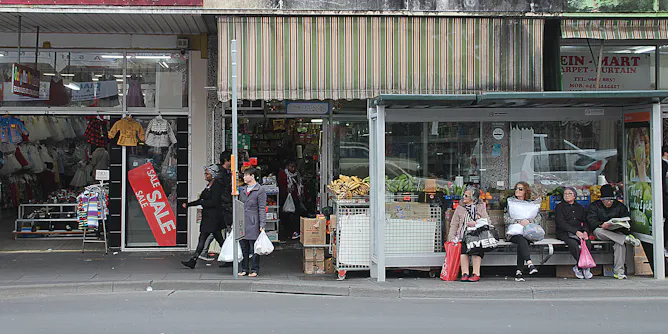
Must the aggressive, homogeneous global pattern of development take its course in Melbourne’s long-standing multicultural suburb of Footscray?
Articles on Gentrification
Displaying 101 - 120 of 127 articles
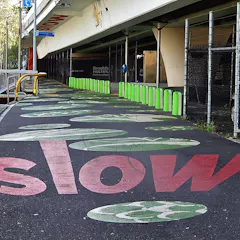
Smart cities are usually optimised like a business for speed and efficiency. Placemaking can slow down cities to improve health and wellbeing and promote more democratic engagement of citizens.
Grassroots venues are run on tight margins, and have been under pressure for some time from external factors such as rising costs and gentrification.

The Melbourne suburb of Richmond is prime inner-city real estate, but the community is paying a price for redevelopment that jars with the existing neighbourhood.
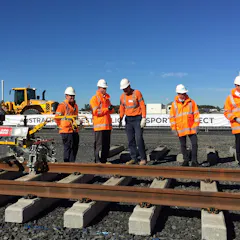
Who’ll profit from the value uplift arising from the huge investment of taxpayers’ funds in creating better-serviced, higher-density suburbs? And what will the changes mean for existing residents?
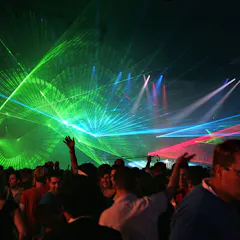
On the same day that London’s legendary Fabric closed permanently, Berlin’s infamous techno club Berghain was granted a tax break.
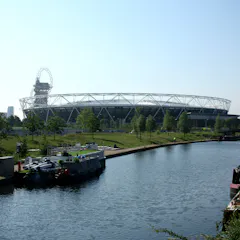
Looking back on the legacy of London 2012, it’s clear the local artistic community has lost out.

Social media is notoriously unsuitable for population studies, but these researchers have found a way to make the bias work in their favour.
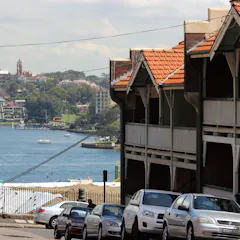
The NSW government agenda would deny the ‘right to the city’, that network of diverse communities, practices and places which give rise to the convivial and inclusive potential of cities.

Is Berlin’s underground scene in danger of going to the wall?
In a competitive rental market, landlords can easily skirt anti-discrimination laws.
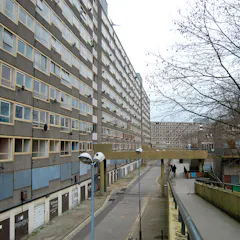
Unless Cameron learns a lesson from history, the tenants of Britain’s council estates will face displacement and gentrification by stealth.

Rather than being microcosms of the community, schools are increasingly divided by class and ethnicity.

The term ‘post-tourist’ is commonly used to refer to a new breed of travellers, those who eschew common ‘hotspots’, immersing themselves in “local culture” for an extended period of time. And yet …

The “edgy authenticity” of street art makes it an ideal tool for urban planners seeking to attract the new “creative class”.
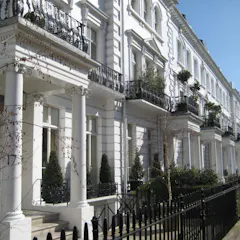
The arrival of the super-rich has triggered a ‘trickle down’ effect – and not in a good way.
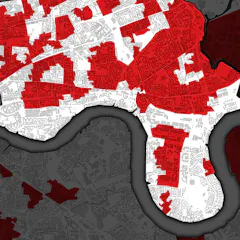
These maps can tell us much more than the location of England’s most and least deprived areas.

What will the hipster come to symbolise about life in the early twenty-first century when historians of the future reflect on this era?
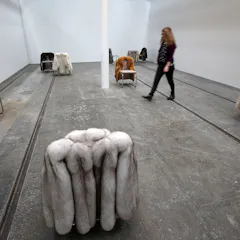
Shortlisted for the Turner in 1997, Christine Borland discusses the suffocating nature of the prize and its shortsighted attempts to branch out.

Gentrification is an immoral process - here’s why violent protest has a role to play in the fight against it.
Top contributors
-

Assistant Professor, Acadia University
-
Honorary Senior Fellow in Urban Geography and Planning, The University of Melbourne
-
Research Associate, Southern Centre for Inequality Studies, University of the Witwatersrand, University of the Witwatersrand
-
Professor of Sociology, Brandeis University
-
Research Fellow, School of Communication, Society & Culture, Macquarie University
-
Professor in Human Geography, Royal Holloway, University of London
-
Senior Lecturer in Landscape Architecture, The University of Melbourne
-
Ph.D. Candidate, University of British Columbia
-
Research Associate, Goldsmiths, University of London
-
Professor, City Futures Research Centre, UNSW
-
Assistant Professor of Sociology, University of California, Santa Cruz
-
Professor of Urban Planning, The University of Melbourne
-
Associate Professor of Sociology, Bentley University
-
Lecturer, School of the Built Environment, Heriot-Watt University
-
PhD Candidate, University of Cambridge