
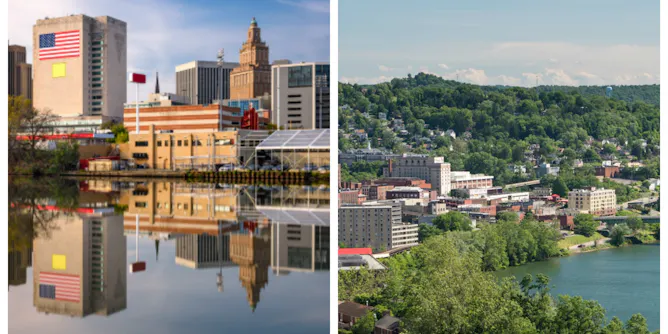
Universities teach students and produce research – but do they have responsibility to engage with the communities that surround them? Two university presidents explain why their answer is an emphatic yes.
Articles on Gentrification
Displaying 81 - 100 of 127 articles
A 17-minute video artwork reflects on time and changing urban communities.

Ultimately, most regulatory interventions in nightlife precincts are about imposing particular ideas of social and moral order not only within these spaces but also in the city more broadly.
When the city centre was revitalised in the 1990s, homeless people were pushed out. With homelessness rising today, it’s important to recognise the links between urban development and displacement.

Gentrification is not the only path for improving urban neighborhoods. A cleanup in Brooklyn and Queens offers another, more inclusive model that scholars have dubbed ‘just green enough.’
This is how the working-class traders of Chrisp Street Market stood up to property developers – and won.
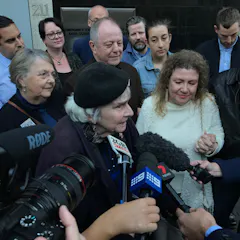
All but a handful of the former public housing tenants are gone. But despite the government again rejecting the recommended heritage listing of the Sirius building, the fight to save it isn’t over.
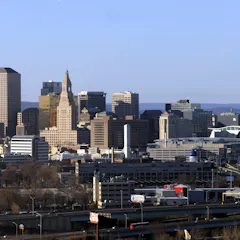
In the country’s wealthiest cities, gentrification is a dirty word. But it’s all relative – just ask Hartford and Columbus.
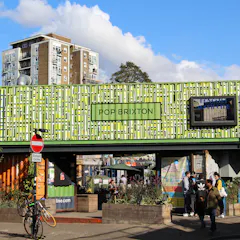
There’s a new and growing practice of naming and shaming artists working within the context of gentrification.

A new project documents who uses urban industrial lands slated for redevelopment. It reveals a vibrant but largely hidden sector at the interface between creative industries and small manufacturing.

For the first time in Australia, more higher-density housing than detached housing was being built last year. Compact cities have pros and cons, but the downsides fall more heavily on the poor.
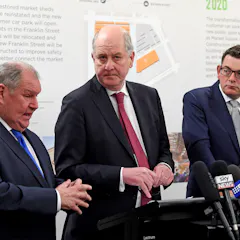
Mixing public and private housing in urban renewal projects can be a contentious business. But public good and optimal use of public resources, not developer interests, should guide such decisions.
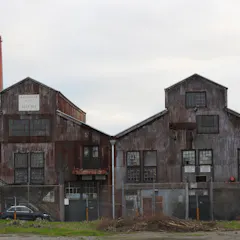
Cleaning up and reusing contaminated sites, known as brownfields, can create jobs and promote economic growth. But it also can drive gentrification that prices out low-income residents.
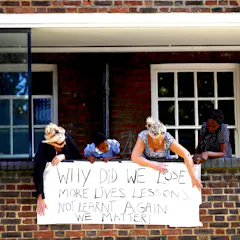
Marginal people become resourceless, invisible to public policies, and disempowered in public life. This increases their vulnerability to disaster.
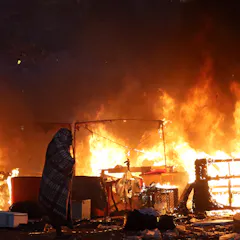
Luz, a once-elegant 19th-century neighbourhood in downtown São Paulo, is prime real estate. But redevelopment means clearing out a homeless encampment known as “Crackland”.
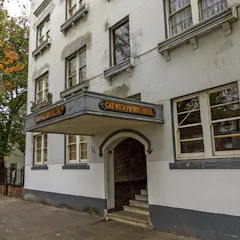
When wealth accumulation becomes the driver of urban regeneration, residents who already have little or no say in the future of our cities are further marginalised by gentrification.
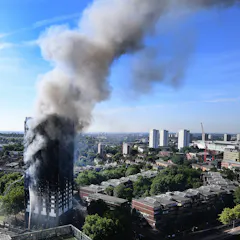
As fire tore through Grenfell Tower, I witnessed the complete and terrible destruction of 120 homes just like the one I grew up in.
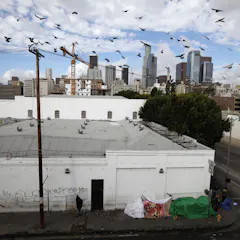
A new study shows what growing local inequality in American cities looks like and asks what that means for people who live in them.
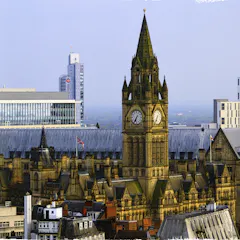
Like many cities, Manchester can demonstrate strength through diversity, but must face down the forces that would see it divided.
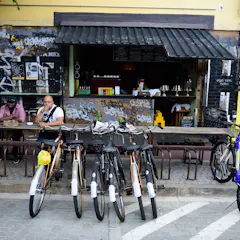
Maboneng in Johannesburg represents one strand of the type of urban “development” that’s advocated for by the proponents of “global cities”.
Top contributors
-

Assistant Professor, Acadia University
-
Honorary Senior Fellow in Urban Geography and Planning, The University of Melbourne
-
Research Associate, Southern Centre for Inequality Studies, University of the Witwatersrand, University of the Witwatersrand
-
Professor of Sociology, Brandeis University
-
Research Fellow, School of Communication, Society & Culture, Macquarie University
-
Professor in Human Geography, Royal Holloway, University of London
-
Senior Lecturer in Landscape Architecture, The University of Melbourne
-
Ph.D. Candidate, University of British Columbia
-
Research Associate, Goldsmiths, University of London
-
Professor, City Futures Research Centre, UNSW
-
Assistant Professor of Sociology, University of California, Santa Cruz
-
Professor of Urban Planning, The University of Melbourne
-
Associate Professor of Sociology, Bentley University
-
Lecturer, School of the Built Environment, Heriot-Watt University
-
PhD Candidate, University of Cambridge