
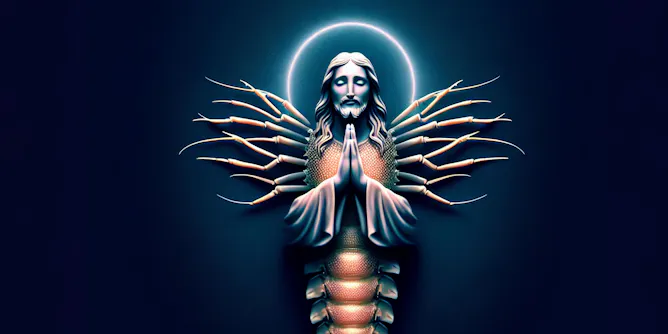
Is most of the content on the internet fake? Here’s what the dead internet theory really means – and why we should be warier of how we’re manipulated for profit and political gain.
Articles on Generative AI
Displaying 181 - 200 of 256 articles
AI may shore up an industry experiencing economic headwinds. But in a field where professional ethics and public trust are particularly important, it’s a risky endeavor.
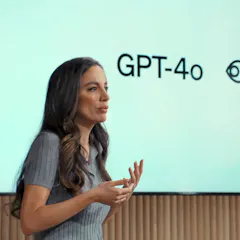
The ‘multimodal’ GTP-4o works with text, sound, images and video, all wrapped in a chatty interactive ‘personality’.

With the click of a button, you can now generate songs in any topic and genre you want. But it’s not clear-cut whether you own the music, despite what the app terms say.
ChatGPT and other AI writing tools can make researchers more productive – but quality control is essential.

Looking through the archive of an arts magazine I discovered how Ballard was trying out an early form of computer-generated poetry.
‘Uncanny’ AI music generators blur the line between creators and consumers. Will they turn music from high art to an everyday language? Listen to these AI-generated tracks and judge for yourself.
Daniel Angus, a professor of digital communication, explains how artists are trying out data poisoning to protect their intellectual property. Listen to The Conversation Weekly podcast.
The upgraded AI systems may even be able to undertake a form of reasoning.

Visually appealing and cheap to produce, AI-generated images allow scammers and spammers to post high volumes of engaging content − and Facebook’s algorithm may be promoting these posts.
The rise of generative AI and its effect on war-gaming will fundamentally transform how senior military and political leaders plan and prepare for war.
AI chatbot makers’ restrictive use policies hinder people’s access to information.

There’s no escaping generative AI as it infiltrates our workplaces and daily lives. Learning what these tools can do will help you understand their full impact.

Modelling bolsters idea that fact checking is a useful defence against the flow of disinformation.
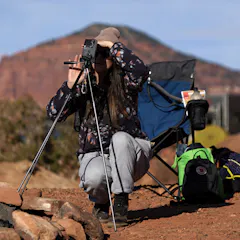
Your phone can’t take a perfectly clear picture of a solar eclipse like a professional camera can, but there are lots of other creative directions you can take to capture the rare moment.
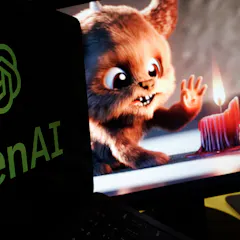
With the right prompts, AI users can mimic copyrighted works. There’s no easy technical or legal fix.
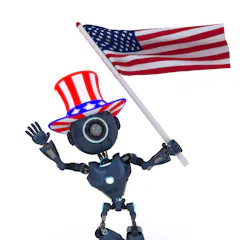
Using disinformation to sway elections is nothing new. Powerful new AI tools, however, threaten to give the deceptions unprecedented reach.
Publishers are starting to develop guidelines around the use of generative AI in photos.
Generative AI can be a useful tool, but it can also create inaccurate information. Here’s how to safeguard Australian courts against fake cases, like we’ve already seen overseas.

Increasingly powerful AI is everywhere. But the hype is tempered by public and expert concerns – they want stronger regulation before it’s too late.
Top contributors
-

Associate Professor of Visual Communication & Digital Media, RMIT University
-
Senior Lecturer in Law, University of New England
-
Associate Professor of Linguistics and Director of Language Lab, The University of Western Australia
-
Senior Lecturer in Law and Emerging Technologies, Western Sydney University
-
Senior Lecturer in Business Information Systems, University of Sydney
-
Professor of Philosophy and Director of Applied Ethics Center, UMass Boston
-
Professor in Computational Intelligence, Australian Catholic University
-
Adjunct Lecturer in Public Policy, Harvard Kennedy School; University of Toronto
-
Professor of Digital Communication, Director of QUT Digital Media Research Centre, Queensland University of Technology
-
Professor of Computer Science and Director of the Art & AI Lab, Rutgers University
-
Director of Sydney Executive Plus, Business School, University of Sydney
-
Professor of Computer Science, University of California, Berkeley
-
Associate Professor of Information Science, University of Colorado Boulder
-
Assistant Professor, Faculty of Business, University of New Brunswick
-
Associate Professor of Political Science, Brock University