

Preparing for an uncertain future is less about predicting which jobs will survive than developing skills that allow people to adapt as work changes.
Articles on GenAI
Displaying 1 - 20 of 26 articles

We increasingly turn to chatbots when we are upset. But what they cannot do may be what matters most.

We may soon know the answers to many long-standing mathematical problems.

Researchers interviewed almost 30 religious leaders across all six major religious faiths in the UK to find out how AI was affecting them.

For legal reasons, organisations require a human reviewer of generative AI outputs. But this human oversight must be valued and budgeted for in the transition to AI.

How can business schools best navigate the AI era? Does GenAI in higher education constitute a level playing field where educational inequality and diverse learning needs are concerned?

Encourage verifying anything important – news, health claims, law, school facts, statements that may be repeated as “true”.

When new technology can produce the texts companies or departments use to explain themselves, core values can shift incrementally without anyone really noticing.
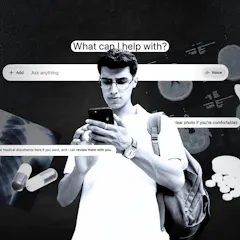
OpenAI’s new dedicated ‘health and wellness’ tool allows users to link medical records to chat. But it hasn’t been independently tested and will still make mistakes.

One-third of students in an OECD survey said school has not taught them anything useful for a job.

AI agents can navigate course sites, consume materials and complete assignments, effectively simulating student engagement.

It is vital that lawyers are taught how to use GenAI to avoid the risk of deciding questions of justice on fabricated case law.

We need to understand what AI means for how knowledge is created.

Researchers found more than 80 cases of generative AI use in Australian courts so far – mostly by people representing themselves. That comes with serious risks.

Apps and users might be hopeful that Gen-AI can make dating apps fun again.
Should GenAI be rapidly rolled out to improve public service policymaking and delivery? Or is a more cautious approach needed to rebuild trust after Robodebt?

Concerns about privacy, consent and memory raised by artificial intelligence will become more urgent as more advanced models enter the market.

A new study surveys Canadians’ attitudes towards and use of generative AI. Many worry it could be used to manipulate voters or interfere with democratic processes
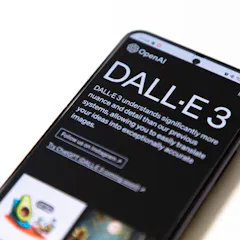
Generative AI tools are constantly improving — making it increasingly difficult for us to detect which images are AI-generated and which are real.

From clay tablets to electronic tablets, technology has played an influential role in shaping human knowledge for centuries.
Top contributors
-

ARC DECRA Fellow / Lecturer in Business Information Systems, The University of Queensland
-
Research Fellow, Institute of Educational Technology, The Open University
-
Post Doctoral Research Fellow, Sydney Health Literacy Lab, University of Sydney
-
NHMRC Principal Research Fellow, Sydney School of Health, University of Sydney
-
Professor of Biomedical Informatics, University of Sydney
-
Chair in Safety Science, University of York
-
Sessional Lecturer, Toronto Metropolitan University
-
Assistant Professor, Faculty of Education, University of Winnipeg
-
Vice-Chancellor's Senior Research Fellow in Music Industries and Cultural Economy, RMIT University
-
Professional Teaching Fellow, Management and International Business, University of Auckland, Waipapa Taumata Rau
-
Senior Lecturer, Management and International Business, University of Auckland, Waipapa Taumata Rau
-
Senior Research Fellow, Human-AI Decision Making, The University of Queensland
-
PhD candidate, Computer Science, University of Waterloo
-
Assistant Professor, School of Communications, Dublin City University
-
Professor of learning technologies, University of Minnesota