
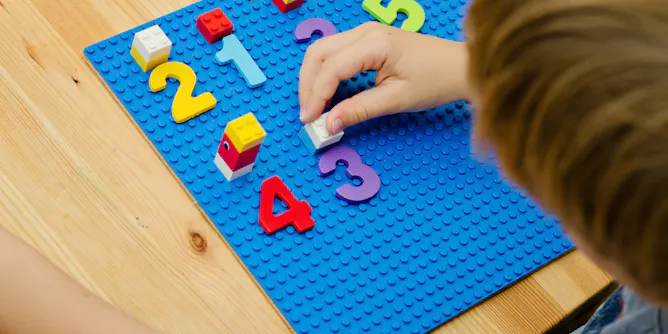
Through games and household tasks, parents can help their children learn basic math skills like counting, geometry and algebraic thinking.
Articles on Games
Displaying 81 - 100 of 108 articles

Games such as chess should be a welcome addition to the activities available for prisoners.

Managers work tirelessly to modernise offices, innovate and cut costs, but what really boosts employee performance? The answer is the scientific method: design, test, and measure.

The story of this video game speaks to what seems a powerful political moment, of an American nation literally at war with itself.
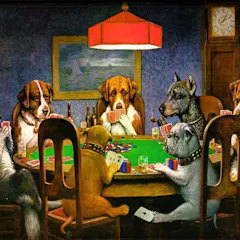
With a proposition bet, the odds are always against you.
Australian children were once free to play on the streets, but today the urban space is less friendly to children and their imaginations.
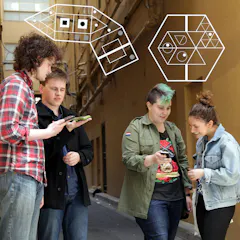
As adults we often trivialise the value of play. But playing games lets us play with possibilities, see how they play out – and exploring alternative realities helps us see the familiar in new ways.

Watching how people play a game against a computer opponent can help identify how humans use – or don’t use – game theory principles to make decisions.
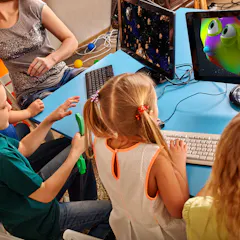
Video games have been helping kids to learn for years, here’s how.
Australia’s videogame industry has called for an end to the government’s silence around funding. And with local games competing on the world stage, it’s time for the cultural medium to be recognised alongside TV and film.
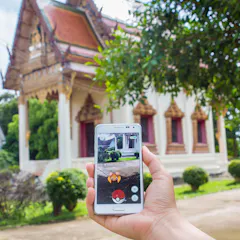
Who owns culture in the real-virtual world of augmented reality?
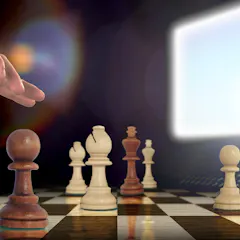
Twenty years after Deep Blue beat Garry Kasparov at chess, artificial intelligence can make games more fun, and perhaps even endlessly enjoyable, if it learns to adapt.
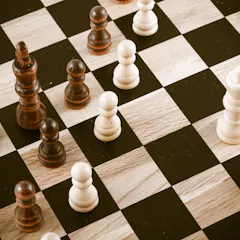
The truth about chess playing and intelligence.
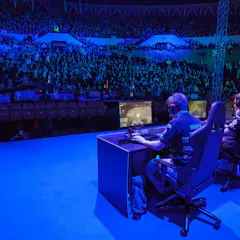
Australia’s biggest prize pot for computer gaming is up for grabs this weekend which shows our growing interest in the multi-million dollar eSports industry.

People want video games and interactive experiences that help them explore deep and meaningful themes, such as creating family, valuing diversity and living responsibly.
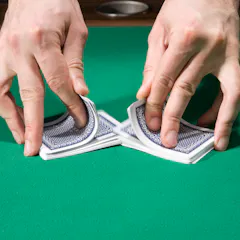
When is a pack of cards truly random?
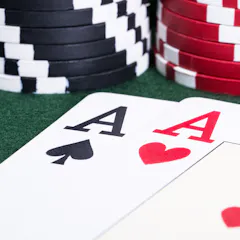
Artificial intelligence researchers have upped the ante and developed a program that has beaten the world’s best Heads-Up No-Limit Texas Hold’em poker players.

The Oujia board’s origins were anything but evil. It emerged, in part, out of a longing to communicate with loved ones who had died during the Civil War.
What happens when games and social media infiltrate society to the point that we all become avatars and anonymous usernames?

What research into game play and human interaction can tell us about why the newest mobile game craze is attracting so many different people to play.
Top contributors
-

Professor in Human-Computer Interaction, ARC Future Fellow, University of Sydney
-
Professor in American Media and Culture, University of Kent
-
Associate Professor, Queensland University of Technology
-
Senior Lecturer in Digital Cultures, Australian Research Council DECRA Fellow, University of Sydney
-
Senior Lecturer - Games and Interactivity, Swinburne University of Technology
-
Associate Professor, Film, Screen and Creative Media, and Associate Dean Engagement, Bond University
-
Senior Lecturer: Game Design & Digital Media, Adelaide University
-
Lecturer in Digital Cultures, University of Sydney
-
Professor, Werklund School of Education, University of Calgary
-
VC Senior Research Fellow, RMIT University
-
Professor, Computer Science, University of Sydney
-
Emeritus Professor, University of Nottingham, (currently Vice-Chancellor at MILA University, Malaysia), University of Nottingham
-
Professor of Computational Media, University of California, Santa Cruz
-
Associate Professor of Economics, University of Miami
-
Professor of Computational Media, University of California, Santa Cruz