
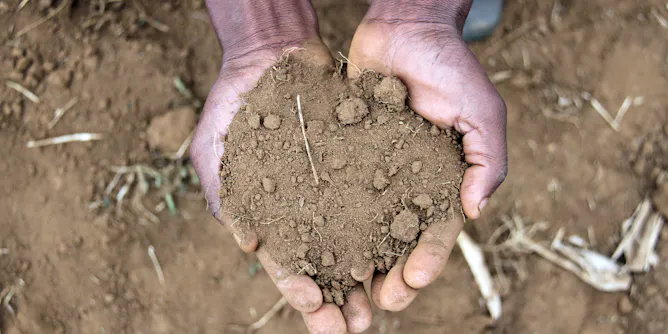
Microbial ecology helps explain how ecosystems respond to environmental pressures.
Articles on Fungi
Displaying 1 - 20 of 155 articles
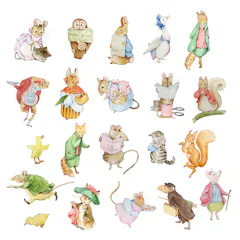
Her illustrations remain beautiful works of art, but they also show how the best natural history drawings make us notice things we might otherwise miss.
The African armyworm causes havoc for many crops and livestock.
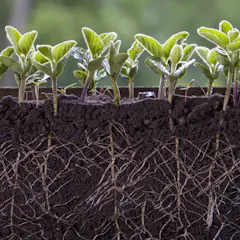
Too much fertilizer disrupts the hidden world of soil-dwelling microbes that were sustaining healthy crops long before synthetic fertilizer was invented.
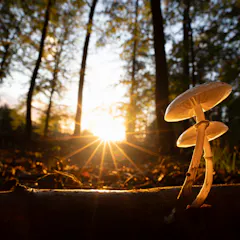
A new study provides a crucial baseline: the first global map of where these fungal networks are and how much of them exists.
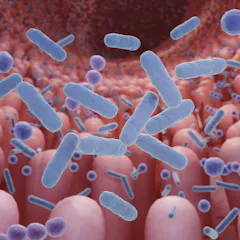
Microbiomes influence how efficiently a child’s body extracts and uses nutrients from food for growth and development.
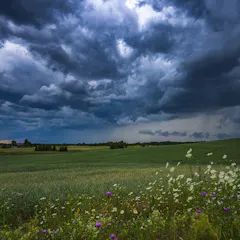
Soil fungi “borrow” bacterial genes to control the weather
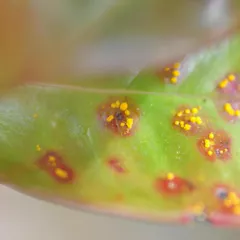
Farmers and nursery managers often use fungicide is to tackle plant rust disease, but we need to find ways to decrease our reliance on fungicide treatment.

Over a three-decade experiment in the Rocky Mountains, fungi and plant life fundamentally changed. The result has consequences for cattle and wildlife.
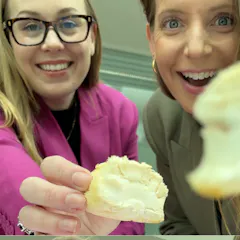
The mushrooms lived in space for over a month – and could be key to the health of astronauts in the future.

Mycelium, the hidden network behind mushrooms, can be grown into durable, low-carbon materials.

One study found socks contained the highest microbial count of any other once-worn clothing item.
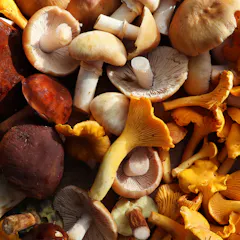
Two ethnobiologists at Penn State surveyed over 800 mushroom harvesters in the mid-Atlantic region to understand what they’re hunting and why.

Psychedelic plants and fungi grow all over the planet.

The ‘mycobiome’ refers to the hundreds of species of fungi that normally live on and in our body.
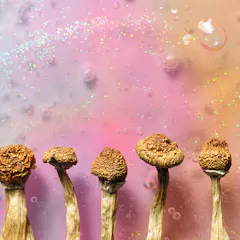
The discovery could also make the production of psilocybin in the lab more sustainable.
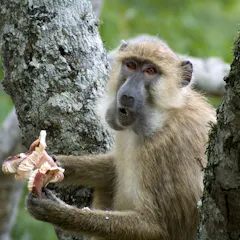
Mushrooms make up a crucial part of some monkeys’ diets, offering insights into the past.
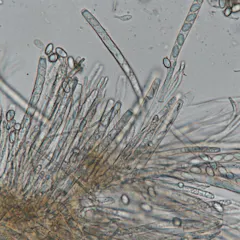
Challenging the long-standing assumption that a cell’s nucleus contains a complete set of chromosomes, recent research reveals that some fungi nuclei only contain half.

Advances in imaging, text recognition and machine learning are transforming what can be done with collections of plants and fungi in herbaria and museums globally.

In some cases it’s mould but the more likely culprit is a bacteria called Serratia marcescens. Here’s what you need to know about it.
Top contributors
-

Cornelius Vanderbilt Chair in Biological Sciences, Professor of Biological Sciences and Biomedical Informatics, and Director of the Vanderbilt Evolutionary Studies Initiative, Vanderbilt University
-
Associate Professor of Mycology and Plant Pathology, West Virginia University
-
Professor in Plant-Soil Processes, University of Sheffield
-
Adjunct academic, mycology, Flinders University
-
Lecturer in Mycorrhizal Ecology, Hawkesbury Institute for the Environment, Western Sydney University
-
Postdoctoral Researcher in Mycology, Earlham Institute
-
Professor, Immunology and Immunotherapy, University of Birmingham
-
Postdoctoral Researcher in Mycology, West Virginia University
-
Honorary Professor Department of Biological and Environmental Sciences, University of Stirling
-
Associate Lecturer, Department of Biology, Lund University
-
Professor of Microbiology, The Wellcome Trust Research Laboratory, Division of Gastrointestinal Sciences, Christian Medical College, Vellore
-
Professor and ARC Future Fellow, Hawkesbury Institute for the Environment, Western Sydney University
-
Senior Research Associate, School of Agriculture, Food and Ecosystem Sciences, The University of Melbourne
-
Chairperson, Centre of Social Medicine and Community Health, Jawaharlal Nehru University
-
Senior Lecturer in Clinical Microbiology, University of Leicester