
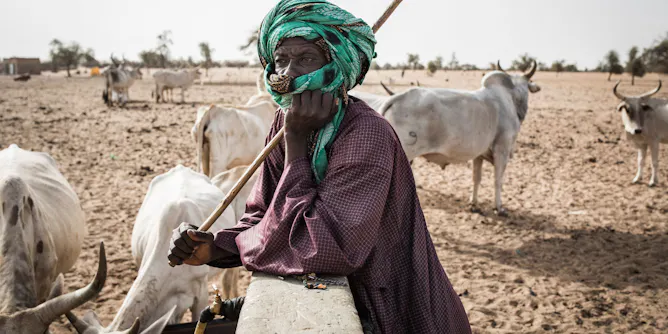
Genetic insights into the Fulani people not only illuminate their biological history but also enrich our understanding of their cultural and historical narratives.
Articles on fulani
Displaying all articles
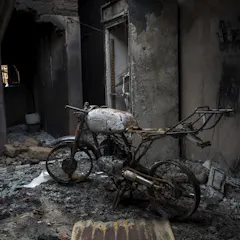
The idea and feeling of resistance from the minority groups have been strong drivers for conflicts in Nigeria.
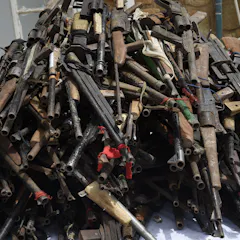
Civilian protection payment is not a sustainable self-protection strategy in north-west Nigeria.
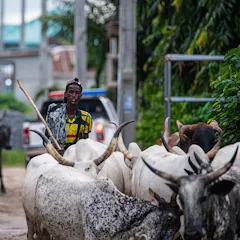
Violence between herdsmen and farmers in the Sahel is nothing new, but in recent years Nigeria has a noticeable upturn in violence.

Labels that emphasise the social identities of the contending parties not only impede efforts to comprehend their causes but also obscure their vast dimensions.
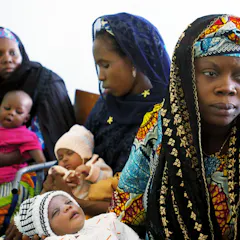
More attention should be given to the oral health of women during the reproductive years, in particular those who have many children.
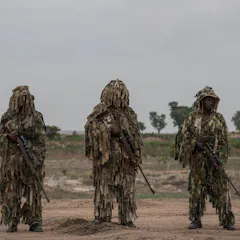
The atrocities and motivation of bandits have assumed insurgent-type criminality. But the Nigerian government is reluctant to label them terrorists or insurgents.
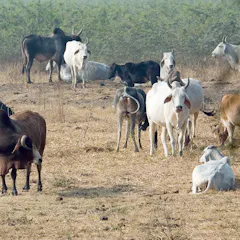
Critics have said that ranching is environmentally unsustainable because it results in land degradation. There are other reasons it’s not the solution.
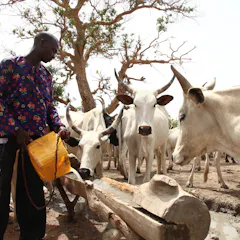
Clashes between farmers and herders in Nigeria have their roots in history and an overriding arc of insecurity, but new challenges are contributing to the problem.
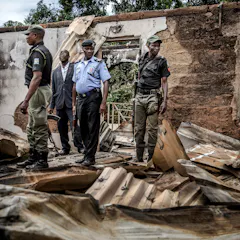
Conflicting groups in Kaduna can only achieve peace if they negotiate based on the value and inherent dignity of the human person.

The absence of a strong government in Mali
allows jihadists to enter new areas and flourish.
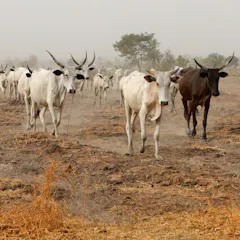
Talk of ethnic and religious conflict between Muslim Fulani herders and local Christian farmers misses the full picture – this is about resources.

Attacks by Fulani herdsmen on communities in West Africa are increasing in number and in sophistication. Regional and national authorities must respond promptly to arrest the threat.
Top contributors
-

Leverhulme Early Career Research Fellow, Aston University
-
Reader (Associate Professor) Department of Political Science, Federal University of Lafia, Nigeria, Federal University Lafia
-
Assistant Professor of Political Science, Lakehead University
-
Lecturer, Land Management and Land Tenure, University for Development Studies
-
Lecturer, University of Northampton
-
Professor of International Relations, Norwegian University of Life Sciences
-
Reader in International Relations, Royal Holloway, University of London
-
PhD candidate and Research Fellow, University of Ibadan
-
Lecturer, Department of Planning, University for Development Studies
-
PhD Candidate in Political Science, University of Oslo
-
Research fellow, French Institute for Research in Africa, University of Ibadan
-
Associate Professor of Dentistry, Obafemi Awolowo University
-
Senior Lecturer, Department of Criminology, Security, Peace and Conflict Studies, Caleb University
-
Professor, Anthropology and Genetics, Charles University
-
Instructor in Population Genomics, Johns Hopkins University