
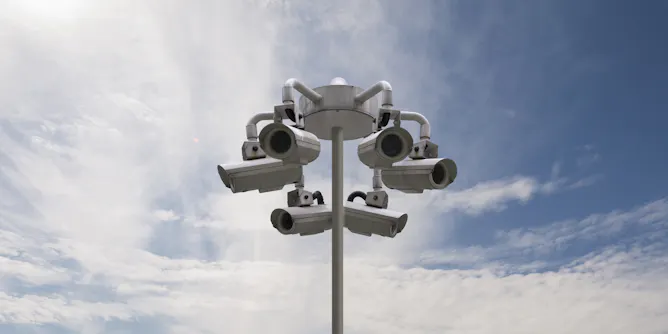
The architecture of automated license plate readers turns local cameras into a far-reaching surveillance network that can be accessed by agencies that never purchased the devices.
Articles on Fourth Amendment
Displaying all articles
License plate readers are widely used in the US. A new product marketed to police departments promises to add the ability to sense phones and other devices in passing cars.
Geofencing warrants, which round up the location data of everyone in a specific place at a specific time, are now legally subject to Fourth Amendment protections.
Geofencing warrants round up the location data of everyone in a specific place and time, whether or not they had any connection to a crime – a test of the Fourth Amendment in the digital age.
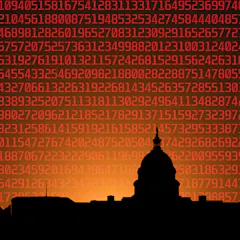
To augment information about you that it collects directly, the US Government is buying less-regulated information harvested by cameras, cellphones and apps and sold on the commercial data market.
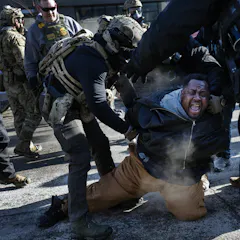
In Minnesota, can constitutional protections withstand the actions of a federal government seemingly intent on aggressively violating the rule of law?
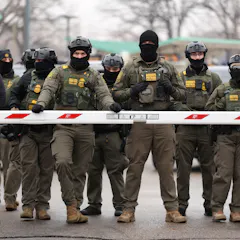
A policing scholar and former FBI special agent lays out the established principles of policing and constitutional law that govern how federal immigration enforcement efforts should be carried out.
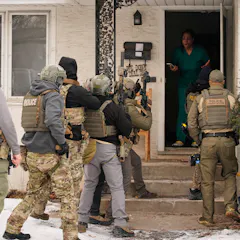
Since the republic’s beginning, it has been uncontested law that to invade someone’s home, the government needs a warrant reviewed and signed by a judicial officer. ICE is turning that law on its head.
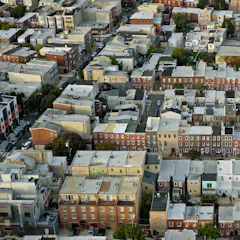
The Philadelphia Police Department plans to expand its use of drones, including as first responders.

Police can reconstruct someone’s movements for days or weeks at a time, without any court oversight.
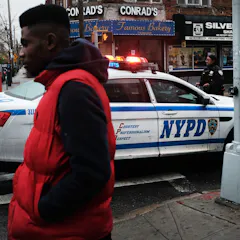
Evidence from NYC shows that stop-and-frisk policing leads to greater mistrust of police and more racial disparities in the criminal justice system.

Some US law enforcement agencies are using a commercial app that tracks people all day long via their phones – without a court order or oversight.

The Supreme Court has found protections for people’s privacy in several constitutional amendments – and used it as a basis for some pretty fundamental protections.
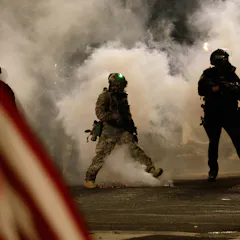
The lawsuits filed in Portland sparked by the presence of federal law enforcement agents sent there by President Trump are a preview of the legal battles to come in cities across the US.

Cellphone data can show who coronavirus patients interacted with, which can help isolate infected people before they feel ill. But how digital contact tracing is implemented matters.
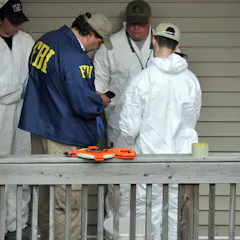
A recent US Supreme Court ruling marks a new milestone in the debate over police power and privacy in the digital age.
People’s most private information isn’t on paper locked in desks anymore – it’s online, stored on corporate servers. The Supreme Court now says some privacy protections cover that data.

Should police be able to use cellphone records to track suspects – and law-abiding citizens?
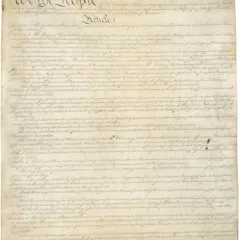
The FBI has a history of abusing search warrants to illegally read Americans’ emails. Did the agency just do it again, in the highest of all high-profile situations?
We don’t expect our own government to hack our email – but it’s happening, in secret, and if current court cases go badly, we may never know how often.
Top contributors
-

Affiliated Faculty Member, Institute for Computational and Data Sciences, Penn State
-
Professor of law and ethics, Georgia State University
-
Associate Professor of Law and Director of Criminal Practice Clinic, University of New Hampshire
-
Bernard A. Galler Collegiate Professor of Electrical Engineering and Computer Science, University of Michigan
-
Professor of Law and Faculty Director, Technology, Law & Security Program, American University
-
Assistant Professor of Law, University of Oregon
-
Associate Professor of Law, University of Colorado Boulder
-
President, Dickinson College
-
Professor of Sociology, Criminology, and Public Policy, Penn State
-
Associate Professor of Philosophy, University of Alabama; Institute for Humane Studies
-
Professor of History, Augsburg University
-
Professor of History, University of St. Thomas
-
Associate Professor of Criminology and Justice Studies, Drexel University
-
Professor of Criminology and Justice Studies, Drexel University
-
Ph.D. Candidate in Geography and Assistant Director at the Center for Refugee Studies, Indiana University