

South Africa is home to some remarkable geoheritage.
Articles on Fossil preservation
Displaying all articles

Cutting-edge analysis of fossil ape teeth reveals ancient seasonal change in Africa, long before human ancestors appeared. The method will be crucial for the future study of early hominins.
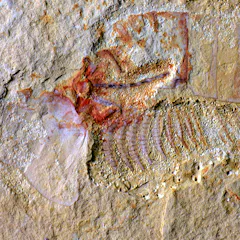
Researchers have found a new way by which the brains of ancient animals can be preserved.
The updated methods are providing a clearer picture of how Earth and its inhabitants evolved over the past 60,000 years - and thus, providing new insight into its future.
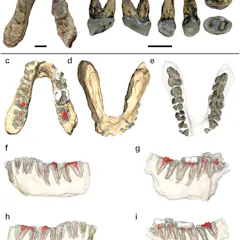
The theory that humankind originated in Europe is an old one. It was abandoned in 1924 when the first Australopithecus was discovered in South Africa.

Africa has one of the world’s richest fossil records, and evidence suggests that amateurs collected really important fossils long before professionals arrived on the scene.
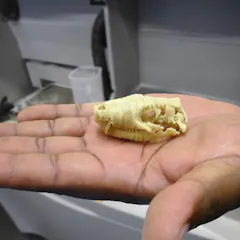
An old technique to explore the inside of fossils unfortunately ended up destroying some unique specimens. New technology has been used to reconstruct one such fossil.
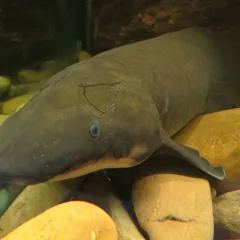
To understand how some creatures evolved, you need to see how their brain developed over millions of years. That’s now possible thanks to some clever use of scanning technology.
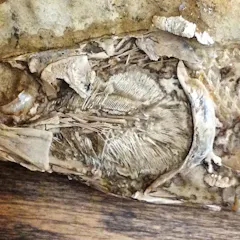
For centuries, the fossil remains of back-boned animals were studied primarily from their hardened bones. Now palaeontologists can study the softer side of these ancient creatures.
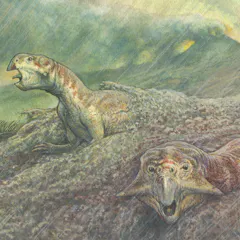
Was there a ‘dinosaur Pompeii’ in China? New research questions the claim.
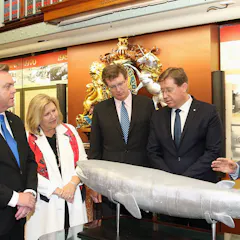
Every state and territory in Australia should have one: a fossil emblem. Not only can they be good for tourism but they can also help teach people about the ancient history of the regions.
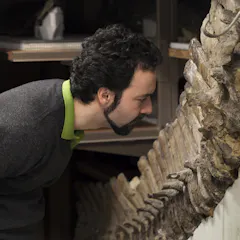
Organic dinosaur remains were thought to be extremely rare – until now.
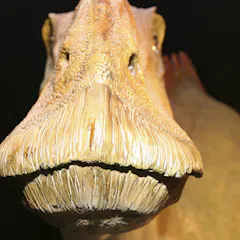
Life as we know it is carbon-based, that is, organic. These organic molecules containing mostly carbon and hydrogen are delicate to the ravages of time, relatively speaking. They aren’t usually preserved…
Top contributors
-

Associate professor in Vertebrate Palaeontology, University of the Witwatersrand
-
Emeritus Strategic Professor in Palaeontology, Flinders University
-
Postdoctoral Researcher in Palaeobiology, University College Cork
-
PhD student, Imperial College London
-
Palaeontologist, University of Southampton
-
Postdoctoral Research Scientist, Columbia University
-
Professor, Director, Carbon Dating Laboratory, University of Waikato
-
Post-doctoral researcher in Palaeobiology, Flinders University
-
Assistant Professor, Harvard Kennedy School
-
Professor of Earth Sciences, University of New England
-
Professor in the Australian Research Centre for Human Evolution & Griffith Centre for Social and Cultural Research, Griffith University
-
Professor of Geology, Vice President for Academic Affairs and Dean of the College, Pomona College
-
Pro Vice-Chancellor of Research, University of Technology Sydney
-
Merit Researcher, Natural History Museum
-
Chair professor, Queen's University Belfast