
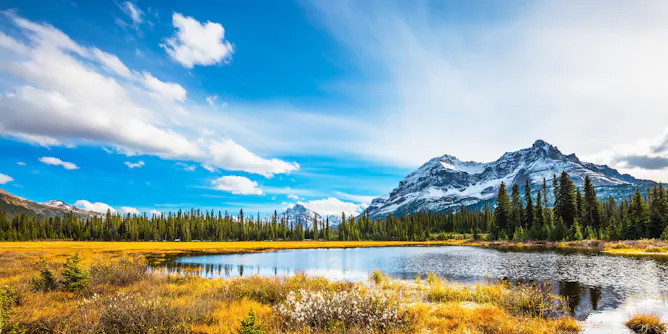
Integrating local and Indigenous knowledge into conservation can help to support diverse diets without compromising biodiversity goals.
Articles on Forests
Displaying 121 - 140 of 502 articles

To fight global warming we will soon have to try to remove carbon dioxide from the skies or find ways to reflect the Sun’s heat. Such radical paths must be examined, but risky experiments avoided.
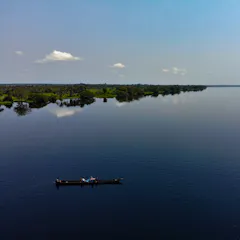
The Ruki River supplies dissolved carbon from forest vegetation and soils to the Congo River.

President Biden has called for protecting large, old trees from logging, but many of them could be cut while the regulatory process grinds forward.
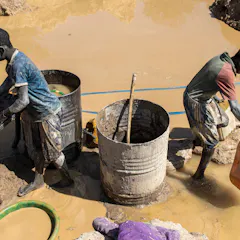
Given the dangers of mercury toxicity and the high exposure of miners and their communities, solutions are needed to reduce their exposure.
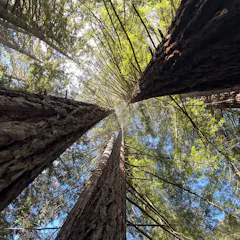
Redwoods grow in networks that house unique communities of plants and animals high in the air. They offer life lessons about adapting over time.
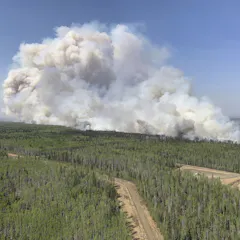
Current greenhouse gas inventories in Canada only consider “managed” lands. This must change before we can truly understand the scale of Canada’s carbon emissions.
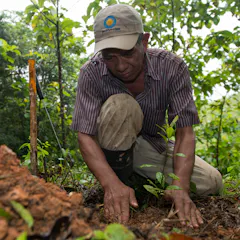
It might seem counterintuitive to suggest timber harvesting when the goal is to restore forests, but that gives landholders the economic incentive to protect and manage forests over time.
When forest communities have secure rights and tenure, the results can be miraculous.
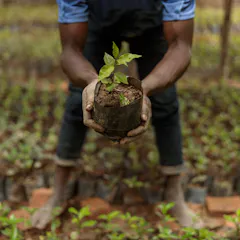
Carbon capture and sequestration can play a role in limiting warming but the nuances of its application are far more complicated than just planting trees. Getting it wrong could make warming worse.
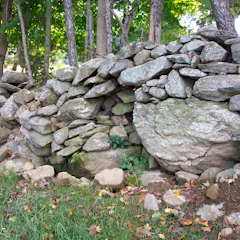
New England has thousands of miles of stone walls. A geoscientist explains why analyzing them scientifically is a solid step toward preserving them

For the proposed Great Koala National Park to actually help koalas, logging should stop and plantations should be added to the park.
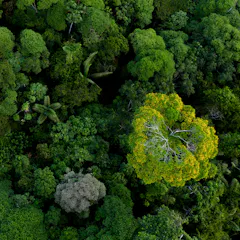
We argue for an orderly transition from ‘timber mining’ to managed forestry in the tropics. Here’s a five-step plan to improve forest fates, with benefits for the climate, biodiversity and people.
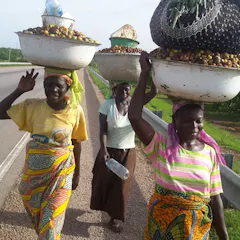
Shea is a key economic crop for poor women in the northern parts of Ghana.
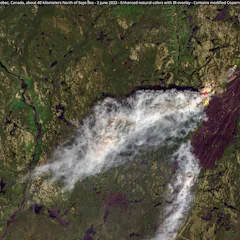
The forest fires of the summer of 2023 in Québec were devastating. It was the worst year in 50 years. But with climate change, the worst may be yet to come.

Satellite data shows wildfires are destroying large areas of timber-producing forests around the world. These fires are becoming more destructive with each passing year.

How will Earth’s vast boreal forests look in a warmer world? Combining satellite-based research with fieldwork shows that the planet’s largest wilderness may be changing in unexpected ways.

New research identifies what needs to be done to stop failing forests.
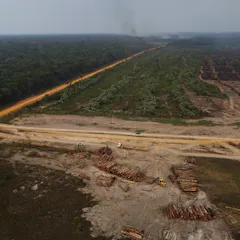
Getting serious about protecting global biodiversity requires not just policy but a revolution in how we talk about, and with, our planet’s forests.
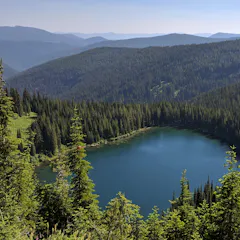
As the climate warms, devastating fires are increasingly likely. The 2020 fires pushed the Southern Rockies beyond the historical average. Is there hope for the Northern Rockies?
Top contributors
-

Distinguished Professor of Ecology, Fenner School of Environment and Society, Australian National University
-
Distinguished Research Professor and Australian Laureate, James Cook University
-
Research Associate, University of New South Wales, and Adjunct Associate Professor, Curtin University
-
Professor, University of Tasmania
-
Chief Research Scientist, CSIRO Environment; Executive Director, Global Carbon Project, CSIRO
-
Research Fellow, Fenner School of Environment and Society, Australian National University
-
Professor in Conservation Science, School of the Environment, The University of Queensland
-
Professor Emeritus of International Environmental Policy, Tufts University
-
Master of University House and Professor of Forestry, Australian National University
-
Professor Emeritus of Global Change Biology and Terrestrial Systems Science, Oregon State University
-
Agente de transfert de connaissances pour le Centre de recherche sur la boréalie (CREB), Université du Québec à Chicoutimi (UQAC)
-
Professor in Forest and Landscape Dynamics, The University of Melbourne
-
Honorary Professorial Fellow, The University of Melbourne
-
Associate Professor of Civil Engineering, Boise State University; United Nations University
-
CGIAR