
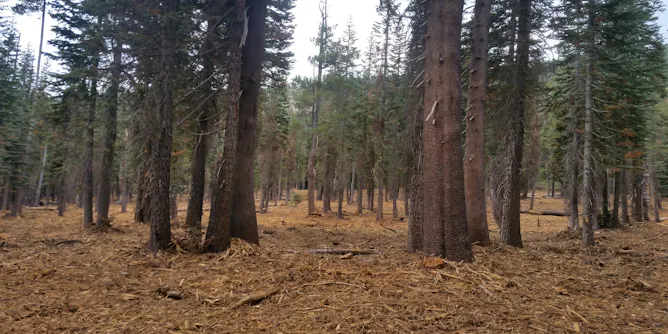
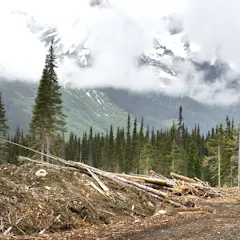
Restoring western forests – thinning out small trees and dead wood – is an important strategy for reducing the risk of massive wildfires. But these projects aren’t fast, easy or cheap.
Articles on Forests
Displaying 281 - 300 of 503 articles

Conservation or copper? A proposed mine in northern Minnesota pits industrial jobs against a thriving outdoor economy.
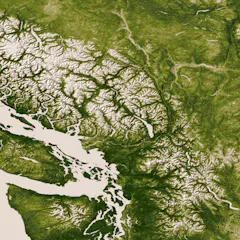
Local adaptation allows plants and animals to thrive in a diversity of places. Sometimes adaptation sharpens patterns of where organisms live, but 85% of the time, it creates a more homogeneous world.
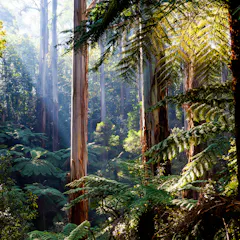
We counted the number of standard trees in Australia. It turns out that since 1990, we’ve actually been gaining trees faster than losing them.

Debating whether climate change or forest management has caused the devastating wildfires in California, Washington and Oregon is a false choice.
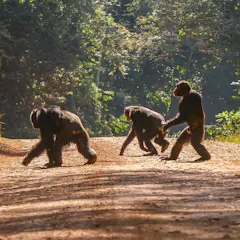
As in humans, environmental changes provoked chimpanzees to develop a diverse range of behaviours.
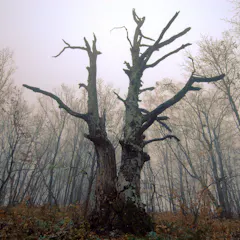
We analysed 210,000 tree ring records from 80 different species, and found the trade off between growth and lifespan may neutralise the forest carbon sink.
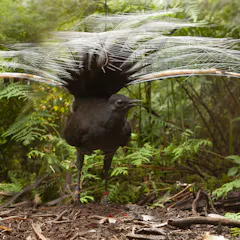
The Superb Lyrebird is famous for its song and dance, but what is less known is their extraordinary role as world-class ecosystem engineers.
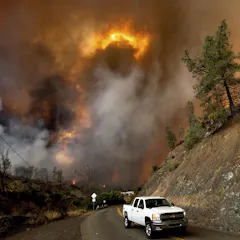
Wildfires blanketing several Western cities are creating hazardous health conditions. Don’t count on cloth masks to protect your lungs.
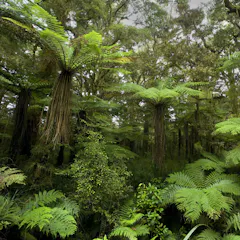
They’re a familiar sight on forest walks and long drives, but tree ferns are more fascinating than you may have realised.
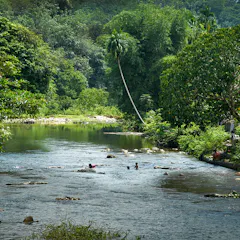
Conservation and development scheme REDD+ has manifested as a series of models, which increases its perceived success and enables it to continue despite not delivering on its wide-reaching promises.
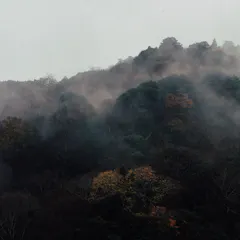
The age of a forest can influence how effectively it offsets our emissions.
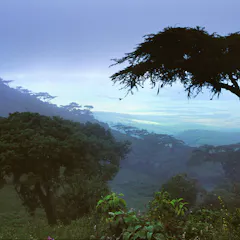
In general, the larger the tree, the more carbon it stores.
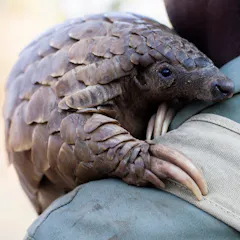
Yellow fever, malaria and Ebola all spilled over from animals to humans at the edges of tropical forests. The new coronavirus is the latest zoonosis.
New findings show how changes in land use have complex effects on animal and plant species.
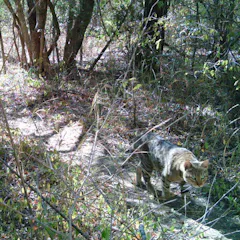
The conventional view is that Madagascar has no native cats. Yet, cats are plentiful.

Local people are caught in an impossible situation – stay home and starve or venture out to buy food, potentially bringing the virus home too.
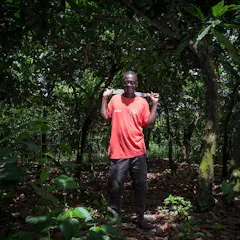
The rising demand on the world market for cocoa has put pressure on Ghana’s forests.
Protected areas in Nigeria are generally hampered by limited funds and resources.
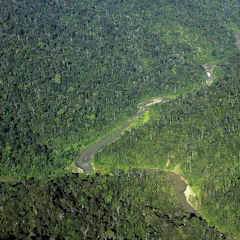
Declaring conservation areas is meant to preserve nature. Why is this approach still failing?
Top contributors
-

Distinguished Professor of Ecology, Fenner School of Environment and Society, Australian National University
-
Distinguished Research Professor and Australian Laureate, James Cook University
-
Research Associate, University of New South Wales, and Adjunct Associate Professor, Curtin University
-
Professor, University of Tasmania
-
Chief Research Scientist, CSIRO Environment; Executive Director, Global Carbon Project, CSIRO
-
Research Fellow, Fenner School of Environment and Society, Australian National University
-
Professor in Conservation Science, School of the Environment, The University of Queensland
-
Professor Emeritus of International Environmental Policy, Tufts University
-
Master of University House and Professor of Forestry, Australian National University
-
Professor Emeritus of Global Change Biology and Terrestrial Systems Science, Oregon State University
-
Agente de transfert de connaissances pour le Centre de recherche sur la boréalie (CREB), Université du Québec à Chicoutimi (UQAC)
-
Professor in Forest and Landscape Dynamics, The University of Melbourne
-
Honorary Professorial Fellow, The University of Melbourne
-
Associate Professor of Civil Engineering, Boise State University; United Nations University
-
CGIAR