
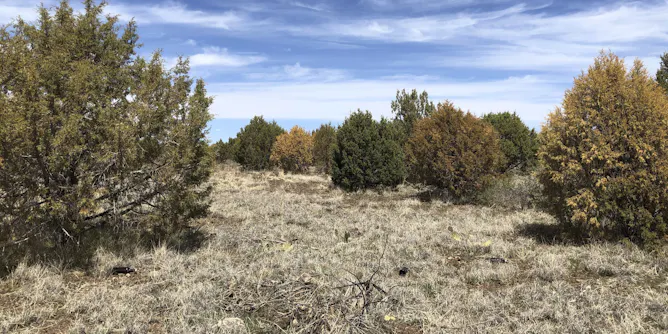
Without enough water, trees can develop embolisms, similar to blockages in human blood vessels, and they’re more likely to die from drought or fires.
Articles on Forests
Displaying 261 - 280 of 503 articles
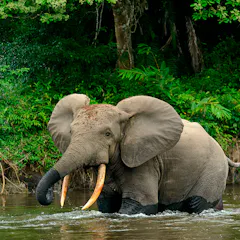
Studying how elephants move can give clues into how they can be better managed to conserve their populations.

The more our cities grow, the more we need access to enjoy — and be in relationship with — urban forests to maintain our well-being.
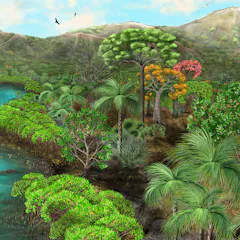
Using remnants of fossilized trees, scientists and an artist figured out what the forest looked like long before humans existed.
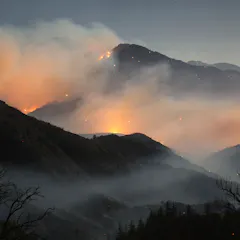
As the risk of fires rises in areas once considered too wet to burn, it creates hazards for mountain communities and for downstream water supplies.

They overlook a vast body of evidence that crown fire – the most extreme type of fire behaviour in which tree canopies burn - is more likely in logged native forests.

Large-scale tree-planting projects are politically popular and media-friendly, but without effective planning and long-term management, they can do more harm than good.
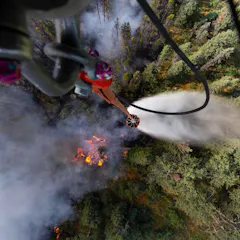
A new study finds more deciduous trees like aspen are growing in after severe fires in the region, and that has some unexpected impacts.
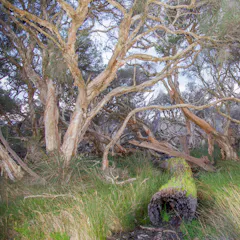
Scientists are learning trees can emit methane, which could be a big problem for global warming. But a world-first discovery of methane-eating bacteria in paperbark can help moderate this.
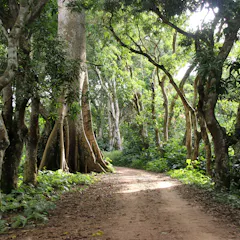
A stable ecosystem of organic matter is the key to improving agricultural yields in the surrounding farmland and fighting climate change.
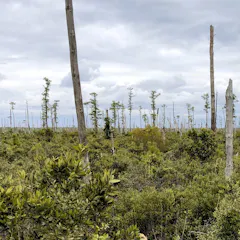
As sea levels rise along the Atlantic coast, saltwater is intruding inland, killing trees and turning coastal forests into marshes. Should scientists try to slow the process, or work with it?

The International Union for Conservation of Nature has made two big decisions related to the conservation of the African elephant.

Permanently protecting large, mature forests is a faster and cheaper way to stabilize Earth’s climate than complex carbon capture and storage schemes, and more effective than planting new trees.
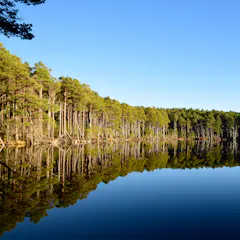
Trees may be more resilient to future dry spells than scientists first thought.
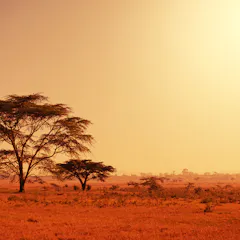
Large areas targeted for forest restoration in Africa are covered by savanna and grassland, which provide important ecosystem services that would be lost should they be converted to forests.
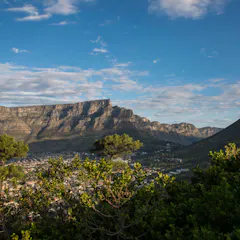
Protecting forests means protecting a rich biodiversity of plants, animals and the livelihoods of many people.
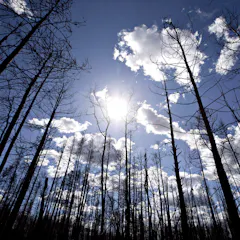
Removing trees killed by fires can have long-term consequences for wildlife.
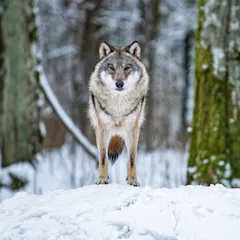
Historians and scientists discovered how colonisation in eastern Europe changed ecosystems – and the societies embedded in them.
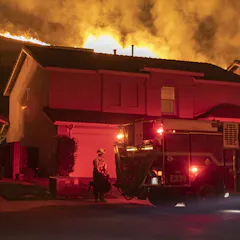
A fire scientist offers a six-point strategy for preventing wildfires and living safely in flammable landscapes.
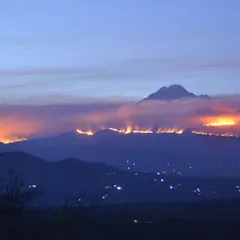
There have been several severe fires on Kilimanjaro over the last few decades that have dramatically changed land cover.
Top contributors
-

Distinguished Professor of Ecology, Fenner School of Environment and Society, Australian National University
-
Distinguished Research Professor and Australian Laureate, James Cook University
-
Research Associate, University of New South Wales, and Adjunct Associate Professor, Curtin University
-
Professor, University of Tasmania
-
Chief Research Scientist, CSIRO Environment; Executive Director, Global Carbon Project, CSIRO
-
Research Fellow, Fenner School of Environment and Society, Australian National University
-
Professor in Conservation Science, School of the Environment, The University of Queensland
-
Professor Emeritus of International Environmental Policy, Tufts University
-
Master of University House and Professor of Forestry, Australian National University
-
Professor Emeritus of Global Change Biology and Terrestrial Systems Science, Oregon State University
-
Agente de transfert de connaissances pour le Centre de recherche sur la boréalie (CREB), Université du Québec à Chicoutimi (UQAC)
-
Professor in Forest and Landscape Dynamics, The University of Melbourne
-
Honorary Professorial Fellow, The University of Melbourne
-
Associate Professor of Civil Engineering, Boise State University; United Nations University
-
CGIAR