
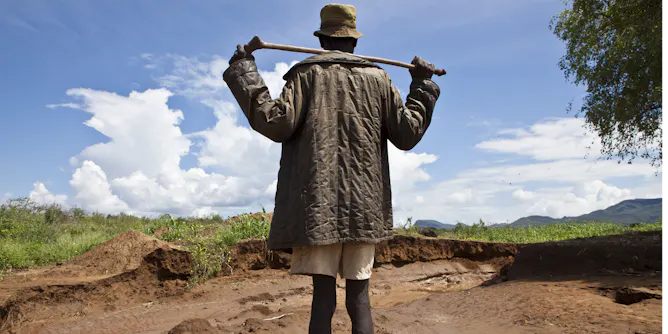
The absence of the early warning network will affect Kenya’s ability to address food insecurity.
Articles on Food systems
Displaying 21 - 40 of 79 articles

Frybread — a simple, versatile “comfort food” for many Indigenous communities — embodies the contradictions that have dictated Indigenous food and health in North America since colonization.

Just as calls for health-care reform often focus on improving services, Canadians have the right to expect better outcomes from agricultural policies.
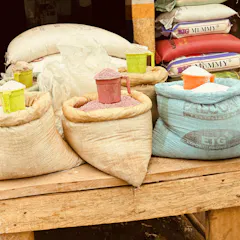
The world faces compounding crises in food availability. Efforts in Sierra Leone to address these challenges could serve as a foundation for wider food security initiatives.

Eating sustainably is more feasible than most realize. These four tips can help reduce the footprint of your kitchen while also helping you live a more healthy life.
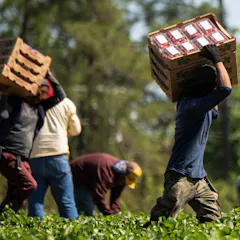
Local food systems are often hailed as being more sustainable than global food systems, but are these systems truly any better?

School food can connect people powerfully to their local lands, resources and economies, and be a tool towards reconciliation with Indigenous communities.
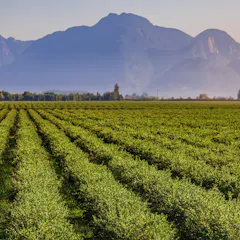
In the face of growing social and environmental challenges, organizations in the food and agriculture sector are increasingly turning to nature for inspiration.

The UN climate conference brought some progress. A former UN official who has been involved in international climate policy for years explains what has to happen now for that progress to pay off.
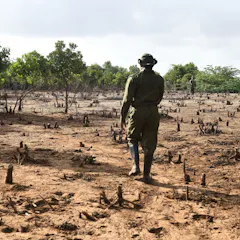
The Kenyan state has historically viewed forests in terms of production and economic development – not biodiversity and conservation.

Too much red meat – and especially processed meat – is linked to cancer and heart disease. But moderation is the key – alongside better farming practices

A guaranteed basic income is a promising tool for contributing to sustainability and justice across agriculture and fishing sectors.

Both at home and in schools, food can become a powerful tool to empower young people to take climate action, which can lead to reduced climate anxiety and increased feelings of hope for the future.
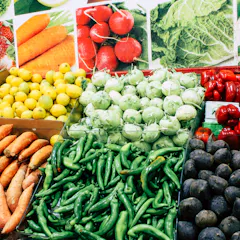
The inequitable distribution of the benefits and harms of the food system is a violation of the constitutional right to food.
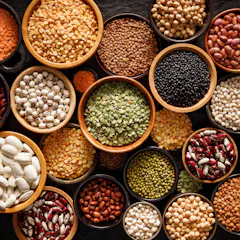
Pulses are important for many reasons. They are packed with nutrition, resilient and crucial for achieving food security in Africa.
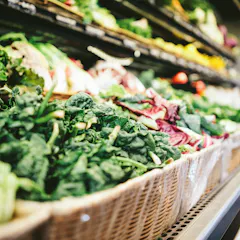
Innovations in food science and technology are well-positioned to address many existing food systems challenges.

Extreme weather will continue to disrupt global food systems.
Synthetic milk offers dairy milk without the concerns such as methane emissions or animal welfare. But is it the whey forward?
A ‘learning journey’ research process exposed a broad group of participants to local realities of the food system and childcare in a small town.
Infectious diseases originating in wild animals are high and may be increasing. This is a sign that ecosystem degradation is undermining the planet’s capacity to sustain human wellbeing.
Top contributors
-

Senior Fellow, Department of Agricultural Economics, Stellenbosch University
-
Professor, Sustainable Food Systems, Dalhousie University
-
Research Associate in Plant Biology, University of Cambridge
-
President, Food Secure Canada
-
Postdoctoral Fellow, Common Ground Canada Network, Dalhousie University
-
Director of the Arrell Food Institute and Professor in the Dept. of Geography, Environment and Geomatics, University of Guelph
-
Co-director; Bureau of Food and Agricultural Policy (BFAP), Stellenbosch University
-
Assistant Professor, Faculty of Land and Food Systems, University of British Columbia
-
Professor and Dean of The Ontario Agricultural College, University of Guelph
-
DeWitt Wallace Professor of Geography, Director of Food, Agriculture & Society Program, Macalester College
-
Canada Research Chair in Equitable and Sustainable Food Systems, Lakehead University
-
Professor and Director, University of Waterloo
-
Professor of Rural Sociology, University of Missouri-Columbia
-
Emeritus Professor, Fenner School of Environment & Society, Australian National University
-
Assistant Professor, School of Public Health and Social Policy, University of Victoria