

An expert on food policy explains how the end of COVID-19 waivers will impact children’s access to food, as well as the importance of food banks and pantries.
Articles on Food systems
Displaying 41 - 60 of 79 articles

Industry seeks to capitalize on regenerative agriculture, but standards that focus only on carbon or other select environmental metrics will undermine its transformative potential

The world is facing one of the century’s biggest challenges: How to nutritiously feed the growing population, address climate change and not destroy the ecosystems on which we all depend for life.
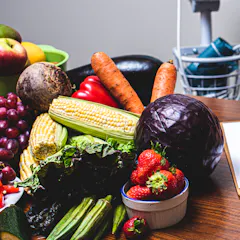
Food security is crucial to disease prevention and management, so prescribing healthy foods and reducing barriers to better diets makes sense. But food prescriptions should not be immune to scrutiny.

Ultra-processed foods that contributed the most dietary energy for Aussies included ready-made meals, fast food, pastries, buns, cakes, breakfast cereals, fruit drinks, iced tea and confectionery.
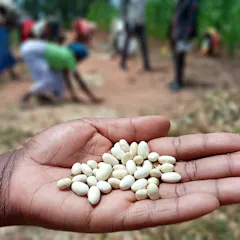
Reviving long-lost legume species could help improve global food security and decrease world hunger.

Fast food brands target high- and middle-income groups who have incomes to adopt so-called modern lifestyles, including consuming fast food regularly.
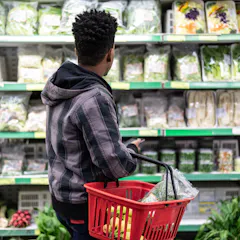
Commitments made on the global stage must now be followed through with policy and regulatory reform at national, regional and continental levels.

Humanity’s biggest challenges are not technical, but social, economic, political and behavioural. Effective actions are still possible to stabilise the climate and the planet, but must be taken now.
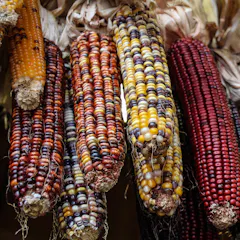
Our food systems are failing to feed all of us.
In this episode of Don’t Call Me Resilient, we pick apart what is broken and ways to fix it with two women who battle food injustice.
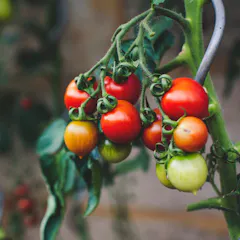
The COVID-19 pandemic has highlighted the problem of food insecurity for many people, especially racialized and Indigenous households.
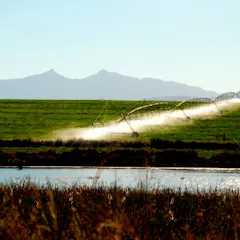
The EU’s trading partners, including South Africa, will have to adhere to new regulations tied to the blocs ‘Farm to Fork’ strategy.
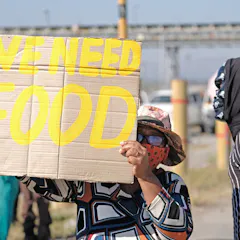
These organisations are ideally placed to contribute their fine-grained local knowledge. They intimately understand the specific needs of the most vulnerable in their communities.
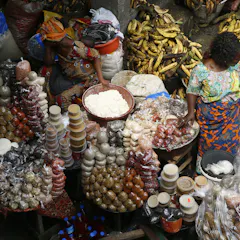
Globally, experts are beginning to recognise that focusing on one aspect of food overlooks the trade-offs or sacrifices people make.
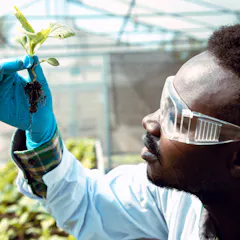
Stronger agricultural R&D systems will enable agriculture to power Africa’s transformation.

As the global South transitions to a predominantly urban future, food offers a way to understand the role of cities in future development.
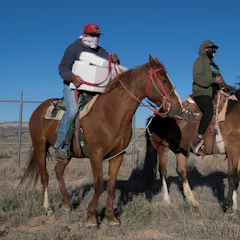
Indigenous people in the US have high rates of food insecurity and dietary-related health problems. Any attempts to address the problem must start with land justice, argues a scholar of Native health and food.
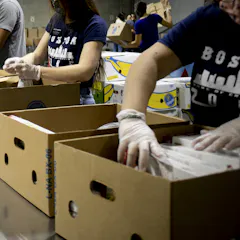
Food production in the US is heavily concentrated in the hands of a small number of large agribusiness companies. That’s been good for shareholders, but not for consumers.
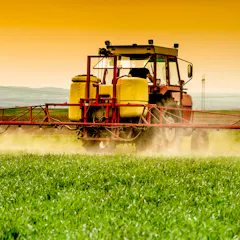
Modern agriculture releases lots of different greenhouse gas emissions, each with complex effects on the global climate.
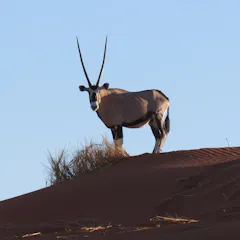
Wildlife populations have plummeted by 68% since 1970. But we have a plan to turn things around.
Top contributors
-

Senior Fellow, Department of Agricultural Economics, Stellenbosch University
-
Professor, Sustainable Food Systems, Dalhousie University
-
Research Associate in Plant Biology, University of Cambridge
-
President, Food Secure Canada
-
Postdoctoral Fellow, Common Ground Canada Network, Dalhousie University
-
Director of the Arrell Food Institute and Professor in the Dept. of Geography, Environment and Geomatics, University of Guelph
-
Co-director; Bureau of Food and Agricultural Policy (BFAP), Stellenbosch University
-
Assistant Professor, Faculty of Land and Food Systems, University of British Columbia
-
Professor and Dean of The Ontario Agricultural College, University of Guelph
-
DeWitt Wallace Professor of Geography, Director of Food, Agriculture & Society Program, Macalester College
-
Canada Research Chair in Equitable and Sustainable Food Systems, Lakehead University
-
Professor and Director, University of Waterloo
-
Professor of Rural Sociology, University of Missouri-Columbia
-
Emeritus Professor, Fenner School of Environment & Society, Australian National University
-
Assistant Professor, School of Public Health and Social Policy, University of Victoria