

Environmental footprint calculators may promise to help consumers lead a greener life. But they may in fact encourage choices that don’t benefit – or even harm – the environment.
Articles on Food production
Displaying 41 - 60 of 104 articles

Inoculating trees with an edible fungi can produce more protein per hectare than pasture-raised beef, while reforesting, storing carbon and restoring biodiversity.

Vegetables, fruits and legumes are nutritious and sustainable – but subsidies overwhelmingly neglect them.
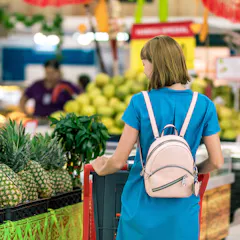
Researchers are looking into the potential technological threats to data safety and privacy from the smart supermarkets of the future.
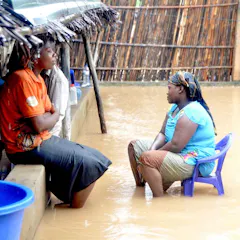
Small and medium-scale farmers and agri-businesses in Southern and Eastern Africa, which are at the heart of inclusive food value chains, are not receiving fair prices for their produce.
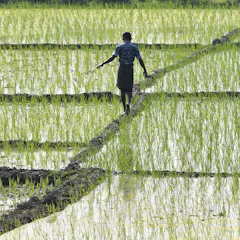
A new study provides a detailed way to calculate the climate impact of food production, which could lead to more sustainable farming policies and methods.
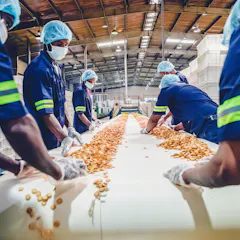
The cost of food that gets trashed anywhere between the farm and your plate is hundreds of billions of dollars a year in just the US. But a lot can be salvaged as ingredients for other food products.
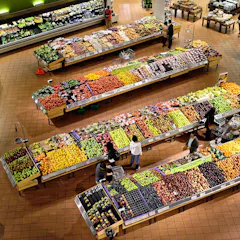
How to keep food prices down? Use technology to change the way we produce food and public policy to ensure there’s a fair price put on things like climate change, human labour and animal welfare.

Pandemic viruses arise from raising, harvesting and eating animals. Policy strategy for averting the next pandemic should include supporting those already seeking to make plant-based dietary changes.
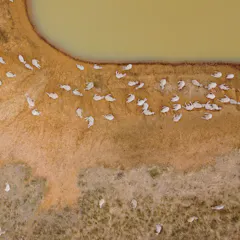
This is not an imaginary future dystopia. It’s a scientific projection of Australia under 3°C of global warming – a future we must both strenuously try to avoid, but also prepare for.
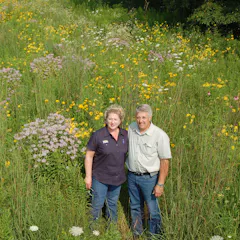
It’s possible to feed the world’s 7.8 billion people with more environmentally friendly farming practices. Here’s how.
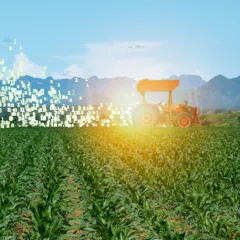
Year round local food production is within our grasp, and will slash agriculture’s climate impact — but only if we embrace agricultural technology.
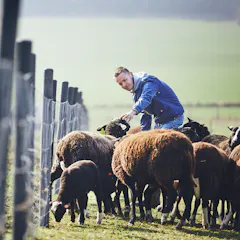
The €24 billion spent supporting farm incomes in richer regions could more than cover the EU’s Biodiversity Strategy.
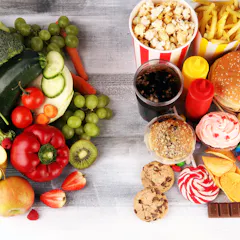
Coronavirus has shown how damaging ill-health can be for the economy, and poor diet is the world’s leading cause of ill-health.
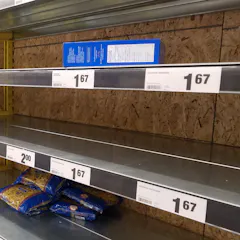
Using innovative technologies like Bitcoin and automation can help protect our food supply chains from disruptions like the one caused by the current coronavirus pandemic.
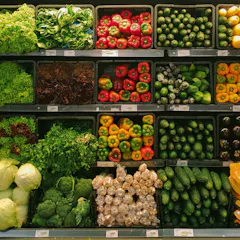
Food is essential to survival. It is also essential to identity. During times of national crisis like the coronavirus pandemic and in the historical landscape, food issues become prominent.
CC BY-NC-ND6.59 MB (download)
Taking a look at food supply chains in South Africa during the lockdown.
If lab-grown meat is truly going to be the next frontier in ethical eating, it’s important to consider who’s most at risk of being left behind in the race to develop it.
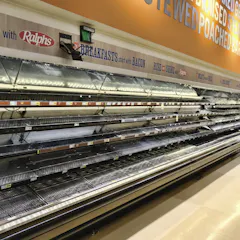
COVID-19 is showing us we must work collectively to put resilience alongside efficiency as the primary drivers for the systems we depend upon each and every day for food.
Sweeping changes are in store for British farming, but they’re not guaranteed to benefit struggling ecosystems.
Top contributors
-

Director of the Arrell Food Institute and Professor in the Dept. of Geography, Environment and Geomatics, University of Guelph
-
Research Director, Institute for Sustainable Futures, University of Technology Sydney
-
Senior Analyst, University of Pretoria
-
Director, Food and Agriculture Institute, University of The Fraser Valley
-
Emeritus Fellow in Plant Biochemistry, University of Westminster
-
Executive Director, Swette Center for Sustainable Food Systems, Arizona State University
-
Chief Research Scientist, Food Systems and the Environment, CSIRO
-
PhD Candidate, School of Social Sciences, University of Tasmania, and Senior Research Consultant, Institute for Sustainable Futures, University of Technology Sydney
-
Associate Professor in Food Systems, The University of Melbourne
-
Senior Researcher on Environment and Health, University of Oxford
-
Research Fellow, Tegemeo Institute, Egerton University
-
Director, Agri-Food Analytics Lab, Professor in Food Distribution and Policy, Dalhousie University
-
Associate Professor, Institute for Sustainable Futures, University of Technology Sydney
-
Professor of Food Policy, City St George's, University of London
-
Professor of Agricultural Development, The University of Queensland