

Using government developed criteria for marketing to kids, none of the child-targeted cereals examined would be permitted to be advertised to children, and 96 per cent surpassed sugar thresholds.
Articles on Food labels
Displaying 1 - 20 of 30 articles

Obesity remains a problem in Africa.

Fruit juices get a free regulatory ride in South Africa because the sugar in them is natural.

Only about a third of infant foods in NZ, and a quarter in Australia, meet WHO nutritional recommendations. But many are packaged to create a ‘halo’ of health.

South African labels on food to show they’ve been produced in environmentally friendly ways are confusing and unhelpful.

Packaged foods in Kenya are required to list ingredients, but this information can be hard to interpret.

Product labelling showing whether food comes mainly from animals or plants can help consumers make more climate-friendly choices.

Ministers are tightening the screws. If food companies don’t embrace health stars, they’ll be compulsory.
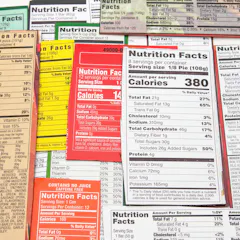
The process of converting food into nutritional information is more than just a scientific process. It involves many political and technical compromises that continue to shape the food industry today.

Research shows that consumers place their trust in animal welfare certificates on food.

Many food and beverage companies are not doing enough to positively shape diets in Canada, while positive examples show that public health commitments are achievable.

People may be surprised when they read a nutrition label on a bottle of wine. The industry should take note.
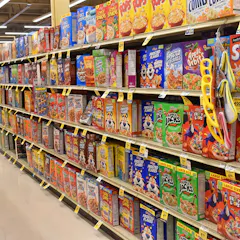
The increased availability and consumption of unhealthy food has contributed to poor health outcomes.

Australia’s food labelling system is under-performing. Here’s how we can make it more effective.

While these kinds of food labels may be easier to understand, they run the risk of being too generalised.

UK supermarket chains have dropped the use of “best before” date labels to reduce the amount of food being thrown out when it’s still perfectly edible. It’s just as big a problem in Australia.

Looking to save money on your grocery bill but not sure about home-brand food? It’s actually a healthy option, with a few exceptions.
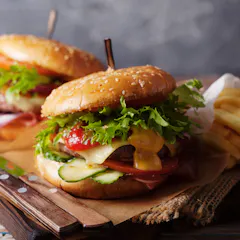
South Africa should introduce regulations that mandate the nutritional labelling of fast foods. This will help consumers make informed dietary choices.

Everyone knows it’s hard to stop eating potato chips or chocolate chip cookies. New research shows why: Certain combinations of fat, sodium, sugar or carbohydrates make them irresistible.
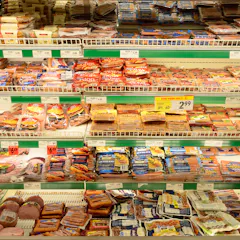
Meat producers are lobbying in many states to keep the word ‘meat’ off labels of plant-based products like the Impossible Burger. But this may not clarify shoppers’ choices.
Top contributors
-

Research Scientist, African Population and Health Research Center
-
Researcher in Law and Policy, SAMRC/Centre for Health Economics and Decision Science - PRICELESS SA, University of the Witwatersrand
-
Lecturer, Department of Physiology, University of the Witwatersrand
-
Professor and Tyson Endowed Chair in Food Policy Economics, University of Arkansas
-
Senior Lecturer, Division of Human Nutrition, Faculty of Medicine and Health Sciences, Stellenbosch University
-
Professor of International Political Economy, University of York
-
Professor and Chair Community Development and Applied Economics, University of Vermont
-
Dean and Professor of Marketing at School for Business and Society, University of York
-
Science Communication Researcher, Stellenbosch University
-
Assistant Professor of Food Safety, Extension Food Safety Specialist at University of Missouri, Kansas State University
-
Principal Research Scientist, CSIRO Agriculture, CSIRO
-
Professor; Faculty of Science, University of Technology Sydney
-
Research Assistant, Cofrin Logan Center for Addiction Research and Treatment., University of Kansas
-
Master of Science student, School of Nutrition, Université Laval
-
Professor and Director Food Systems Program, Global Change Institute, The University of Queensland