
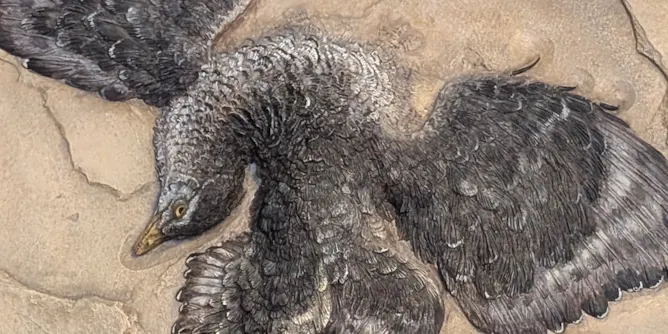
Archaeopteryx is an evolutionary icon for scientists.
Articles on Flight
Displaying 1 - 20 of 29 articles

Dinosaur wings seem to have originally been used not to fly but to attract a mate.

A 56 million-year-old fossil bone helps explain how this (mostly) flightless family of birds spread to so many different continents.

The scarcity of bat fossils is more than a palaeontological puzzle: it has implications for bat conservation strategies today.

People have been flying airplanes for well over a century. Engineers know how to balance all the forces at play, but still aren’t exactly sure how some of the physics of flight actually works.

The iconic image of a witch on a broomstick has apocryphal origins. But whether they could actually fly didn’t stop Christian society from persecuting them.
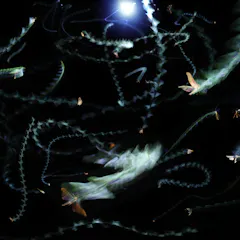
A new study shows how artificial light at night scrambles insects’ normal flight patterns, pulling them off course into orbit around the light.
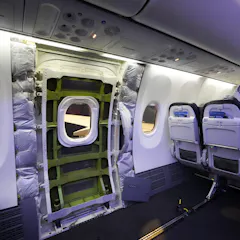
A commercial pilot turned management expert and author of ‘The Next Crash: How Short-Term Profit Seeking Trumps Airline Safety,’ explains the economics behind the near-deadly disaster.
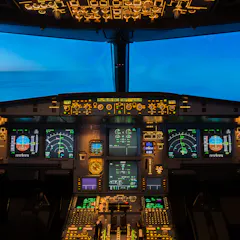
Takeoff and landing are among the most difficult tasks commercial pilots perform.
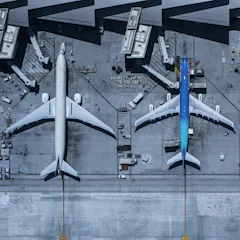
Airlines are investing in sustainable biofuel startups and starting to uses alternative fuels, including cooking oil, ag waste and corn ethanol. But biofuels alone won’t be enough, research shows.

Prehistoric reptiles like pterodactyls took flight long before bats and birds, but we don’t know how it happened.

No, you’re not imagining it. Your body does some weird things up in the air. Here’s a guide to the common and merely embarrassing to the rare, but serious.

When something disrupts the smooth, laminar flow of high-altitude winds, your flight might get a little bumpy.
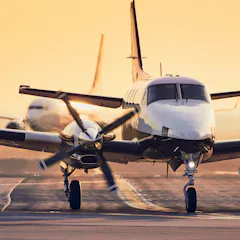
Air Canada and United Airlines both have orders for hybrid electric 30-seaters. An aerospace engineer explains where electrification, hydrogen and sustainable aviation fuels are headed.
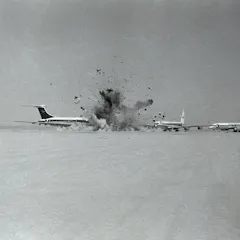
From 1968 to 1974, US airlines experienced 130 hijackings. But it was Cooper’s hijacking-as-extortion plot that captured the public’s imagination – and inspired a copycat crime wave.

Ski jumpers do everything they can to counteract the effects of gravity and fly as far as they can down hills.
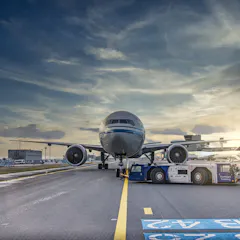
Using recycled plastic to wire planes could reduce their emissions while cutting down on waste from the 3-D printing industry.

Since 9/11, billions have been spent beefing up airport security. Was it worth it?
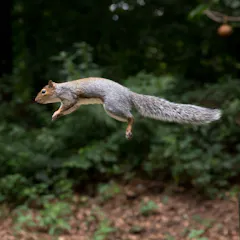
How do squirrels leap through trees without falling? It takes strength, flexibility and finely tuned cognitive skills.
Thousands of chemical compounds in wildfire smoke are interacting with each other and sunlight as the smoke travels. For people downwind, it can become more toxic over time.
Top contributors
-

Professor of History, University of Dayton
-
Adjunct Associate Professor, Griffith University
-
Lecturer in Law, University of Tasmania
-
Professor, School of Veterinary Science, University of Sydney
-
Postdoctoral Research Associate in Bioengineering, Imperial College London
-
Associate Professor in Aviation, CQUniversity Australia
-
Professor of Mechanical and Aerospace Engineering, Clarkson University
-
Professor of Biological Sciences, Florida International University
-
PhD Candidate, Palaeontology, University of Oxford
-
Research Assistant, Griffith Aviation, Griffith University
-
Professor of Aviation, Griffith University
-
Postdoctoral Researcher in Atmospheric Chemistry, University of Washington
-
Associate professor, Swansea University
-
DST Group Joint Chair of Sensor Systems, Adelaide University
-
Senior Lecturer in Aerospace Engineering, Coventry University