
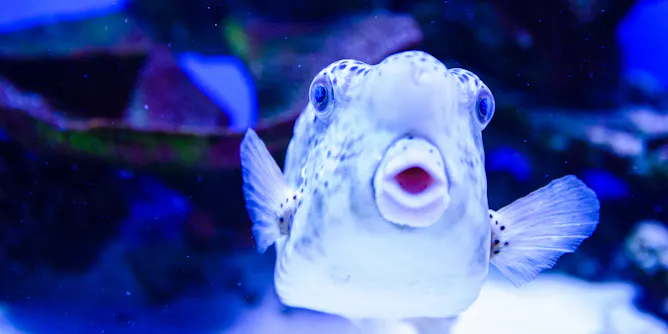
New research shows fish are more similar to complex animals like humans and other mammals than we previously thought.
Articles on Fish
Displaying 361 - 380 of 495 articles

A score of new fish species discovered recently in northern Australia remind us how little we know about our country.

Africa has a number of excellent scuba diving sites, but these must be maintained sustainably to keep attracting different divers.
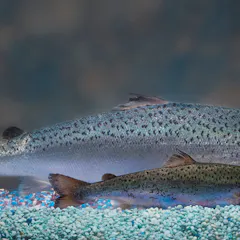
The US food authority may have approved GM salmon for our consumption, but it may take time before any appear in our stores.

There are no proper laws to combat fisheries crime. As a result, a number of organisations need to join forces to stop the problem.
Much of what we know about these elusive eels’ life cycle has been based on circumstantial evidence. Now for the first time, scientists tracked an adult eel to its distant spawning ground.

A study suggests that stopping deep-sea trawling at a depth of around 600m makes sense.
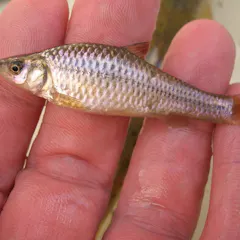
A small invasive fish known as the topmouth gudgeon has already wreaked havoc on European species and its arrival to the US and South America is only a matter of time.
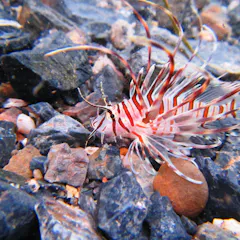
We know the warming seas are forcing some marine life to new waters, but we don’t know much about how fast and how far they are moving. But now you can help scientists find the answers with Redmap.

The combination of local fishing rights with adjacent marine reserves creates incentives to avoid overfishing and could improve nearshore, small-scale fisheries around the world.
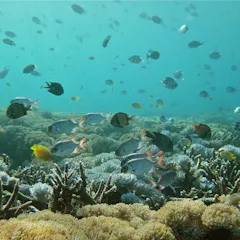
How will climate change affect life in the oceans? New research shows that the answer is likely good and bad.

The Great Southern Reef covers 71,000 square km and contributes more than A$10 billion to Australia’s economy each year.
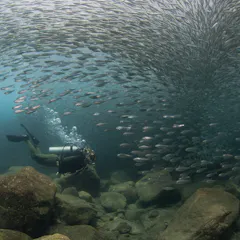
Over the past 80 years sardine and anchovy have become icons of modern-day marine biology, oceanography and climate research.

Climate change will hit South Africa’s fish population.
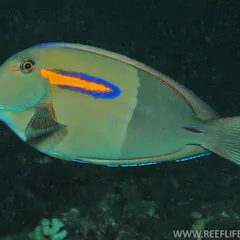
As warmer seas move further south, tropical wildlife is going with them, giving us a dramatic insight into how global warming is changing our oceans.

Despite having an internationally recognised fishing system, Namibia needs to shift gears to maintain its excellent fishing status.
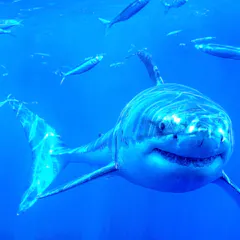
We used to think of sharks as primitive fish because the had cartilage instead of bones. Turns out there was a good reason why and it makes them anything but primitive.
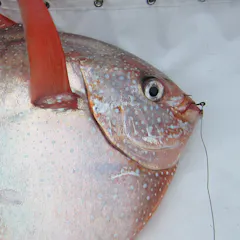
The opah fish circulates heated blood through its body like a bird or mammal, meaning it can outcompete its deep sea rivals.
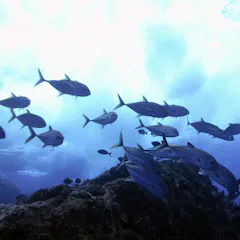
Scuba-diving scientists devise method for gauging the health of coral reefs – a vital ecosystem for keeping fisheries sustainable for people.
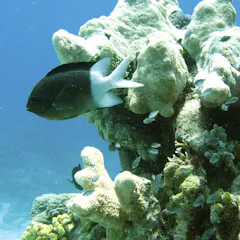
Warmer temperatures can throw off the gender balance in some species. But some fish can adjust their offspring’s gender to compensate, but only if temperatures don’t rise too high.
Top contributors
-

Emeritus Strategic Professor in Palaeontology, Flinders University
-
Professor, Macquarie University
-
Executive Director and Professor of Fisheries and River Management, Gulbali Institute (Agriculture, Water and Environment), Charles Sturt University, Charles Sturt University
-
Matthew Flinders Professor of Biodiversity Genomics, Flinders University
-
Adjunct associate in freshwater fisheries ecology and management, University of Canberra
-
Associate Professor in Ecology, Charles Sturt University
-
Postdoctoral Fellow in Vertebrate Palaeontology, Flinders University
-
Research Associate in the College of Science and Engineering, Flinders University
-
Postdoctoral Research Associate at the School of Biosciences, Cardiff University
-
Chief Research Scientist - Environment, CSIRO
-
Professor, University of Wollongong
-
Associate Professor of Neuroscience and Behavioural Analysis, University of Surrey
-
Professor of Marine biology, The University of Melbourne
-
Freshwater Ecologist, Charles Sturt University
-
Associate Professor in Marine Biology, Swansea University