

Companies like Meta and IBM are exploring explore how AI can hyper-personalize ads, drawing from our chat histories, playing to our unique fears and vanities.
Articles on Filter bubble
Displaying 1 - 20 of 31 articles

We know targeted political adverts contribute to polarisation, but commerical ones leave us fragmented too.

Science denial is not new, but researchers have learned a lot about it. Here’s why it exists, how everyone is susceptible to it in one way or another and steps to take to overcome it.

Cognitive shortcuts help you efficiently move through a complicated world. But they come with an unwelcome side effect: Facts aren’t necessarily enough to change your mind.
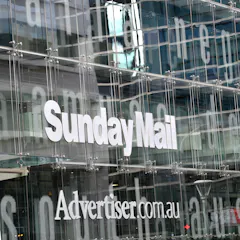
Research shows Google News results often prioritise mainstream media over smaller news businesses. It’s a double-edged sword. While local outlets suffer, it’s actually better for readers.

If teenagers organizing on social media can hamper a presidential campaign rally, how challenging is it to manipulate elections?
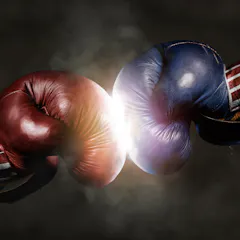
A person’s political identity is wrapped up in almost everything they do. Exposure to opinions from the other side actually makes it worse.
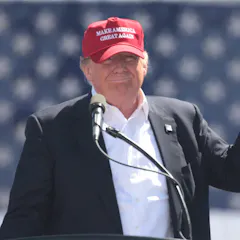
The fourth is the Oxford-style debate series, this article argues that “the impact reflected by Trump is here to stay”.
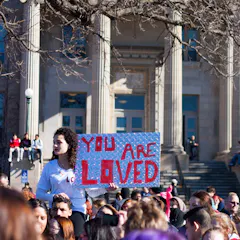
Diversity is an enormously appealing and powerful concept, yet it can also distract us from the focus we need to face today’s pressing social issues. So what’s the way forward?
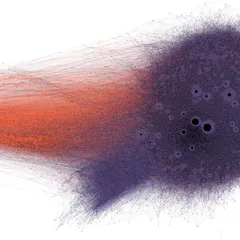
Information on social media can be misleading because of biases in three places – the brain, society and algorithms. Scholars are developing ways to identify and display the effects of these biases.
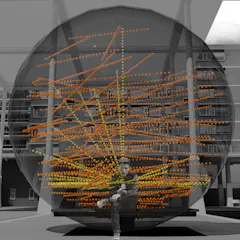
How data is changing the shape of our personal ‘bubble’ – in pictures.
Simulation models show just how effectively fake news and propaganda can shift opinions.

Harvesting data from Facebook’s users is within the rules, I should know, I’ve done this kind of research myself. But the latest scandal may make it harder for us to get any useful data.
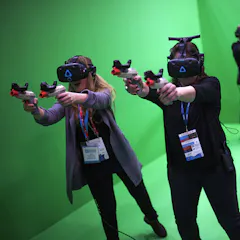
As the internet-connected world reels from revelations about personalized manipulation based on Facebook data, a scholar of virtual reality warns there’s an even bigger crisis of trust on the horizon.

Despite fears that so-called echo chambers are causing political polarization, a new study suggests it’s not the case.
Today’s communications platforms and the algorithms that power them have led to a radical change in how public discourse is conducted and public opinion formed.
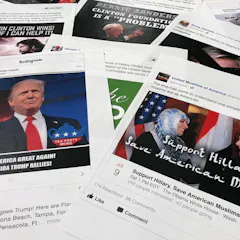
A scholar asks whether democracy itself is at risk in a world where social media is creating deeply polarized groups of individuals who tend to believe everything they hear.
Concerns over filter bubbles and fake news are often based on anecdotal evidence. There is relatively little systematic research on the topic; a new survey finds widespread fears are unwarranted.
Twitter is made up of numerous communities clustered around all manner of topics. If all you see is the same, it’s time to break out of your filter bubble.

Scrutinising the output of a national theatre at a time of rising nationalism is a worthwhile activity, but it needs either radical intention or emotional insight.
Top contributors
-

Professor in department Law, Managment, and Social Sciences, EM Lyon Business School
-
Professor, Digital Media Research Centre, Queensland University of Technology
-
Senior Lecturer, Communications and Media Studies, Monash University
-
Emeritus Professor of Complex Systems Science, Crawford School of Public Policy, Australian National University
-
Project Lead Ethics of Algorithms, Bertelsmann Stiftung
-
Professor of Informatics and Computer Science, Indiana University
-
Professor of Theatre and Performance, University of Greenwich
-
Associate Professor, Communication, L’Université d’Ottawa/University of Ottawa
-
Research Assistant (National Security College), Australian National University
-
Senior Lecturer in Applied Linguistics and English Language, The Open University
-
Head of Art and Design, University of Hertfordshire
-
Content Director & Editorial Trainer, ABC Radio; 2014 fellow at the Reuters Institute for the Study of Journalism, University of Oxford
-
Assistant Professor of Computer Science and Engineering, University of South Florida
-
Professor of Digital Communication, Hamburg University of Applied Sciences
-
Ph.D. Candidate in Electrical Engineering and Computer Science, Massachusetts Institute of Technology (MIT)