
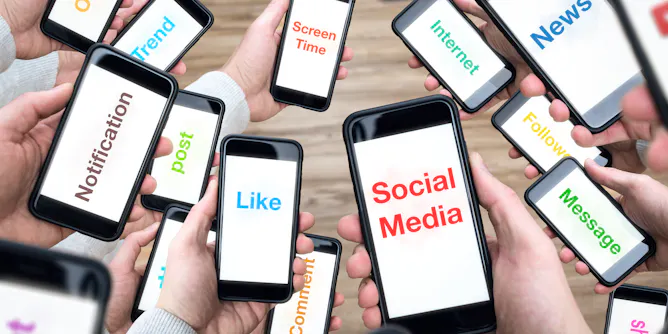
Social Stress Indicator is invaluable for digital governance, crisis response, mental health monitoring, and platform design to track and respond to social stress.
Articles on Echo chamber
Displaying all articles

An impending election doesn’t mean that people have to avoid social media altogether. When used wisely, it can still be an important source for political information and an outlet to express opinions.

We analysed eight years of Reddit posts from conspiracy theorists. Our findings have helped debunk some common myths about this somewhat alienated group of people.

Rush Limbaugh is said to have presented the world as a simple binary – as a struggle only between good and evil. That worked, as a philosopher explains, because many people live in echo chambers.

People know about Facebook’s problems, but assume they are largely immune – even while they imagine that everyone else is very susceptible to influence.

New research into the economics of attention online casts doubt on the net’s role in fostering public debate, and raises concerns about the future of democracy.

Today’s communications platforms and the algorithms that power them have led to a radical change in how public discourse is conducted and public opinion formed.

More and more, news items, adverts and posts by friends are blurred in Facebook’s interface. This all merges into a single stream of information.
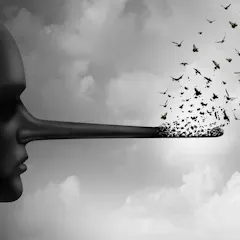
Emmanuel Macron is the latest to talk about reining in fake news. It can’t be done.

Thanks to new deep-learning techniques, AI has the potential to analyse, improve and contribute to the process of human discussion.
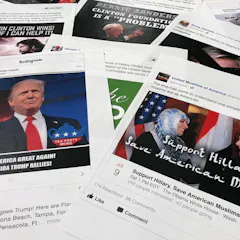
A scholar asks whether democracy itself is at risk in a world where social media is creating deeply polarized groups of individuals who tend to believe everything they hear.

We know negative news has an impact on our mental health, especially if we are constantly being exposed to it. Twitter is trying to help young people cope with the stress, which is a good start.
Concerns over filter bubbles and fake news are often based on anecdotal evidence. There is relatively little systematic research on the topic; a new survey finds widespread fears are unwarranted.

Technology exacerbates the news echo chamber, but it can also be the solution to overcoming our deep-seated psychological biases.

Bringing back the diminished tradition of eating lunch together may be the solution.
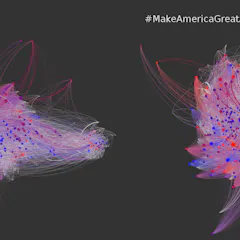
If people can be conned into jeopardizing our children’s lives, as they do when they opt out of immunizations, could they also be conned out of democracy?
Top contributors
-

Lecturer in Psychology and Cognitive Science, University of Sheffield
-
Associate Professor, Centre for Positive Psychology, The University of Melbourne
-
Project Lead Ethics of Algorithms, Bertelsmann Stiftung
-
University of Hertfordshire
-
Professor of Digital Communication, Hamburg University of Applied Sciences
-
Associate Professor of Philosophy, Director of Center for Professional and Applied Ethics, University of North Carolina – Charlotte
-
Professor, Faculty of Law, Thompson Rivers University
-
Ph.D. Candidate in Electrical Engineering and Computer Science, Massachusetts Institute of Technology (MIT)
-
Professor of Computer Science and Philosophy, University of Dundee
-
Lecturer in Law, Edinburgh Napier University
-
Assistant Professor, Michigan State University; Massachusetts Institute of Technology (MIT)
-
Professor of Media and Information Policy, Michigan State University
-
Professor of Informatics and Computer Science, Indiana University
-
Associate Professor of Philosophy, University of Utah
-
Graduate Student in Philosophy, Australian National University