

Australia is on track to have more deaths than births by the 2060s. Other countries grapple with the same problem. Are they doing better than us?
Articles on Fertility rate
Displaying 1 - 20 of 29 articles

South Korea’s unusually rapid transition to a super-aged society means it has had little time to find solutions for pension funding and healthcare for the elderly.

Rising population growth should slow in the coming decades and see a decline in the second half of the century.

New Zealand’s population structure is changing rapidly, yet the country has no comprehensive strategy to intervene or adapt to demographic shifts.

The Asian giant is grappling with a dramatic population decline, with a fertility rate of 1.0, well below the 2.1 replacement rate.

With fertility rates at a record low, many say young people aren’t having kids because they’re too expensive. Turns out, it’s not that simple.

Two sociologists found that when the pace at which family sizes was shrinking slowed down, starting in the 1990s, progress toward closing the gender pay gap grew sluggish too.

Greater longevity of marriages has been heralded as a sign of more successful relationships, but the reality is far more nuanced.

While the changes in population structure that accompany low birth rates are real, the impact of these changes has been dramatically overstated.

Even though there are 8 billion people on Earth today, a catastrophe could send that number much lower within a few decades.

Social drivers are at the heart of this trend.

Young Taiwanese women in particular seem reluctant to have babies these days – and there may be quite a few reasons for that.

Without policies that take account of a growing population with few working-age people, DRC risks seeing an increase in poverty and hunger.

South Korea’s fertility rate fell below the level needed to sustain a population in the mid-1980s – and it never recovered. It is now below one child per woman during her reproductive years.

Eight countries are projected to be behind 50% of the growth in population over the next three decades. Five are in Africa.
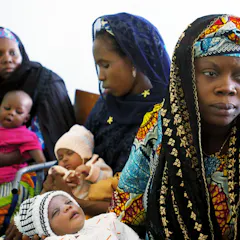
More attention should be given to the oral health of women during the reproductive years, in particular those who have many children.

Economic opportunities, social norms and expanding education and employment options for many women help explain why U.S. fertility has slowed in the late 20th and early 21st centuries.

Immigration has historically offset America’s low fertility rate, but the recent dramatic drop in immigration threatens that trend.

The Nigerian government must design more interventions to improve education, employment opportunities and the economy in order to control the country’s population growth.

Despite the hype about a “coronial” baby boom, the pandemic is likely to see many Australians delay or not have children at all.
Top contributors
-

Demographer, POLIS Centre for Social Policy Research, Australian National University
-
Principal Research Fellow, Charles Darwin University
-
Professor of population and development studies, University of Kinshasa
-
Professor of Sociology, Texas A&M University
-
Professor-at-large, School of Public Health, University of the Witwatersrand
-
Dornsife Endowed Professor of Global Health, Drexel University
-
Deputy Director of the Hugo Centre for Migration and Population, Adelaide University
-
Associate Professor of Dentistry, Obafemi Awolowo University
-
Professor of Sociology and Founding Director of The Future of Work Lab, Podcast at MissPerceived, The University of Melbourne
-
Boeing International Professor of Statistics and Sociology, University of Washington
-
Assistant Professor, Brooklyn College
-
Associate Professor of Demography, University of Dar es Salaam
-
Professor of Sociology, Iowa State University
-
Assistant Chief Planning Officer, National Centre for Technology Management, Obafemi Awolowo University
-
Associate Professor, University of Sydney