

Australia is on track to have more deaths than births by the 2060s. Other countries grapple with the same problem. Are they doing better than us?
Articles on Birth rates
Displaying 1 - 20 of 29 articles

NZ First’s Kiwi Kids Grant is tied up with the party’s broader immigration policies. But a ‘baby bonus’ for citizens won’t necessarily achieve the intended outcome.

The Russian Orthodox Church is creating another pro-family day, part of a broader ‘traditional values’ campaign run by the government.
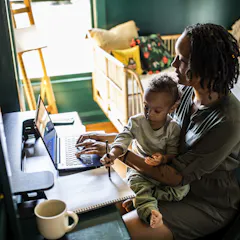
Two sociologists found that when the pace at which family sizes was shrinking slowed down, starting in the 1990s, progress toward closing the gender pay gap grew sluggish too.
Embracing the lower fertility rates we’re seeing could help ease humanity’s impact on the planet.

Russia’s emphasis on what it deems family values comes from the top, but some of the policies that most impact Russians are implemented by regional governments.
Social drivers are at the heart of this trend.
What real issue does a low birth rate pose, and for whom?
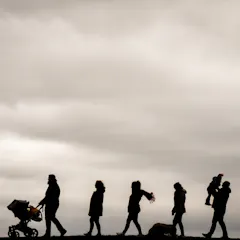
Low birth rates aren’t just a potential economic crisis. They can tell a deeply personal story about women failing to reach their goals for motherhood.

In general, an ageing population puts added pressure on the working-age population to be more productive – just to maintain total output – amid growing fiscal constraints.

Following a 30-year boy-to-girl birth rate imbalance, up to 800,000 ‘extra’ men born since the mid-1980s will be unable to find a South Korean woman to marry. That has big demographic consequences.

South Korea’s fertility rate fell below the level needed to sustain a population in the mid-1980s – and it never recovered. It is now below one child per woman during her reproductive years.

Childbearing goals have remained remarkably consistent over the decades. What has changed is when people start their families and how many kids they end up having.

While most women who try for a baby will succeed, some won’t, and some will have fewer children than they had planned to have.
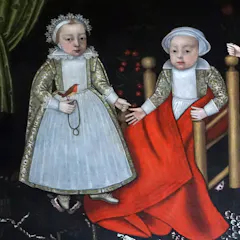
Go back to 17th- and 18th-century England and France and you’ll see the same sort of handwringing over birthrates that we’re seeing today.
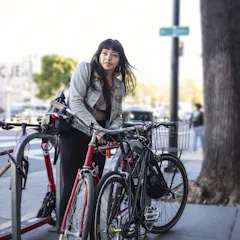
Economic opportunities, social norms and expanding education and employment options for many women help explain why U.S. fertility has slowed in the late 20th and early 21st centuries.

The ongoing COVID-19 pandemic is reducing life expectancy, decreasing birth rates and slowing down immigration. These changes may produce concerning trends in populations globally.

Fertility is higher in Northern Europe than in Southern Europe. To understand, let’s take a look at family policies, equality between women and men and the economic context.
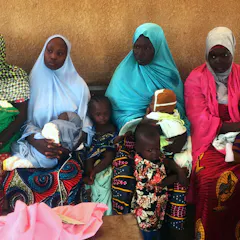
Research shows that unrest, even terrorism, can erupt in poor countries with a surplus of young people and not enough jobs. Can Niger, a once-peaceful sub-Saharan African nation, handle its baby boom?

Did you ever consider that human beings might have a breeding season? Birth seasonality exists – and has interesting implications for childhood disease outbreaks.
Top contributors
-

Professor of Sociology, Texas A&M University
-
Assistant Professor of Economics, University of Central Florida
-
Demographer, POLIS Centre for Social Policy Research, Australian National University
-
Visiting Assistant Professor of Russian Studies, College of the Holy Cross
-
Associate Professor, University of California, Santa Barbara
-
PhD Candidate in History, Boston University
-
Professor, Director of the National Perinatal Epidemiology and Statistics Unit, UNSW
-
Associate Professor of Environmental Economics, University of California, Los Angeles
-
Associate Professor of Business, Boston University
-
Professor of Sociology, University of Maryland
-
Assistant Director of the Global Systems Institute, University of Exeter
-
Associate Professor of Social Research and Economic Thought, Catholic University of America
-
Professor of Social Science and Public Policy, Hong Kong University of Science and Technology
-
Gilles Pison is a Friend of The Conversation.
Anthropologue et démographe, professeur émérite, Muséum national d’histoire naturelle (MNHN); Ined (Institut national d'études démographiques)
-
Honorary Professor of Demography, Macquarie University