
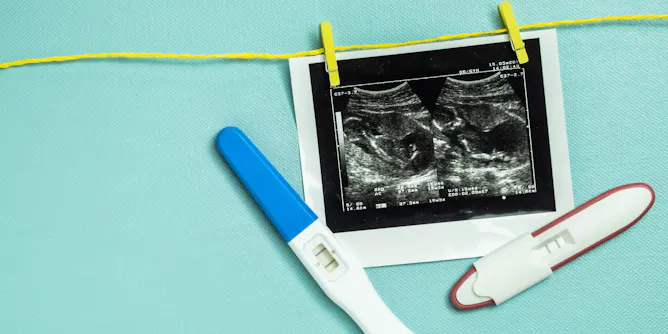
The number of UK babies being born to surrogate mothers has risen by 255% in the past six years.
Articles on Fertility
Displaying 141 - 160 of 244 articles

The number of births in the US is down 2 percent. That pops the country’s ‘fertility bubble’ – and brings numbers closer in line with peer countries.

Excess weight affects fertility in men and women - the good news is weight loss can reverse the negative effects.

There is no biological evidence for “giving your body a break” and in fact, it could do your health more harm than good.

Before the pill, contraceptive options were extremely limited and generally required the cooperation of the male partner. Almost 60 years later, the pill remains the mainstay of contraception.

Folic acid in pregnancy – and the gene which explains why the benefits may differ.

It’s 40 years since the birth of Louise Brown, the world’s first test tube baby. But our long read explains how infertility has a much longer history.
Contrary to popular perception, women don’t freeze their eggs for career reasons.
If you are looking to freeze your eggs, here are six things to consider.

How does the two-child policy in China impact women’s equality? Do women have the ability to stop when they no longer want more children?

Research shows that the Y chromosome may be able to protect itself from extinction in the short term. But what about in a future where we all reproduce artificially?

Once young women could access health insurance through their parents, they seemed to make very different decisions about contraception, abortion and marriage.

Research is increasingly finding an association between alcohol consumption and sperm health.

Infertility is not just an issue for women.

There’s no reason why small families shouldn’t become the norm in Africa. But this will depend on improving education opportunities for women and improving birth control policies.
Study results examining the effect of antioxidants on sperm health are mixed.

The release of TV program The Handmaid’s Tale and a study on male sperm numbers have left some worried about the future of human fertility.

A study in mice shows it is possible to delete extra chromosomes in a range of conditions that are associated with infertility, including Down’s syndrome.

The baby bonus did its job, encouraging people to have more children at a time when fertility rates were low.
A better understanding of sperm could help develop new fertility treatments and contraceptives for men.
Top contributors
-

Adjunct Senior Research Fellow, Global and Women's Health, School of Public Health & Preventive Medicine, Monash University
-
Senior Lecturer, School of Social Sciences and Humanities, Loughborough University
-
Senior lecturer in reproductive Biology, University of Sheffield
-
Monash University
-
Adjunct clinical professor, Monash University
-
Assistant Professor of Sociology, University of South Carolina
-
NHMRC Emerging Leader Research Fellow in Reproductive Health, School of Public Health, University of Sydney
-
Professor and Director, Robinson Research Institute, Adelaide University
-
Emeritus Professor of Reproductive and Periconceptual Medicine, The Robinson Research Institute, Adelaide University
-
Professor of Social Science and Public Policy, Hong Kong University of Science and Technology
-
Professor of Reproductive Medicine, University of Dundee
-
Adjunct Professor, La Trobe University
-
Assistant Professor of Obstetrics and Gynecology, UMass Chan Medical School
-
Associate Professor,, The University of Melbourne
-
Associate Professor in Contraception, Reproductive and Sexual Health, Anglia Ruskin University