
Phosphorous levels in coral reef systems located close to shorelines have increased over the past few decades according to…
Articles on Fertiliser
Displaying 81 - 90 of 90 articles

If Earth were like a human body, large animals might be its arteries, moving nutrients from where they’re abundant to where they’re needed. Currently the planet has large regions where life is limited…
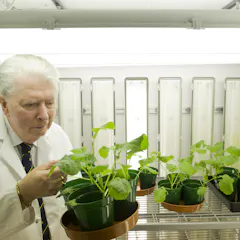
Each year more than 1 million tonnes of mineral nitrogen fertiliser is applied to arable and grass crops in the UK. This pollutes waterways through nitrate run-off and the atmosphere from the release of…
A new study reveals the role fertiliser plays in reducing the risk of crop pest infections. A well known pest, the spider-mite…

A joint project between scientists in the UK and China has shown how improved methods of manufacturing nitrogen fertiliser and better use of it by farmers could reduce greenhouse gas emissions by hundreds…
Phosphorus is an important, life-giving element and is often used for plant growth in an agricultural setting. Scientists…

What goes down our toilet is commonly viewed as waste. This makes intuitive sense because separating people from their excreta - sanitation - is arguably the single most important public health objective…
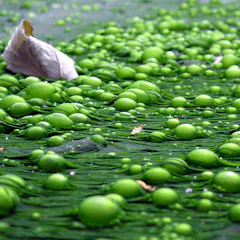
Planet Earth has boundaries for its biophysical subsystems. By 2009, we had already exceeded three of the boundaries – climate change, biodiversity loss, and the nitrogen cycle. Climate change is a top-of-mind…
Microbial communities living in and on plant roots can boost the health, growth and defence mechanisms of plants. Research…
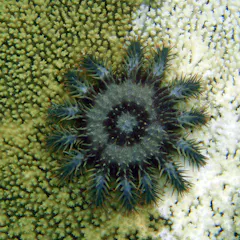
The Great Barrier Reef is under attack from a range of enemies including climate change effects (coral bleaching, increased severe storms, and ocean acidification), pollutant discharge from the land, coastal…
Top contributors
-

Professorial Fellow, ARC Centre of Excellence for Coral Reef Studies, James Cook University
-
Senior Fellow, Department of Agricultural Economics, Stellenbosch University
-
Outreach Fellow, Institute for Water, Environment and Health (UNU-INWEH), United Nations University; Technical University of Hamburg
-
Executive Co-Director, Institute for Water, Environment and Health (UNU-INWEH), United Nations University; Technical University of Hamburg
-
Professor of Earth System Science, UCL
-
Postdoctoral Researcher, Agricultural Science, The University of Western Australia
-
Professor, University of Maryland Center for Environmental Science
-
Adjunct Professorial Research Fellow, Partner Investigator, ARC Centre of Excellence for Coral Reef Studies, James Cook University
-
Chief Research Advisor, Grantham Centre for Sustainable Futures, University of Sheffield
-
Research Fellow, International Food Policy Research Institute (IFPRI)
-
Senior Researcher, Agricultural Research Council - Animal Production, University of KwaZulu-Natal
-
Professor - School of Agriculture and Food Science, The University of Queensland
-
Professor of Chemistry, George Washington University
-
Marie Curie Research Fellow, School of Chemistry, University of Bristol
-
Senior Research Fellow and Science Director, Department of Agriculture and Food Systems, The University of Melbourne