
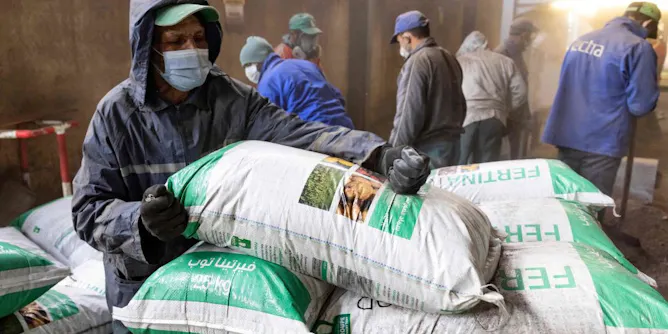
How well Morocco manages challenges to its fertiliser industry will affect its own development and the stability of food supplies across the world.
Articles on Fertiliser
Displaying 41 - 60 of 90 articles
The impacts of Russia’s invasion of Ukraine will pass, but the impacts of climate change will not.
Up to 42,000 tonnes a year of microplastics are removed from sewage, spread on fields as fertiliser and eventually wash back into watercourses.

Wheat and bread play a central role for food security and political stability in Sudan.
The ultimate crop yields that farmers harvest depends on the use of fertilisers.
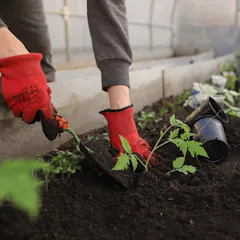
If we want to reduce carbon emissions and preserve planetary ecosystems, we need to protect our soils.

Realities on the ground tell a different story from the claim that a Green Revolution ensures food security and increased income for smallholder farmers in Ghana.
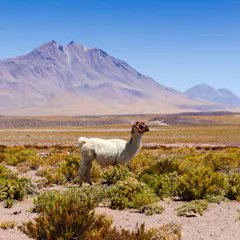
Guano helped humans farm the world’s driest desert, new research finds.
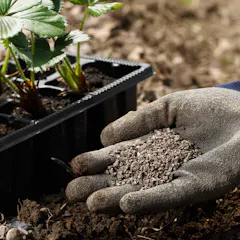
If rolled out worldwide, our method could replace a quarter of all the synthetic nitrogen fertiliser used in agriculture.
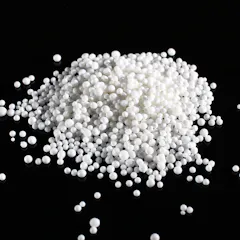
What do ammonium nitrate and iodine have in common? Both substances are of immense service to humankind, and the history of their discovery is closely linked to that of the production of explosives.
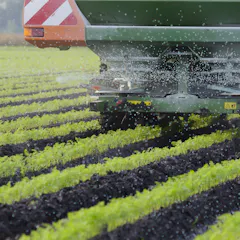
Agriculture is the dominant cause for the increasing N₂O concentrations. Emissions must be reduced if we hope to stabilise Earth’s climate.
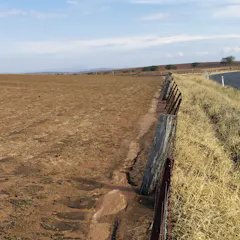
It’s painfully clear nature is buckling under the weight of farming’s demands. There’s another way – but it involves accepting nature’s limits.

And why development funders should listen to smallholder farmers

We need phosphorus for life, as well as for fertiliser to help plants grow, but raw supplies are limited.

Wildflowers, bees and butterflies – your lawn is a vibrant ecosystem waiting to be unleashed.

Feeding pigs seaweed could make them, us and the planet healthier without contributing to antibiotic resistance in bacteria.

Existing toilets aren’t a good fit for parts of sub-Saharan Africa because many areas lack water and there’s often no proper plumbing.
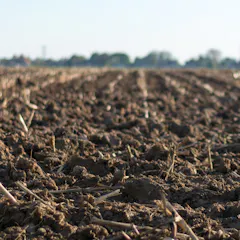
An ancient relationship between plants and fungi could be used in sustainable agriculture. But there’s still a lot we don’t know, and new research suggests these fungi can sometimes do more harm than good.
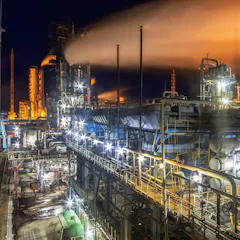
Producing ammonia, which is a key ingredient in fertilizers, is one of the world’s most energy-intensive chemical manufacturing processes. Now there’s a new low energy option in development.

The federal government’s new $500 million funding package for the Great Barrier Reef seems predominantly focused on the tactics that are already being tried, without much success.
Top contributors
-

Professorial Fellow, ARC Centre of Excellence for Coral Reef Studies, James Cook University
-
Senior Fellow, Department of Agricultural Economics, Stellenbosch University
-
Outreach Fellow, Institute for Water, Environment and Health (UNU-INWEH), United Nations University; Technical University of Hamburg
-
Executive Co-Director, Institute for Water, Environment and Health (UNU-INWEH), United Nations University; Technical University of Hamburg
-
Professor of Earth System Science, UCL
-
Postdoctoral Researcher, Agricultural Science, The University of Western Australia
-
Professor, University of Maryland Center for Environmental Science
-
Adjunct Professorial Research Fellow, Partner Investigator, ARC Centre of Excellence for Coral Reef Studies, James Cook University
-
Chief Research Advisor, Grantham Centre for Sustainable Futures, University of Sheffield
-
Research Fellow, International Food Policy Research Institute (IFPRI)
-
Senior Researcher, Agricultural Research Council - Animal Production, University of KwaZulu-Natal
-
Professor - School of Agriculture and Food Science, The University of Queensland
-
Professor of Chemistry, George Washington University
-
Marie Curie Research Fellow, School of Chemistry, University of Bristol
-
Senior Research Fellow and Science Director, Department of Agriculture and Food Systems, The University of Melbourne