

Policymakers and health researchers are increasingly recognising the harms of stigmatising language and attitudes towards larger-bodied people.
Articles on Fat stigma
Displaying all articles

The season three scene between Colin and Penelope got more than a few hearts racing. It’s a refrenshingly rare onscreen portrayal of a larger women in a passionate, sexual encounter.

Does weight come back when you stop taking drugs like Ozempic? Are these medications simply another (expensive) form of yo-yo dieting? Here’s what we know so far.

We don’t tell people taking statins to treat high cholesterol or drugs to manage high blood pressure they’re cheating or taking the easy way out. Nor should we when people take drugs like Ozempic.

Weight stigma doesn’t have to be malicious or targeted directly at a person to cause harm. Fat microaggressions lead to poorer health, well-being and life outcomes among fat people.

A recent study showed encouraging people with obesity to interact with others more can keep them alive for longer.
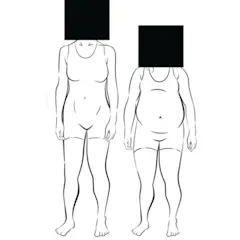
While excess weight arises from a complex interplay of genes, environment, diet and activity, new research finds Americans hold parents responsible for excess weight in their kids.

New Canadian clinical practice guidelines for obesity aim to help reduce the prevalence and impact of weight bias and stigma in clinical care, and also encourage the public to advocate for change.

People with obesity earn less and have a harder time finding work.

The hostile environment that marginalised people find themselves in serves as a source of constant stress.

Dieting is a setup. The act of dieting causes physiological changes that make it hard to continue dieting successfully. Here’s how the body fights back when some people try to lose weight.

But you wouldn’t know it to look at a newspaper.
Top contributors
-

Lecturer in Psychology, University of Essex
-
Associate Professor of the Psychology of Obesity, University of Leeds
-
Associate Professor, Psychology, University of California, Los Angeles
-
Head of HR Research Development, Institute for Employment Studies, Lancaster University
-
Research Fellow in Public Health and Obesity, Leeds Beckett University
-
Assistant Professor, Health, Kinesiology and Applied Physiology, Concordia University
-
Senior Research Fellow, Division of Health Research and Social Work, Lancaster University; La Trobe University
-
Professor of Health Promotion, Dalhousie University
-
General Practitioner, PhD Candidate, Bond University
-
Associate Professor of Psychology, University of California, Los Angeles
-
PhD Candidate in Psychology, Western University
-
Ph.D. Candidate in Clinical Psychology, Oklahoma State University
-
Laureate Professor in Nutrition and Dietetics, University of Newcastle
-
Chair Professor, Psychology, Western University
-
Professor Applied Social and Policy Research; Director, Centre for Loneliness Studies, Sheffield Hallam University